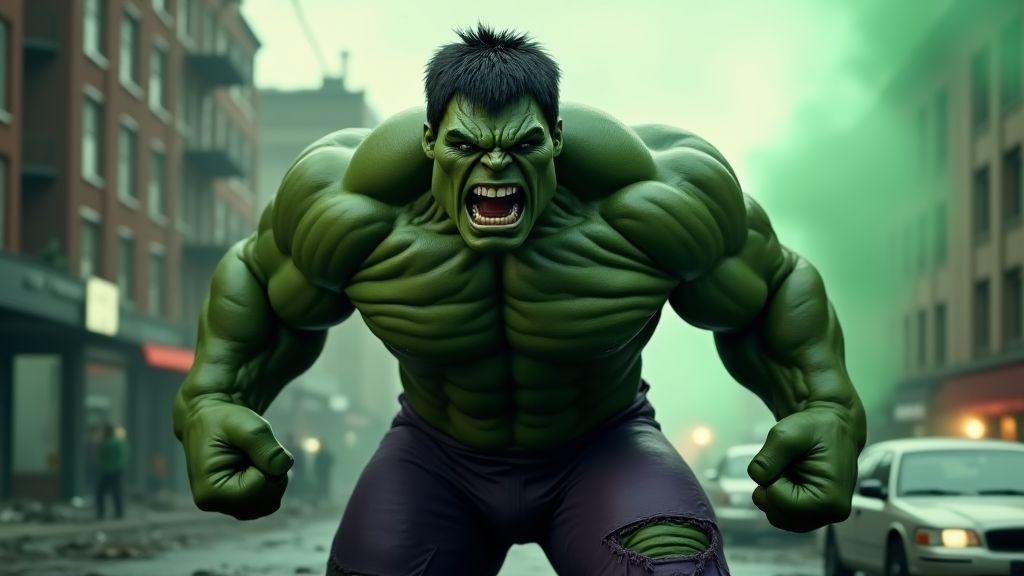
Hulk’s Rage Finally Finds Its True Target drops you into the heart of a huge Hulk saga. You get the big beats from Planet Hulk and World War Hulk, watch Bruce Banner face raw pain, and learn how his trauma shapes Hulk’s mind and rage.
You’ll explore gamma origins, classic foes like Leader, Abomination, and Red Hulk, and the thin line between vengeance and justice. Pick up essential issues and watch the final showdown so you can judge the arc for yourself.
Key Takeaway
- You see who really caused the harm
- You use your anger to protect others
- You act fast when injustice shows up
- You stop harming innocent people
- You learn to control your rage
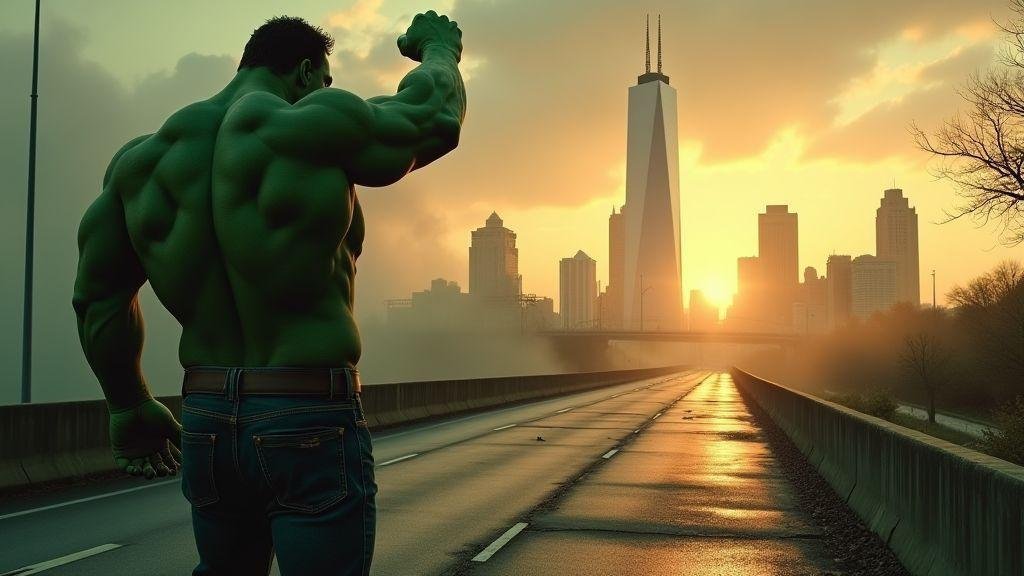
How Hulk’s Rage Finally Finds Its True Target frames the plot and stakes
You feel the story snap into focus the moment Hulk’s Rage Finally Finds Its True Target appears. That line is your compass: it tells you who the enemy is and why everything else explodes. The plot stops being random smashing and becomes a hunt with personal, loud stakes.
The emotional weight lands hard. When the Hulk picks a true target, it’s not just about buildings and armies — it’s about loss, betrayal, and the people who broke him. You see the cost up close: friends, families, whole neighborhoods at risk. That makes every punch mean something.
The pacing rides that choice. Small conflicts swell into full wars because the Hulk’s aim sets the scale: small grudge, public outrage, then full-blown reckoning. The outcome matters to the whole Marvel map.
What you should know from World War Hulk and Planet Hulk
Planet Hulk sends you to the dark side of exile. The Hulk is stripped of Earth, forced into gladiator pits, and shaped by loss and pain.
There he finds purpose — and love — which makes what follows feel like betrayal rather than random fury. Read about the wider influence of that exile in the impact of Planet Hulk on Marvel Comics.
World War Hulk is the return and the payoff. The Hulk comes back angry, targeted, and deadly focused on the Illuminati who sent him away. This arc shows revenge at full volume: strategy, allies, and huge consequences across cities and teams.
It teaches you that when the Hulk has a target, the story stops being a rampage and starts being judgment. For an authoritative reference, see the Overview of the Hulk character and arcs.
Callouts: exile breeds motive, love amplifies loss, revenge sets scope.
“He doesn’t smash because he’s mindless. He smashes because someone made a choice.”
| Arc | Core Trigger | Main Target | Tone |
|---|---|---|---|
| Planet Hulk | Exile and survival | Gladiators / Imperium | Tragic, heroic |
| World War Hulk | Betrayal and revenge | Illuminati / Earth’s heroes | Angry, apocalyptic |
How the stakes compare to other Marvel Hulk pivotal moments and when the Hulk finds true target
Compared to quieter Hulk tales, the revenge arcs have clear targets and huge fallout. Think of quieter runs where Hulk is a force of nature versus these arcs where he is a judge. When the Hulk gets a specific target, the story involves governments, teams, and whole cities — the scale jumps from personal struggle to full-blown crisis.
Line these arcs up with others like Immortal Hulk or Maestro to see different aims. Immortal Hulk plays on fear and horror; Maestro imagines a future dictator. But when the Hulk finds a true target — the one idea or person who will not be forgiven — the stakes are about justice, vengeance, and consequence. That moment makes the fight feel inevitable.
Quick factual note on Hulk’s major revenge arcs
Major revenge arcs to remember: Planet Hulk (2006) — exile, gladiator story; World War Hulk (2007) — vengeance on the Illuminati; Maestro (various) — future dictator seeking dominance; Immortal Hulk (2018–) — horror and existential stakes. Each arc shifts the target and changes what counts as victory.
Bruce Banner emotional reckoning in Hulk’s Rage Finally Finds Its True Target
You watch Banner change in scenes that feel raw and simple. The story puts his pain front and center. Instead of smashing a city, the Hulk points at what Banner has tried to hide: fear, shame, and the cost of years of running. This is why Hulk’s Rage Finally Finds Its True Target lands so hard — the target is inside him.
That shift makes the violence feel earned. You see flashes of memory, small domestic moments, and quiet failures. Those details make the fury less random and more like a mirror. When the Hulk rips into something, you understand it as a reaction to loss and guilt, not just a mood swing.
As a reader or viewer, you connect. The fight scenes become emotional puzzles. You root for Banner to name the hurt and for the Hulk to stop masking it. That choice turns chaos into a path toward healing, however jagged.
Tip: Pay attention to quiet beats — a look, silence, or a lingering scar. Those are where the reckoning lives.
For research-backed context on trauma’s effects on behavior and emotion, see How trauma shapes emotion and behavior.
| Aspect | Banner (inside) | Hulk (expression) |
|---|---|---|
| Primary driver | Guilt / fear | Rage / protection |
| Typical reaction | Withdraws, self-blame | Explodes, defends |
| How target appears | Memory, regret | Smashing, confrontation |
| Story outcome shown | Acceptance attempts | Focused release |
How Banner’s trauma shapes the Hulk psychology and rage you see
Banner’s trauma is the engine behind the Hulk’s moves. The Hulk’s outbursts often match Banner’s old wounds: if Banner is haunted by a broken relationship, the Hulk lashes at items or symbols of that pain. That logic makes the monster feel like a translator for Banner’s silent screams.
You start to read the Hulk like a language. Loud smashing often covers up a soft truth — fear of being alone, fear of hurting people, fear of losing control. The Hulk’s choices point you to those truths. Once you see that, the green rage becomes a map to Banner’s mind.
“Smash less. Say more.” — a line that shows the shift from raw force to something nearer to confession.
What this emotional arc means for the Hulk character arc conclusion you follow
This arc pushes the Hulk toward a clear finish line: integration or at least truce. You watch scenes where Banner names memories and the Hulk stops reflexively attacking. That small progress matters. It suggests the end isn’t a final fight but a change in how they live together.
Think of it as steps in a rough plan:
- Banner admits a core hurt.
- The Hulk responds with controlled force.
- Both learn to use that force to protect, not punish.
Those steps let the character end in a place that feels honest. You feel relief, not just because the fights stop, but because the anger finally has a purpose.
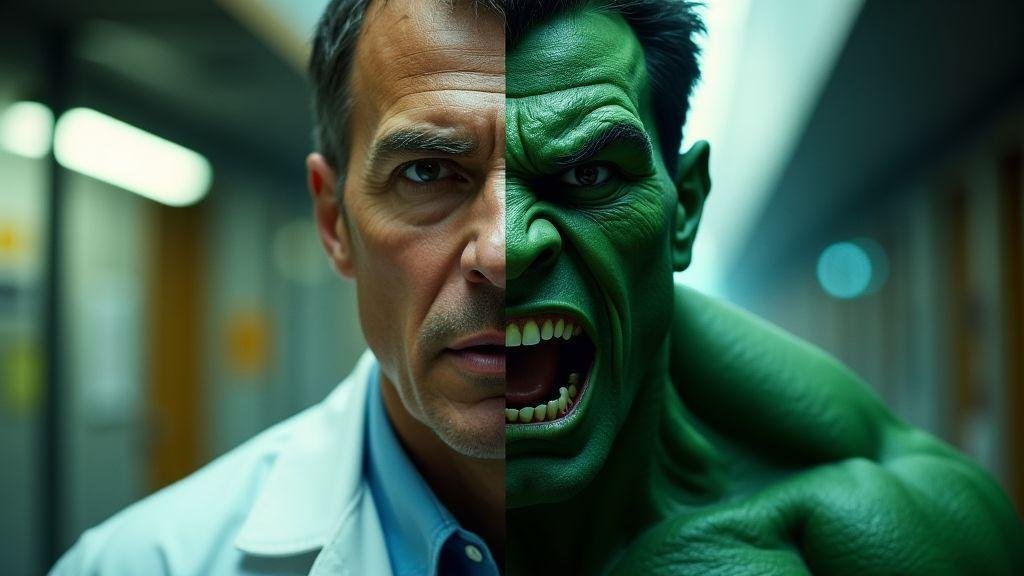
Understanding Hulk psychology and rage through comics, science, and storytelling
The Hulk is a study in split selves. You watch Bruce Banner and the green force he becomes fight for space in one skull. Comics let you see the engine of anger: panels, color, and caption boxes show what Banner remembers and what the Hulk feels.
That makes the rage more than noise — it becomes a language. The Library of Congress provides resources on How comics tell story and emotion.
Comics mix real science and comic logic to make that language believable. Gamma is the excuse; the art is the evidence.
You can read a single splash page and know whether the transformation is sudden terror or a slow, boiling change. Writers and artists choose how raw the Hulk looks, and that choice tells you whether the story is about survival, guilt, or revenge.
As a reader, you learn to spot growth. When the Hulk punches for a cause rather than just to explode, you feel the purpose shift. Small details matter: a softer ballooned word, a lingering panel on Banner’s face, a hand that hesitates. Those moments show the rage turning into motion you can follow.
The gamma origin and comic science behind Hulk’s transformations
The origin is simple on the page: Banner cooks a test, gamma rays hit, the Hulk appears. In reality, gamma rays don’t work like that. Comics use gamma as a storytelling tool. It rewrites rules so the body and mind become visible conflict.
You accept the impossible because it serves a clear emotional beat. For Banner’s journey from scientist to smash, see the Incredible Hulk origin overview.
Different runs treat the science like a dial. Some writers make the change automatic with fear. Others attach it to trauma, grief, or intent. That variance is useful: it lets you read each era as a different answer to the same question — what does anger do to a man?
How writers show internal conflict so you can read the rage as character growth
Writers and artists split the voice between Banner and Hulk with craft tricks: jagged balloons for the Hulk, thin neat type for Banner; cuts between memory and now; color shifts to mark mood. Those cues tell you which side is winning.
For more on narrative techniques that make comics unreliable or subjective, check unreliable narrators in comics.
Visual cues: balloon style, color palette, panel rhythm, recurring motifs, and voice captions.
When those tricks point toward restraint, you see growth. When Hulk protects innocents or Banner accepts loss, the anger becomes agency. Across eras you might get a calm, clever Hulk or a frightened child who hits first.
Either way, the conflict becomes progress you can read. For how panel choreography shapes fight emotion, see comic panel fight choreography.
Fact: Hulk’s personality varies across writers from childlike to strategic
Creators have shifted the Hulk between a childlike force of pure emotion and a strategic warrior who plans and leads.
That range is part of the character’s power; it lets you find a version that speaks to your idea of anger and healing. For different takes across universes and timelines, see different versions of the Hulk.


Hulk vs final antagonist: comparing foes and what a true target means
You watch the fight and feel it: this isn’t just a slugfest. A final antagonist for the Hulk must be more than strong — they must touch something deep in him. When Hulk’s Rage Finally Finds Its True Target, the payoff is emotional as well as physical. The villain has to test Hulk’s anger, identity, and choices.
A foe who forces Hulk to choose between smashing and something harder — control, sacrifice, or reconciliation — makes the clash feel earned. If the antagonist is only powerful, the ending rings hollow. But if they target Bruce’s life, loved ones, or moral core, the fight becomes a turning point.
In the end, the best final antagonists write the story with Hulk, not just fight him. They expose weaknesses you didn’t know existed. You remember the scenes because they change Hulk — that’s the difference between a big punch and a true finale.
When a villain attacks what Hulk values — his family, his sense of self, or his purpose — that’s when Hulk’s Rage Finally Finds Its True Target and the story hits home.
Classic rivals you should know: Leader, Abomination, and Red Hulk
The Leader is the brain to Hulk’s brawn. Samuel Sterns mutated into a mastermind with superior intellect thanks to gamma radiation. He plots, manipulates, and rarely tries to win by strength alone. Expect long games, traps, and attacks aimed at Bruce’s mind and allies — a staple in lists of iconic Marvel villains.
The Abomination is the opposite: raw terror and relentless force. Emil Blonsky matches or surpasses Hulk in brutality and stamina. When Abomination shows up, expect destruction and pure violence — it’s survival, not strategy.
Read the tactical and emotional history in Understanding the Abomination and the matchup breakdown in Hulk vs Abomination.
The Red Hulk blends a military mind with heat-based attacks and tactics, making him a wild card — his motivations and transformations tie back to the role of military antagonists in Hulk stories; see the background on Thunderbolt Ross.
- Leader: intellect, long-term plots, psychological warfare
- Abomination: brute strength, smashing and endurance
- Red Hulk: military tactics, heat generation, unpredictable aggression
| Foe | Primary Threat | Typical Strategy | Emotional Target |
|---|---|---|---|
| Leader | Genius-level planning | Schemes, manipulation | Bruce’s mind and allies |
| Abomination | Raw power | Direct assault, terror | Hulk’s physical limits |
| Red Hulk | Tactical aggression | Military-style strikes, heat-based attacks | Hulk’s identity and pride |
How Hulk final showdown analysis compares to other big Marvel confrontations
Compared with cosmic battles like the Avengers’ universe-level conflicts, a Hulk final showdown is smaller in scale but deeper in feeling. For perspective on power tiers and scale, see rankings of powerful Marvel heroes.
A Hulk finale often centers on one-on-one reckoning, giving room for character beats: photos on a fridge, a broken friendship, a whispered apology. When the audience cares about those details, the final punch matters more than the fireworks.
Other big fights rely on teamwork and spectacle; your typical endgame has heroes trading blows and quips.
A Hulk finale often centers on one-on-one reckoning, giving room for character beats: photos on a fridge, a broken friendship, a whispered apology. When the audience cares about those details, the final punch matters more than the fireworks.
Fact: Red Hulk first appeared in 2008 in Hulk #1 (Loeb/McGuinness)
Red Hulk debuted in 2008 in Hulk #1 by Jeph Loeb and Ed McGuinness, shocking fans by putting a familiar face in a new, dangerous red form.
Hulk vengeance storyline and moral themes in Hulk’s Rage Finally Finds Its True Target
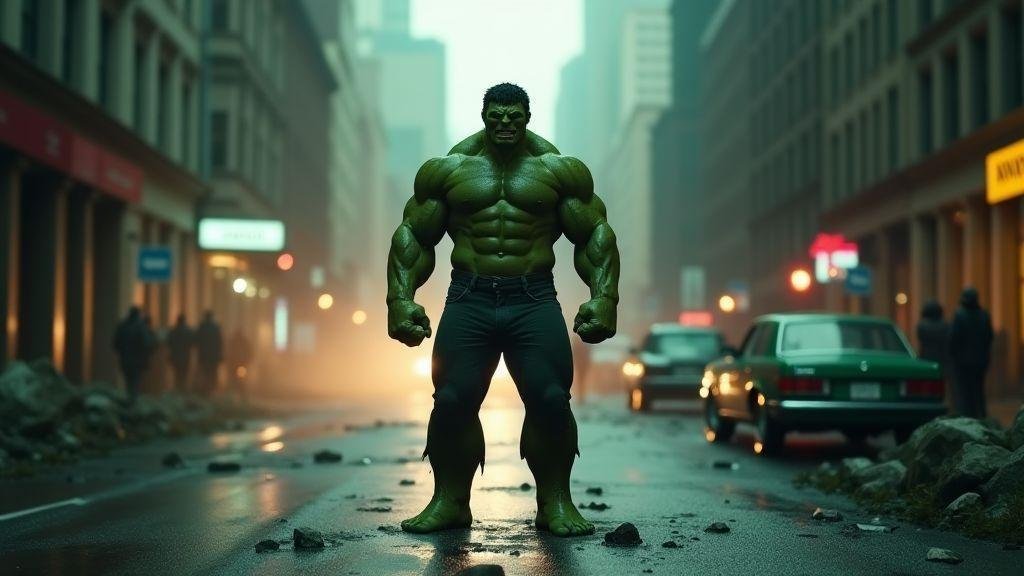
You jump into these comics and feel the weight of Hulk’s anger like a freight train. In Hulk’s Rage Finally Finds Its True Target, the story points the green giant at a specific aim, not just random smashing. That focus turns the plot into a study of trauma, betrayal, and what happens when punishment replaces healing.
The narrative treats the hero as both victim and threat. The writers crank up the pain that made the Hulk explode, then ask whether striking back makes things better. The tension between being wronged and becoming the wrongdoer is where the moral themes live.
By the end, the arc forces hard questions: does hitting the target fix the past, or just spread the hurt? Big fights and quieter moments show that revenge can look righteous while still costing everyone involved.
Vengeance versus justice: how Hulk stories treat revenge so you can judge motives and spot the Hulk rage target
Hulk stories often blur the line between vengeance and justice. Revenge comes from personal pain and aims to wound back. Justice aims to restore balance with rules and witnesses. When the Hulk goes after a person or group, watch whether his goal is to punish or to stop harm for others.
Judge motives by looking at outcomes. If the action protects innocents or reforms a system, it leans toward justice. If it leaves ruin and feeds more rage, it’s vengeance. Pay attention to who suffers after the fight — that shows the true direction of the Hulk’s fury.
Examples you can read: World War Hulk and similar vengeance arcs for context
Start with the pair: Planet Hulk leads into World War Hulk, where exile turns to return and then revenge. Those arcs give you a front-row seat to how grief and loss can push a hero to cross lines.
They’re blunt, loud, and emotionally heavy — in a good way if you want to study motive and cost. See a deeper look at Planet Hulk’s long-term impact here.
Recommended reads:
- Planet Hulk (2006)
- World War Hulk (2007)
- Selected Incredible Hulk issues that touch on exile or betrayal
When you pick them up, watch dialogue and aftermath scenes. The speeches reveal intent; the rubble reveals consequences. That combo tells you whether the Hulk found a true target or just a bigger fight.
Fact: World War Hulk (2007) followed Planet Hulk (2006) and focused on revenge
World War Hulk (2007) is the direct follow-up to Planet Hulk (2006) and centers on the Hulk returning to Earth to settle scores.
How to read Hulk’s Rage Finally Finds Its True Target: key issues and the Hulk ultimate confrontation
You want the full emotional punch of Hulk’s Rage Finally Finds Its True Target. Start with the beats: a dramatic exile, a return, and a final, brutal confrontation. Read in the order that shows cause and effect so you feel why the Hulk acts, who he blames, and what the final fight actually means.
Focus on character shifts as much as big fights. The arc turns on choices by allies and enemies. When you see a calm scene, pay attention — it often sets the fuse for the big explosion. That calm-to-chaos rhythm is what makes the final showdown land emotionally.
Treat each issue as a chapter in a single roaring story. Skipping scenes can hide clues about motives or betrayals. To follow the ultimate confrontation, track the aftermath scenes; they tell you who really wins more than the last punch ever could.
Essential issues and collected editions to follow the arc
Start with the key runs that lead into the confrontation: Planet Hulk, World War Hulk, and relevant Immortal Hulk material for modern tone and consequences. Collect the main mini-series and tie-ins that affect the Hulk’s mindset.
Reading order:
- Read Planet Hulk (the exile and rise).
- Read World War Hulk (the return and revenge).
- Add relevant Immortal Hulk issues if you want modern tone and consequences.
- Fill in major tie-ins only if you like extra context.
| Key Issue / Run | Where to Pick It Up |
|---|---|
| Planet Hulk (2006) | Planet Hulk TPB or Omnibus |
| World War Hulk (2007) | World War Hulk TPB or Omnibus |
| Immortal Hulk (2018–2021) | Immortal Hulk volumes or Omnibus |
| Tie-ins & one-shots | Collected in deluxe editions or compilations |
What to watch for in Hulk final showdown analysis and the Marvel Hulk pivotal moment
Watch emotional payoffs more than spectacle. Note who speaks to the Hulk right before a fight — a short line can flip his motive from rage to purpose. Those lines explain why the showdown becomes personal instead of just another battle.
Also watch for visual echoes. Artists repeat panels, poses, or color palettes to link scenes across issues. When you see the same frame repeated, pause — it’s a cue that the story is connecting dots for you.
That repetition often marks the true turning point in the Hulk’s arc. For more on visual foreshadowing across long-form comics, see foreshadowing in comics art.
Callout: If a panel mirrors an earlier quiet moment, that echo usually signals the Hulk has reached his real target — not just an enemy, but an idea or wound he wants fixed.
Fact: Collected editions often group Planet Hulk, World War Hulk, and later Immortal Hulk stories
Collected editions commonly bundle Planet Hulk, World War Hulk, and selected Immortal Hulk volumes so you can follow the full emotional and narrative thread without hunting single issues.
Why the title matters
The title Hulk’s Rage Finally Finds Its True Target is not just dramatic wording — it’s a thesis for the story. It promises a focused narrative where rage becomes purpose. Every scene that follows answers that promise: who the target is, why it matters, and what the cost will be.
If you’re looking for a Hulk story where anger is used as an instrument of judgment rather than random violence, Hulk’s Rage Finally Finds Its True Target is the precise arc to study.
Conclusion: Hulk’s Rage Finally Finds Its True Target
You leave this arc knowing the Hulk isn’t just a green wrecking ball — he’s a compass. When the rage finds a true target, the story stops being random smashing and becomes a hunt driven by loss, betrayal, and the thin line between vengeance and justice.
You watch Bruce Banner hand the Hulk a language for his pain. The green monster becomes a mirror for what Banner hides, making every punch feel earned and every quiet panel count. You’ll see moments of integration and flashes of possible healing — messy, honest, and not neat.
Look for the echoes. The small beats tell you more than the big explosions. Read Planet Hulk and World War Hulk back to back and you’ll feel the cause-and-effect in your bones. Pay attention to foes like the Leader, Abomination, and Red Hulk — they don’t just fight strength with strength; they test what Hulk values.
In short: this is a story about purpose cloaked as fury. It asks whether hitting the target fixes the past or only spreads the wound. If you want more takes like this, swing by Hero and Villain World and keep reading — there’s always another layer to pull apart.
Frequently Asked Questions
It’s about the Hulk hunting a clear enemy. You watch rage turn to purpose.
It makes him focused. You see a calmer but deadlier side and steps toward integration.
Some scenes are loud and scary. Preview it first.
Look on streaming apps, comic shops, or the publisher’s site. You can buy or rent it.
A big showdown with closure and a twist that reframes motives.