When we think of comic book runs that truly changed the game, Frank Miller’s Daredevil often tops the list. But does it still hold up as a masterpiece today? I believe it does, and we’re about to explore why.
For many, this era defined Matt Murdock, transforming him from a street-level hero into a gritty, complex figure. We’ll delve into the darkness, the drama, and the sheer brilliance that made this series legendary.
The Legend Begins: Frank Miller’s Daredevil
When we look back at the late 1970s, Daredevil was a character on the brink of cancellation.
He was often dismissed as a second-tier Spider-Man clone, lacking a distinct voice or a compelling world of his own.
I remember reading those early issues and feeling that something vital was missing from Matt Murdock’s journey.
Everything changed in 1979 when a young artist named Frank Miller stepped into the pages of issue #158.
Initially hired only for the pencils, Miller saw potential in the Man Without Fear that others had completely overlooked.
We witnessed a seismic shift when he eventually took over the writing duties, bringing a gritty realism to the title.
Alongside the legendary inker Klaus Janson, Miller began to strip away the campy elements of the Silver Age.
They didn’t just draw a comic; they crafted a crime noir masterpiece that felt dangerous and alive.
The arrival of Miller and Janson was not just a creative change; it was a rebirth for the entire medium.
We saw Hell’s Kitchen transform from a generic backdrop into a suffocating, atmospheric character in its own right.
This was the moment the legend truly began, setting the stage for the definitive take on the character.
The Dark Reinvention of the Man Without Fear

Miller’s greatest achievement was the deconstruction of Matt Murdock’s psyche and his moral compass.
We no longer saw a carefree swashbuckler, but a man haunted by his internal demons and his environment.
The reinvention focused on the physicality of being a blind vigilante in a city that wants to devour you.
I find it fascinating how Miller utilized Matt’s heightened senses to create a sense of constant, overwhelming tension.
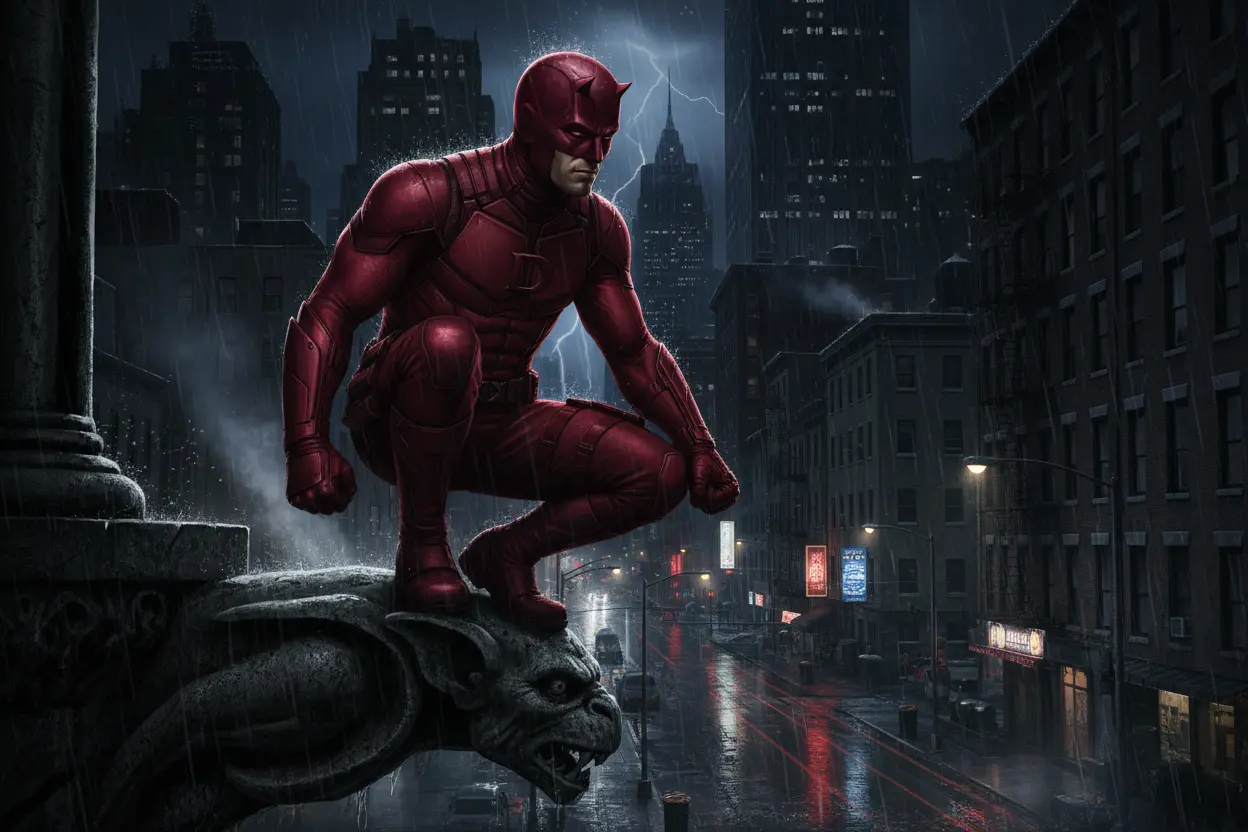
He introduced a noir aesthetic that emphasized shadows, rain-slicked streets, and the moral ambiguity of the night.
Hell’s Kitchen became a place of urban decay, where the law was often as corrupt as the criminals.
We watched Matt struggle with the weight of his dual life, balancing his duties as a lawyer and a vigilante.
Miller pushed the character to his limits, making us question if Matt was truly a hero or just a broken man.
The narrative shifted from simple superheroics to a complex study of trauma and resilience.
This version of Daredevil felt human, vulnerable, and terrifyingly real to every reader who picked up the book.
We believe this dark reinvention is what ultimately saved the character from cultural irrelevance.
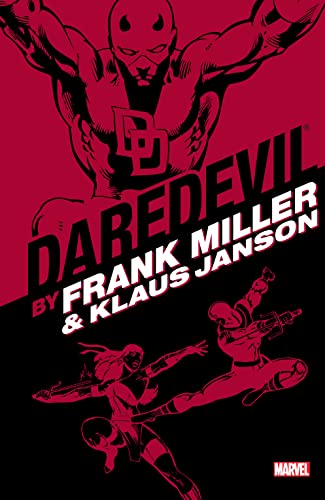
A classic Marvel hero redefined by one of comics’ greatest visionaries! Frank Miller’s spellbinding scripts and pulse-pounding pencils mark one of Daredevil’s greatest eras – but will the Kingpin and Bullseye’s efforts rob the Man Without Fear of everything he holds dear? Featuring the first appearances of Elektra, Stick and the Hand! The daring discovery that drew Ben Urich into Daredevil’s domain of darkness! And such forgotten-yet-formidable foes as Death-Stalker and the Gladiator! Traditional super-heroics mix effortlessly with mysterious martial artistry, doomed romance and dark personal drama. Take a rare look at the formative years of a brilliant comic-book creator and the series that made him famous. Guest-starring the Hulk, the Avengers, and Power Man and Iron Fist!
Elektra and the Legacy of Iconic Characters
One cannot discuss this era without mentioning the introduction of Elektra Natchios, the deadliest assassin in comics.
Her debut in issue #168 changed the trajectory of Matt’s life forever, introducing a tragic romance like no other.
We saw Elektra as more than just a love interest; she was Matt’s mirror image and his greatest temptation.
Their relationship was built on a foundation of shared pain and conflicting ideologies that kept us on edge.
Miller also masterfully reimagined the Kingpin, Wilson Fisk, turning him into Daredevil’s ultimate arch-nemesis.
Formerly a Spider-Man villain, Fisk became the shadow ruler of New York under Miller’s meticulous pen.
We also met Stick, the blind mentor who taught Matt how to weaponize his disability into a deadly gift.
The supporting cast, including Foggy Nelson and Ben Urich, were given new layers of depth and professional stakes.
- Elektra: The tragic lost love and lethal ninja.
- Bullseye: The psychopathic marksman who became a true threat.
- Kingpin: The cold, calculating mastermind of the underworld.
- Stick: The harsh teacher of the Chaste martial arts.
These characters weren’t just tropes; they were pillars of a new, complex mythology that Miller was building.
The death of Elektra remains one of the most emotionally devastating moments in the history of graphic novels.
We still feel the impact of that loss every time we revisit the legendary issue #181.
The Revolutionary Art of Miller and Janson
The visual language of this run was nothing short of a technological leap for the comic book industry.
Frank Miller’s layouts were heavily influenced by cinematic techniques and the rhythm of Japanese manga.
We noticed how he used silence and pacing to build incredible suspense before a single punch was thrown.
Klaus Janson’s inking provided the necessary grit, adding textures that made the world feel dirty and lived-in.
Their collaboration created a visual aesthetic that was sharp, aggressive, and perfectly suited for a crime story.
I am always struck by how they used negative space and heavy shadows to hide and reveal information.
The action sequences were dynamic, focusing on the flow of movement rather than static, heroic poses.
We can see the influence of Will Eisner in the way Miller integrated titles and sound effects into the environment.
| Artistic Element | Impact on the Reader |
|---|---|
| Cinematic Pacing | Creates a “movie-like” experience on the page. |
| Heavy Inking | Enhances the noir atmosphere and sense of dread. |
| Manga Influence | Introduced faster, more fluid combat choreography. |
| Urban Detail | Made Hell’s Kitchen feel like a real, decaying city. |
This art style didn’t just accompany the story; it dictated the emotion of every single panel.
We believe that without Janson’s specific touch, Miller’s vision wouldn’t have reached its full, gritty potential.
Even today, these pages look modern and sophisticated compared to many contemporary releases.



Deep Themes and Grey Morality
Miller’s run is a masterclass in exploring the moral gray areas that define the human condition.
We are constantly presented with the conflict between religious faith and the necessity of violence.
Matt Murdock’s Catholic guilt is a recurring theme that adds a profound layer of internal conflict.
I love how the story asks if justice can truly exist within a system that is fundamentally broken.
The line between a hero and a vigilante is blurred until it almost disappears entirely.
We see Matt making choices that are morally questionable, driven by revenge and a sense of desperation.
The characters are not “good” or “bad”; they are complex beings driven by trauma, ego, and survival.
- Justice vs. Law: The struggle of a lawyer who breaks the law to save it.
- Redemption: The possibility of finding light after falling into the darkness.
- Sacrifice: What is one willing to lose to protect the innocent?
- Obsession: The dangerous drive that fuels both Bullseye and Daredevil.
These themes elevated the comic from a simple “good vs. evil” tale to a philosophical exploration.
We are forced to confront the darkness within ourselves as we follow Matt through the alleys of his soul.
It is this moral complexity that makes the work resonate with adult readers decades after its release.
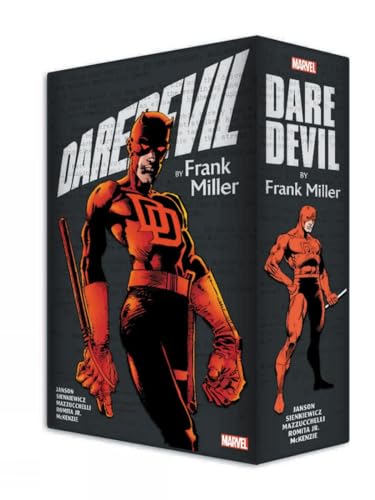
Visionary creator Frank Miller’s complete saga of Matt Murdock and his first love, the lethal assassin Elektra Natchios – in a single exhilarating box set! One of the greatest runs not just in Daredevil history but in all of comics, Miller also introduced Stick and the Hand to the DD mythos and established the Kingpin and his sadistic marksman Bullseye as Matt’s deadliest foes. Plus the stunning graphic novel LOVE & WAR, Miller’s revolutionary revisit of the origin of the Man Without Fear, the starling continuation of Elektra’s story, and much more!
Daredevil by Frank Miller Review: Our Verdict!
After analyzing every aspect of this run, we have reached a definitive conclusion about its quality.
This is not just a great comic; it is the foundation upon which all modern Daredevil stories are built.
The storytelling is tight, purposeful, and uncompromising, refusing to offer easy answers to difficult problems.
We believe the strengths of this work far outweigh any minor dated elements from the early 80s era.
Pros:
- Unmatched Character Development: Matt Murdock becomes a three-dimensional icon.
- Groundbreaking Visuals: The art style redefined the look of street-level superheroes.
- Narrative Depth: It treats the audience with respect, offering mature and complex themes.
- Iconic Villains: The definitive versions of Kingpin and Bullseye were born here.
Cons:
- Some early dialogue can feel a bit melodramatic by today’s hyper-realistic standards.
- The transition between the artist-only and writer-artist phases is slightly noticeable.
In our expert opinion, this run earns a perfect score for its historical importance and sheer quality.
If you want to understand why Daredevil is a top-tier character, you must start with Frank Miller.
We consider this the “Holy Grail” for collectors and fans of the crime-superhero subgenre.
It is a masterpiece of sequential art that every fan of the medium should own and study.
Lasting Impact and Cultural Influence
The ripples of Frank Miller’s work on Daredevil are still felt across the entire pop culture landscape.
He paved the way for the “Grim and Gritty” era of the 1980s, influencing classics like Watchmen.
Without this run, we likely wouldn’t have seen Miller’s later masterpiece, The Dark Knight Returns.
We can see the direct DNA of this era in the critically acclaimed Daredevil series on Netflix.
The show’s tone, its focus on Catholicism, and its brutal fight choreography all stem from Miller’s vision.
I see his influence in every street-level hero who struggles with their inner darkness and moral limits.
Miller proved that comics could be sophisticated literature, capable of tackling deep psychological themes.
The character of Elektra has become a cultural icon, appearing in movies, spin-offs, and countless homages.
We believe this run changed the industry’s perception of what a superhero comic could achieve.
It moved the medium away from children’s entertainment and toward a mature, artistic expression.
The legacy of Miller and Janson is immortal, etched into every shadow of Hell’s Kitchen.
We are still living in the world they built, and for that, every comic book fan is forever grateful.
The Immortal Legacy of Hell’s Kitchen’s Devil
Reflecting on the journey that we made through the pages of Daredevil by Frank Miller, it’s clear that this isn’t just a comic book; it’s a transformative experience. I see in it the essence of what comics can achieve when art and narrative merge in dark perfection.
If you haven’t yet delved into this masterpiece, we encourage you to do so. What’s your favorite scene or most striking character from this run? Share your thoughts in the comments below and let’s continue the conversation!
FAQ – Common Questions About Daredevil by Frank Miller
We have compiled the most frequent questions readers ask when diving into this legendary run to help you decide if it belongs on your shelf.
We highly recommend starting here, as Miller redefined the character’s core identity. This era introduces essential elements like Elektra, the Hand, and the gritty atmosphere that defines the “Man Without Fear” today.
We consider it definitive because Miller moved away from campy superhero tropes to embrace a dark noir aesthetic. His storytelling established the moral complexity and the psychological depth that every subsequent writer has had to follow.
While Miller wrote “Born Again,” it is often sold as a separate graphic novel. Our Daredevil by Frank Miller review focuses primarily on his initial landmark run as writer and artist, which laid the essential groundwork for “Born Again.”
Before this era, Kingpin was largely a Spider-Man foe, but we saw Miller transform him into Daredevil’s ultimate arch-nemesis. He turned Wilson Fisk into a cold, calculating crime lord who rules Hell’s Kitchen with an iron fist.
Not at all; in fact, we find the cinematic layouts and Klaus Janson’s moody inking to be timeless. The visual storytelling was revolutionary for its time and remains a masterclass in building tension and shadow in comics.