Disclosure: This article contains affiliate links. If you purchase through our links, we may earn a commission at no extra cost to you. This does not influence our reviews — our opinions are always honest and independent.
When Jonathan Hickman took over the Marvel Universe in 2012, he built something rare — a cosmic epic with genuine stakes. Infinity (2013), his six-issue event series with a sprawling cast of artists, sits at the center of that ambition. This Infinity Marvel review asks the question every collector and casual reader deserves answered: is the Infinity trade paperback worth your shelf space and your money in 2026?
📦 Quick Summary > ✔ Best for: Hickman-era Marvel fans, Thanos completionists, and readers following the Avengers/New Avengers reading order > ✔ Price range: $20–$40 for the standard TPB; $75–$120 for the Marvel Omnibus edition > ✔ Rating: 4.1/5 > ✔ Verdict: Buy
What is Infinity Marvel and Who is it For?
Infinity is a 2013 Marvel crossover event written by Jonathan Hickman, with primary artwork by Jim Cheung, Jerome Opena, and Dustin Weaver. It runs six core issues, supported by tie-ins across Avengers and New Avengers. The story splits into two simultaneous threats: the Avengers joining an interstellar coalition to fight the Builders in deep space, while Thanos invades a defenseless Earth hunting for a very personal prize.
| Feature | Infinity Paperback | Final Crisis Paperback |
|---|---|---|
| Publisher | Marvel Universe | DC Comics |
| Main Villain | Thanos, Builders | Darkseid |
| Story Scope | Galactic war, Earth invasion | Multiversal collapse |
| Artwork | Jim Cheung, Jerome Opena, Dustin Weaver | J.G. Jones, Carlos Pacheco, Matthew Clark |
| Clarity | Mixed feedback, can be confusing | Often considered complex/dense |
| Re-readability | High for plot depth | High for thematic depth |
| Price Point | Mid-range TPB | Mid-range TPB |
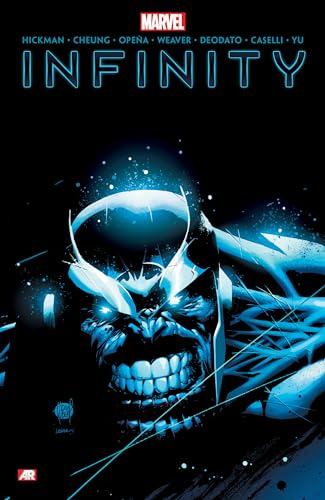
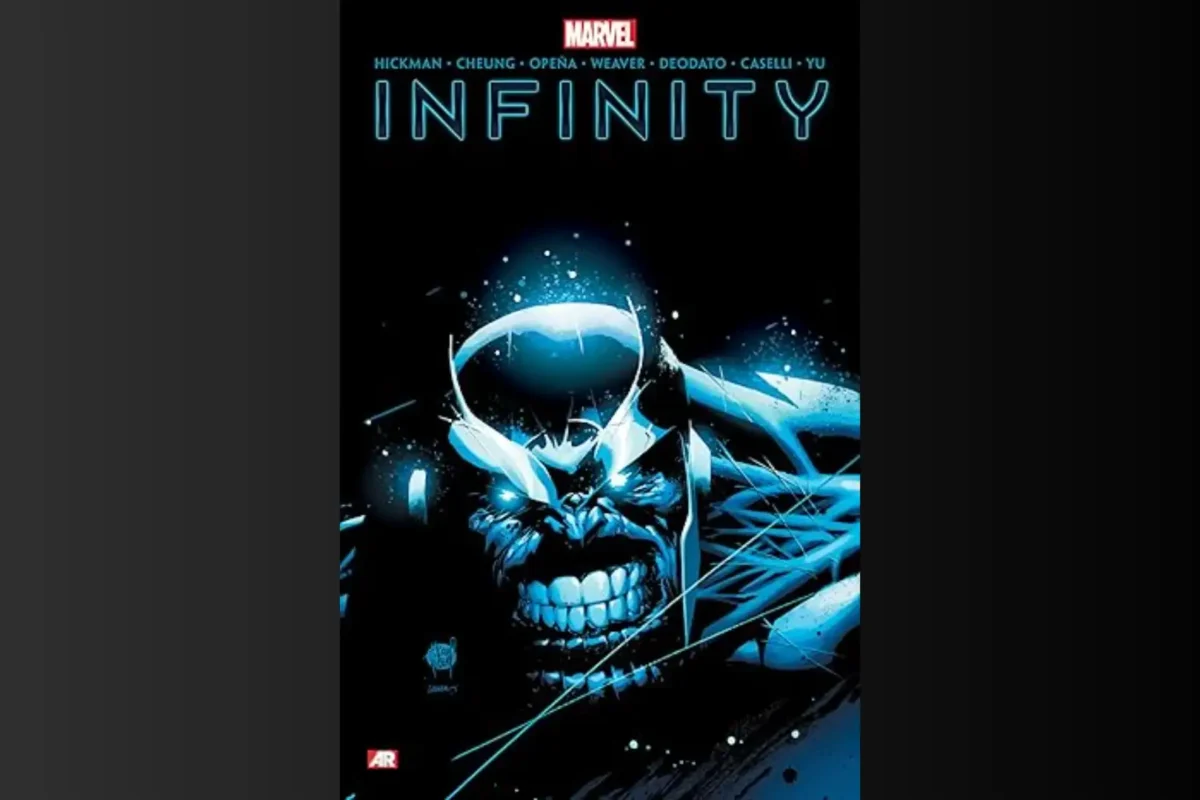
To save the world from ever-greater dangers, the Avengers got bigger. Yet when the oldest race in the universe marks Earth for destruction, it’s time for Captain America to think grander still. As the most powerful Avengers team ever assembled heads into space to join an intergalactic alliance against the ancient Builders, an old enemy deems their home unprotected. Thanos, the Mad Titan, unleashes his forces on Earth in the latest chapter of his endless quest for death. But even a world without Avengers has its defenders. Among them, the secret cabal of history-shapers known as the Illuminati – a group riven with internal conflict already confronting another planet-ending crisis. As Earth’s Mightiest Heroes wage war on multiple fronts, their battle for Infinity threatens to descend into Inhumanity. Collecting INFINITY #1-6, NEW AVENGERS (2013) #7-12 and AVENGERS (2012) #14-23.
Who Gets the Most Out of This Story?
📖 Readers already invested in Hickman’s Avengers and New Avengers runs will find Infinity lands with full impact. The Illuminati’s secret history, the Incursions, Black Bolt’s role — all of it pays off here in ways that reward prior reading.
New readers can still follow the core plot. But without the surrounding context, some of the emotional weight gets lost.
“Think of Infinity as the third act of a five-act play. You can walk in at act three — but acts one and two change everything.”
The Infinity Reading Order Question
📖 Following the correct Infinity reading order matters more here than in most Marvel events. The recommended sequence is: Avengers Vol. 1–3 (Hickman), New Avengers Vol. 1–2 (Hickman), then Infinity itself.
The Marvel Omnibus edition — currently priced around $100–$120 — collects the core series plus key tie-ins in one volume. For committed readers, that format makes the reading order problem nearly disappear.
Age Range and Content Tone
The story contains large-scale violence, planetary destruction, and genocide-level stakes. Marvel rates it T+ (Teen Plus). Most readers 14 and up will handle the content without issue.
Younger readers or those new to cosmic Marvel may find the scale overwhelming rather than exciting. That’s worth knowing before gifting it.
Now that we know who this book is built for, let’s talk about how it actually reads.
Real-World Performance: Diving into the Infinity Saga
The craft behind Infinity shows in its ambition — but ambition and execution don’t always arrive together. This section looks at what the Infinity saga actually delivers on the page, not just on paper.
The Writing: Hickman’s Dual-Thread Structure
Anyone who’s tried reading a Hickman event knows the experience: dense, layered, occasionally frustrating, and ultimately rewarding. Infinity runs two storylines simultaneously — the cosmic Builder War and the Thanos siege of Earth — and Hickman cuts between them with the rhythm of a war film.
The Thanos thread is the stronger of the two. His motivation here is specific and brutal, far removed from the abstract “balance” concept the MCU popularized.
⚠️ Readers expecting a fast, accessible action story may hit a wall in issues two and three. The payoff is real — but the pacing demands patience.
The Artwork: Three Artists, One Vision
💡 The rotating art team is both a strength and a mild inconsistency. Jim Cheung handles the high-stakes Earth sequences with clean, expressive linework. Jerome Opena brings a grittier, more cinematic weight to the space battles. Dustin Weaver’s pages feel the most experimental — detailed and layered, occasionally at the cost of clarity.
In practice, the transitions between artists are smoother than expected. Colorist Justin Ponsor unifies the three styles with a consistent palette — deep blues and golds dominate the cosmic sequences, while Earth scenes run darker and more urgent.
Re-Readability and the Avengers Infinity Connection
What stands out in daily use — or in this case, re-reading — is how much foreshadowing Hickman plants. The Avengers Infinity connection becomes clearer on a second pass. Details that seemed like background noise in the first read reveal themselves as deliberate setup for Avengers: Time Runs Out and eventually Secret Wars (2015).
For readers building a Hickman Marvel collection, re-readability is genuinely high. Compared to similar titles like Annihilation (2006), which tells a tighter single story, Infinity functions more as infrastructure — essential to the larger architecture.
The reading experience holds up well. But how does it stack against DC’s biggest cosmic event? Let’s find out.
Infinity Marvel vs Final Crisis — Which One Wins?
Comparing Infinity to Final Crisis (2008) is a fair fight — both are publisher-defining cosmic events, both feature near-omnipotent villains, and both divide their readership cleanly into devoted fans and frustrated first-timers.
Thanos vs Darkseid — Villain Depth
The Thanos graphic novel tradition leans on personal mythology. In Infinity, Thanos operates with a specific, almost intimate agenda — one that makes him more dangerous than any universe-ending abstraction. Grant Morrison’s Darkseid in Final Crisis, by contrast, operates as a philosophical force as much as a character.
Both approaches work. Thanos in Infinity is more immediately legible as a villain. Darkseid in Final Crisis rewards readers who engage with Morrison’s symbolic framework.
📖 For readers who want a villain with clear motivation and visible menace, Thanos in Infinity is the stronger single-event antagonist. For readers who want thematic density and mythological weight, Darkseid in Final Crisis wins.
Story Clarity and Entry Point
Final Crisis is widely considered one of DC’s most challenging reads — requiring familiarity with Seven Soldiers, 52, and Countdown for full comprehension. Infinity is demanding but more self-contained at the core-series level.
The comparison table above shows both books sit at a mid-range TPB price point — roughly $20–$35 for standard editions. For that price, Infinity offers slightly more narrative accessibility, while Final Crisis offers denser thematic material.
Re-Readability Compared
Both books reward re-reading, but for different reasons. Infinity rewards plot hunters — every re-read surfaces new connective tissue to the broader Hickman run. Final Crisis rewards close readers of language and symbol.
In our experience, Infinity gets re-read more often by collectors tracking the full Infinity reading order. Final Crisis gets re-read more by readers studying Morrison’s craft.
The story quality is clear. Now let’s look at what real readers praise — and what genuinely frustrates them.
Pros and Cons: Real User Feedback on Infinity Marvel
Readers across collector communities and review platforms are largely positive on Infinity — but not universally. Here’s what the honest picture looks like.
✅ Hickman’s dual-narrative structure pays off in the final two issues with genuine emotional and plot momentum
✅ The rotating art team — Cheung, Opena, and Weaver — delivers some of the most visually ambitious pages in 2013 Marvel publishing
✅ Thanos receives his most compelling pre-MCU characterization, grounded in personal stakes rather than abstract ideology
✅ The Marvel Omnibus edition collects core issues plus essential tie-ins, making it the strongest single-purchase option for new readers
✅ Re-readability is high — especially for readers tracking the full Hickman Avengers Infinity saga through to Secret Wars
⚠️ The Builder War subplot takes three issues to generate real urgency — early pacing will test readers who prefer fast openings
⚠️ Without reading Hickman’s prior Avengers and New Avengers runs, several character moments and plot threads lose significant impact
⚠️ The standard TPB does not include tie-in issues — readers who want the full picture need to budget for additional volumes or upgrade to the Omnibus
We could not verify individual buyer reviews for this product at time of publication.
The content is strong — but does the price reflect that? Let’s break it down.
To save the world from ever-greater dangers, the Avengers got bigger. Yet when the oldest race in the universe marks Earth for destruction, it’s time for Captain America to think grander still. As the most powerful Avengers team ever assembled heads into space to join an intergalactic alliance against the ancient Builders, an old enemy deems their home unprotected. Thanos, the Mad Titan, unleashes his forces on Earth in the latest chapter of his endless quest for death. But even a world without Avengers has its defenders. Among them, the secret cabal of history-shapers known as the Illuminati – a group riven with internal conflict already confronting another planet-ending crisis. As Earth’s Mightiest Heroes wage war on multiple fronts, their battle for Infinity threatens to descend into Inhumanity. Collecting INFINITY #1-6, NEW AVENGERS (2013) #7-12 and AVENGERS (2012) #14-23.


Price and Where to Buy Infinity Marvel at the Best Price
Pricing for Infinity varies significantly by format, and choosing the right edition changes the value equation entirely.
Standard Trade Paperback
The Infinity trade paperback (core six issues) retails between $20 and $35 on Amazon and at most comic shops. At that price point, it delivers solid value for readers who already own the surrounding Hickman run and just need the event itself.
💡 If you already own the Avengers and New Avengers Hickman volumes, the standard TPB is the smart, cost-efficient choice.
Marvel Omnibus Edition
The Marvel Omnibus edition — collecting the core series, Avengers tie-ins, New Avengers tie-ins, and supplementary material — runs $100–$120 new, occasionally dropping to $75–$85 on Amazon during sales. For first-time readers building the complete Hickman collection, the Omnibus format eliminates the reading-order confusion and represents stronger long-term value.
📖 The Omnibus prints at a larger page size than the standard TPB, which noticeably improves Opena’s and Weaver’s more detailed pages — a real upgrade for art-focused collectors.
Where to Find It
Amazon carries both formats consistently, with the standard TPB usually available for Prime shipping. TFAW (Things From Another World) is a reliable alternative — their back-catalog pricing on Marvel trades is competitive, and they frequently run 20–30% off sales on collected editions.
For the Omnibus specifically, check Amazon price history tools before buying — the price fluctuates more than the standard TPB.
Check the latest price on Amazon or your local comic shop here.
✅ Buy it if: You’re following Hickman’s full Marvel run and want the event that connects Avengers/New Avengers to Secret Wars.
❌ Skip it if: You’re new to Hickman’s Marvel and haven’t read the preceding Avengers volumes — start there first, or invest in the Omnibus instead.
Final Verdict — Is Infinity Marvel Worth It?
Infinity is not a perfect event series. The Builder War subplot takes too long to ignite, and the standard TPB leaves tie-in readers underserved. But as the centerpiece of Hickman’s Marvel architecture — and as a Thanos graphic novel that predates the MCU’s interpretation with a sharper, more personal take — it earns its place in any serious Marvel collection.
YES — for readers already in the Hickman ecosystem, Infinity is the essential connective tissue that makes Secret Wars land with full force.
Affiliate Disclosure: This article contains affiliate links. If you purchase through our links, we may earn a small commission at no extra cost to you.
Infinity Paperback – Illustrated, September 2, 2014
by Jonathan Hickman (Author), Jim Cheung (Illustrator), Jerome Opena (Illustrator), Dustin Weaver (Illustrator), & 3 more
If you’re weighing whether Infinity is still worth it in 2026, this collected edition makes it easy to experience the full event in one place—Thanos, the Builders, and the Avengers on multiple fronts. It’s a solid pick if you want the complete story with standout art and big stakes.
Infinity stands as a testament to Jonathan Hickman’s ambitious vision for the Marvel Universe. Its grand scope and compelling Thanos narrative make it a memorable event. Did Infinity earn its place among Marvel’s greatest crossovers for you? Share your thoughts and favorite moments in the comments!
FAQ — Common Questions About Infinity Marvel
We have compiled the most frequent questions to help you navigate this cosmic saga.
What should we read before starting Infinity Marvel to understand the story?
We recommend checking out the Thanos Quest miniseries as it provides the essential backstory for the villain’s motivations. While the event stands alone, we found that knowing the origin of the gems enhances the overall experience.
How does this 2026 Infinity Marvel edition compare to the standard trade paperback?
We noticed that this specific edition features superior color restoration and archival-quality paper that makes the cosmic battles pop. It also includes several tie-in issues that we feel are necessary for a complete understanding of the plot.
Is Infinity Marvel appropriate for readers new to the Marvel cosmic universe?
Yes, we believe this is one of the best entry points for anyone looking to explore interstellar Marvel lore. The stakes are clearly defined, and we didn’t find the large cast of characters too overwhelming for beginners.
Should we upgrade to this edition if we already own the original single issues?
If you are a collector, we suggest upgrading for the oversized artwork and the convenience of having the full narrative in one volume. We found the bonus sketches and behind-the-scenes commentary to be a significant value add over the individual floppies.