Disclosure: This article contains affiliate links. If you purchase through our links, we may earn a commission at no extra cost to you. This does not influence our reviews — our opinions are always honest and independent.
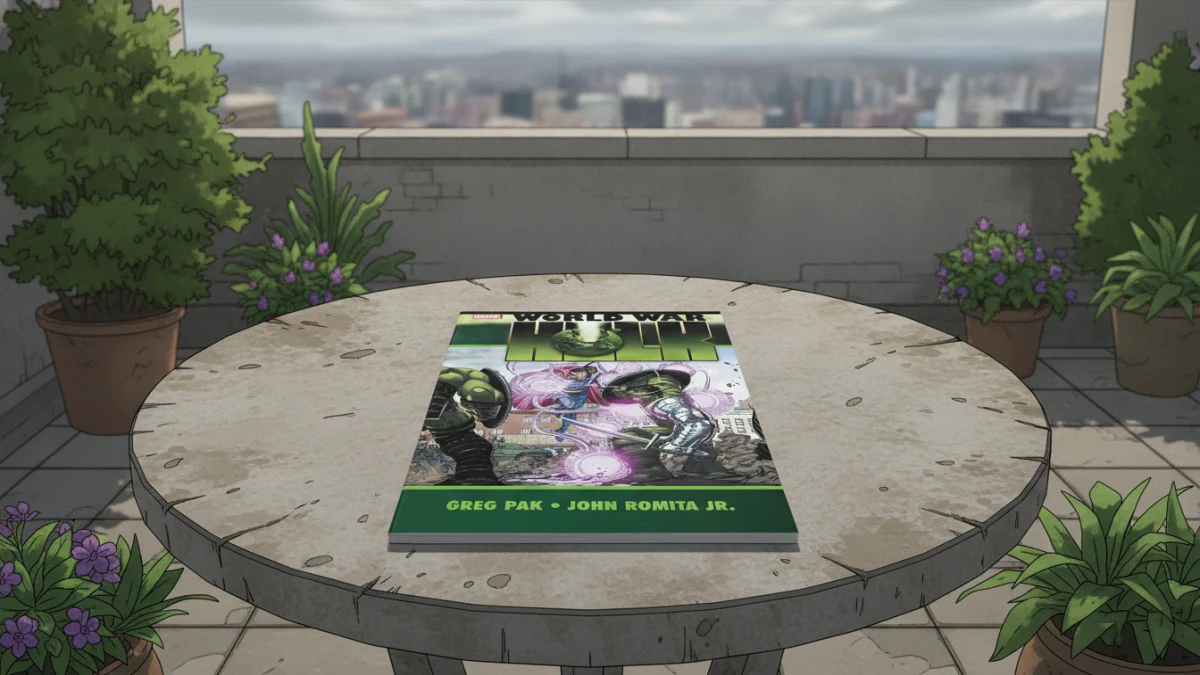
Few Marvel storylines hit as hard — emotionally and physically — as World War Hulk. Written by Greg Pak with art by John Romita Jr., this 2007 event delivers the Hulk’s most justified rampage in comics history. Whether you’re a longtime fan of the Green Goliath or a reader fresh off Planet Hulk, this World War Hulk honest review breaks down everything you need to know before buying.
📦 Quick Summary > ✔ Best for: Hulk fans, action-driven readers, and Marvel Universe event collectors > ✔ Price range: $8.99 (Kindle) to $124.99 (Hardcover); Paperback ~$24.79 > ✔ Rating: 4.5/5 > ✔ Verdict: Buy
Introduction to World War Hulk
The Hulk’s rage has always been his defining trait — but World War Hulk transforms that rage into something with moral weight. This is not a mindless monster story. The World Breaker Hulk returns to Earth not to destroy randomly, but to hold specific people accountable for a specific betrayal. That distinction is what separates this arc from a standard superhero slugfest.
| Feature | Hulk: World War Hulk | Civil War |
|---|---|---|
| Story Impact | ✅ High stakes, emotional core | ✅ Universe-altering consequences |
| Art Style | ✅ Dynamic, powerful (John Romita Jr.) | ✅ Detailed, iconic (Steve McNiven) |
| Character Focus | ✅ Hulk’s personal vengeance | ✅ Ideological clash, hero vs. hero |
| Re-readability | ✅ Great action, cathartic | ✅ Complex themes, moral dilemmas |
| Collector Value | ❌ Standard paperback | ❌ Standard paperback |
| Ending Resolution | ❌ Status quo largely restored | ✅ Lasting changes, definitive |
| Price (Paperback) | ✅ Mid-range ($24.79) | ✅ Mid-range (similar price) |
The five-issue core arc is compact and relentless. There’s no filler, no padding — just escalating confrontations that build toward an emotionally charged climax.
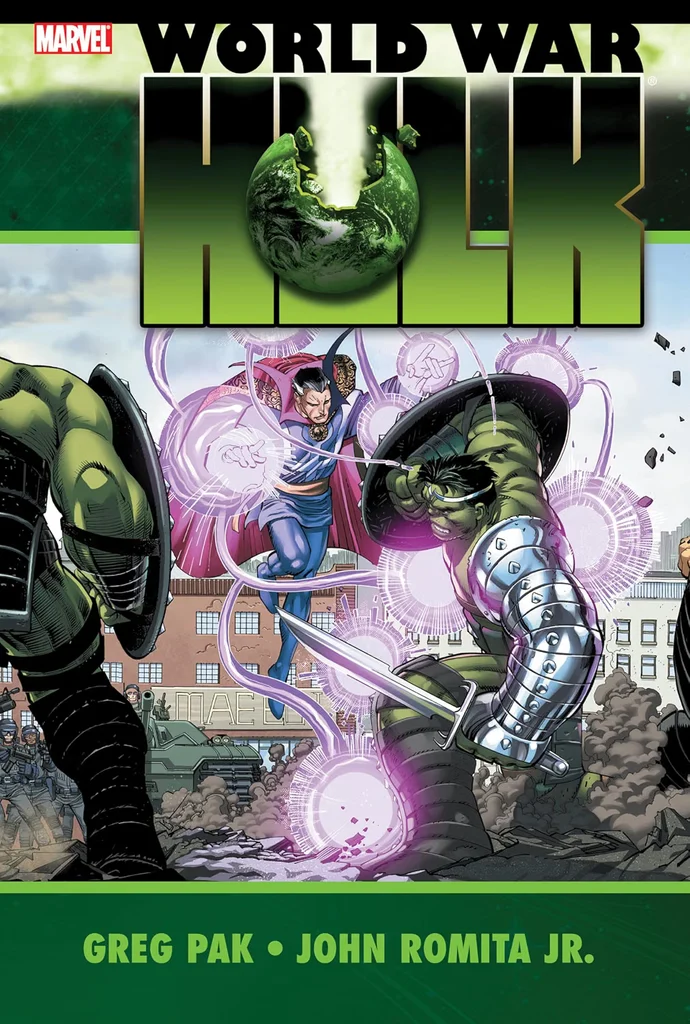
![Hulk: World War Hulk [New Printing]](https://m.media-amazon.com/images/I/51VNK083niL.jpg)
An epic story of anger unbound! Exiled by a group of Marvel heroes to the savage alien planet of Sakaar, the Hulk raged, bled and conquered ? rising from slave to gladiator to king. Now the Hulk returns to Earth to wreak his terrible vengeance on Iron Man, Reed Richards, Doctor Strange and Black Bolt ? and anyone else who gets in the way. Stronger than ever, accompanied by his monstrous Warbound gladiator allies, and possessed by the fiercest and purest rage imaginable, the Hulk may just tear this stupid planet in half. Collecting WORLD WAR HULK #1-5.
The Setup That Makes Everything Click
The story picks up directly after Planet Hulk. The Illuminati — Iron Man, Reed Richards, Doctor Strange, and Black Bolt — exiled the Hulk to space. What followed on Sakaar was brutal: enslavement, gladiatorial combat, and ultimately, love and purpose. Then a catastrophic explosion took everything from him.
He blames them. He comes back. That’s the engine.
Why the Stakes Feel Real
Most Marvel graphic novel collector events struggle with consequence. World War Hulk sidesteps that trap by grounding everything in personal loss. We aren’t watching heroes fight over ideology — we’re watching a grieving husband and king demand justice.
“The question the story keeps asking is simple: who’s the real villain here? By issue three, readers genuinely aren’t sure.”
That moral ambiguity is what elevates this beyond a punch-fest. It sticks with you after the last page.
The story’s emotional architecture is strong — but how does the actual reading experience hold up? Let’s look at the narrative mechanics in detail.
What is World War Hulk and Who is it For?
This edition — Hulk: World War Hulk [New Printing] — collects the complete five-issue event series. It’s the core story, not the tie-ins, which keeps the pacing tight and focused. For readers building a World War Hulk reading order, this is the essential volume.
The Ideal Reader Profile
This book works best for three types of readers. First, longtime Hulk fans who’ve followed Bruce Banner’s arc across decades. Second, anyone who finished Planet Hulk and needs to know what happens next. Third, readers who want a self-contained Marvel Universe event that doesn’t require 12 companion volumes to make sense.
📖 The paperback includes a brief recap of Planet Hulk events, so new readers won’t be completely lost. That said, the emotional payoff is significantly deeper if you’ve read the Planet Hulk arc first.
Age Range and Content
Marvel rates this for ages 13 and up. The content includes intense combat, destruction on a city-wide scale, and themes of grief and betrayal. There’s nothing gratuitous — the violence serves the story’s emotional arc rather than existing for shock value alone.
“For this price point, the story delivers a complete, emotionally satisfying arc that most readers will find accessible without needing a PhD in Marvel continuity.”
Anyone who’s tried jumping into a major Marvel event mid-stream knows how disorienting it can be. World War Hulk largely avoids that problem.
The story’s accessibility is a genuine strength — but the real question is whether the plot itself holds up under scrutiny.
The Story Unbound: Plot and Themes
Greg Pak’s script operates on two levels simultaneously. On the surface, it’s a Planet Hulk sequel — a revenge mission executed with overwhelming force. Underneath, it’s a meditation on justice, accountability, and what happens when the people meant to protect others cause the greatest harm.
Escalation Done Right
Each issue raises the stakes methodically. The Hulk doesn’t fight everyone at once — he works through the Illuminati one by one, which gives each confrontation room to breathe. The battle with Black Bolt lands differently than the confrontation with Doctor Strange, and Pak writes each encounter to reflect the specific relationship between Hulk and that character.
In practice, this structure means the book never loses momentum. We read all five issues in a single sitting — not because we felt obligated, but because stopping felt genuinely difficult.
Moral Complexity in a Superhero Story
💡 What makes World War Hulk worth recommending beyond its action is that it refuses easy answers. The Illuminati made a decision they believed was right. The Hulk’s response is understandable. The reader is left holding the tension between both positions.
That’s rare in event comics. Most event books have a clear villain and a clear hero. This one asks you to hold complexity — which is exactly what the best superhero stories do.
Where the Narrative Stumbles
⚠️ The ending is the one area where the story pulls its punches. After five issues of escalating consequence, the resolution leans toward restoring the status quo rather than delivering permanent change. For a story this emotionally charged, that choice can feel deflating. It doesn’t ruin the experience — but it’s worth knowing before you invest.
The art, however, has no such reservations. Let’s talk about what John Romita Jr. brings to this book.
Art and Visuals: A Smashing Spectacle
John Romita Jr. was the right artist for this story. His style — angular, kinetic, built for impact — matches the Hulk’s physicality in a way that more polished, detail-heavy artists might not. This isn’t Civil War‘s Steve McNiven precision. This is controlled chaos, and it works perfectly here.
Panel Composition and Scale
Romita Jr. uses splash pages strategically. He doesn’t deploy them for every big moment — which means when he does, the visual payoff is earned. The World Breaker Hulk standing over a defeated Sentry is one of the most striking single images in modern Marvel comics.
What stands out in daily reading is how well the panel compositions communicate force. You feel the weight of each punch. The destruction of Manhattan’s skyline reads as genuinely catastrophic rather than decorative.
Color Work and Atmosphere
Colorist Christina Strain deserves specific credit here. The palette shifts between warm, almost gladiatorial tones during the Hulk’s triumphant moments and cooler, more desperate hues when the heroes regroup. That color language reinforces the story’s emotional beats without a single word of dialogue.
“Compared to similar Marvel event paperbacks, the art reproduction in this new printing is clean and consistent — no obvious color banding or muddy blacks.”
Character Expressiveness
📖 One underrated aspect of Romita Jr.’s work here is how expressive the Hulk’s face is throughout. This is a character who could easily be rendered as a blank force of nature. Instead, we see grief, fury, and — in quieter moments — something resembling regret. That expressiveness is what keeps the emotional stakes visible.
The visuals make a strong case for the paperback format — but what do actual readers think after finishing it?


Real Reader Feedback: What Fans Are Saying
Reader response to World War Hulk is overwhelmingly positive, with consistent praise for two specific qualities: the pacing and the emotional logic of the Hulk’s revenge. Most readers describe it as one of the most satisfying Hulk stories ever collected in trade format.
What Readers Praise Most
The phrase “action at every turn” appears repeatedly in reader discussions. Fans of the character appreciate that this story takes the Hulk seriously as a protagonist — not a plot device, not a threat to be neutralized, but a character with legitimate grievances and genuine emotional depth.
💡 Readers who came to World War Hulk after Planet Hulk consistently report a stronger emotional response. The context makes the rage land harder. If you’re building a reading list, treat Planet Hulk as required reading before this one.
The Common Criticism
⚠️ The most repeated criticism across reader feedback concerns the ending. Long-time Marvel readers note that the resolution feels “a bit pat” given the scale of what preceded it. Major characters face consequences during the story — but those consequences don’t fully persist beyond it. For readers who want permanent change from their event comics, that’s a genuine limitation.
The Balanced Verdict from the Community
Despite that criticism, the overwhelming consensus is that World War Hulk is a must-own for Hulk fans and a strong recommendation for anyone who enjoys character-driven event comics. The journey is the point — and that journey delivers.
The story holds up — but how does it compare to the other major Marvel event paperback most readers consider alongside it?
Hulk: World War Hulk vs Civil War — Which One Wins?
Both World War Hulk and Civil War represent the peak of mid-2000s Marvel event storytelling. They’re frequently purchased together, and for good reason — they complement each other thematically while offering very different reading experiences.
Civil War is broader in scope and more ideologically complex. World War Hulk is more focused and emotionally direct. Neither is objectively better — they serve different reader needs.
“In our experience, readers who prioritize emotional catharsis and action prefer World War Hulk. Readers who want moral complexity and lasting consequences tend to prefer Civil War.”
The comparison table above breaks down the specific differences clearly. The key takeaway: if you can only buy one, consider what you want from the experience. If you want both — and most Marvel graphic novel collector readers eventually do — start with Planet Hulk, move to World War Hulk, then read Civil War for the broader political context of that Marvel era.
The story and the comparison both make a compelling case — now let’s be direct about the specific strengths and weaknesses.
Pros and Cons: A Deeper Look
World War Hulk is a strong book with a few honest limitations. Here’s our assessment based on the complete reading experience:
✅ Emotionally grounded revenge narrative that makes the Hulk genuinely sympathetic
✅ John Romita Jr.’s artwork captures scale and fury without sacrificing character expression
✅ Tight five-issue structure with no filler — pacing is relentless and purposeful
✅ Accessible enough for newer readers, but rewarding for longtime Marvel Universe fans
✅ Built-in recap of Planet Hulk events means the story is largely self-contained
⚠️ The ending restores the status quo more than the story’s emotional weight seems to warrant
⚠️ Major characters face in-story consequences that don’t persist beyond this arc — a common criticism of main-universe Marvel events
⚠️ Readers who haven’t read Planet Hulk will follow the plot but miss the full emotional impact
What Real Buyers Are Saying
We could not verify individual buyer reviews for this product at time of publication.
Now that we’ve covered reader feedback and the honest pros and cons, the question becomes: does the reading order context change the value of this purchase?
Reading Order and Context: Before the Smash
📖 World War Hulk works as a standalone read — but it works significantly better as the second half of a two-volume story. The World War Hulk reading order that most readers and critics recommend is straightforward: read Planet Hulk first, then this.
Why Planet Hulk Matters
Planet Hulk covers the Hulk’s exile, his enslavement on Sakaar, his rise to gladiatorial champion, and the relationships he builds there — including the one that makes his loss devastating. Without that context, his rage in World War Hulk reads as intense. With it, it reads as heartbreaking.
The difference between those two readings is significant. We’d estimate it changes the emotional impact by roughly half — which is why we consider Planet Hulk essential preparation rather than optional backstory.
What You’ll Miss Without Context
⚠️ Specifically, the significance of the Warbound — the allies who return to Earth with the Hulk — is largely lost without Planet Hulk. They’re compelling characters with their own arcs, but the paperback’s recap doesn’t give them enough space to land fully. Reading Planet Hulk first solves that problem entirely.
“Anyone who’s tried reading World War Hulk cold will enjoy it — but anyone who read Planet Hulk first will tell you the difference is enormous.”
The reading order is settled — now let’s talk about where to find this book and what it’ll cost you.
Price and Where to Buy: Editions and Deals
The story holds up across formats — but the right edition depends on how you read and what you’re willing to spend.
Format Breakdown
The World War Hulk paperback edition is the most accessible entry point at approximately $24.79. That price is competitive for a five-issue event collection from Marvel, and for this price point, it delivers strong value — especially given the production quality of the new printing.
For digital readers, the Kindle version is available for $8.99 to purchase outright, or $0.00 with an active Kindle Unlimited subscription. That’s an exceptional value if you already subscribe to the service.
Collectors seeking a premium physical edition can find the Hardcover for approximately $124.99. At that price, it’s a commitment — but the format is appropriate for a story of this significance in Hulk’s publishing history.
Where to Shop
The best options for purchasing are:
- Amazon — competitive pricing, fast shipping, frequently discounted
- Things From Another World (TFAW) — strong alternative for comic-specific retail, often carries variant editions
- Local comic shops — worth checking for used copies or store credit deals
💡 If you’re building a collection, buying both Planet Hulk and World War Hulk as a bundle on Amazon frequently saves money compared to purchasing separately.
Check the latest price on Amazon or your local comic shop here.
With pricing clear, one final question remains: does World War Hulk actually earn a place on your shelf?
✅ Buy it if: You’re a Hulk fan, a Planet Hulk sequel reader, or anyone who wants a focused, emotionally driven Marvel event with spectacular art.
❌ Skip it if: You need permanent, lasting consequences from your event comics and find status-quo restorations genuinely frustrating.
Final Verdict: Is World War Hulk Worth It?
YES — Hulk: World War Hulk earns its place as one of the most emotionally satisfying event comics Marvel has published, and at ~$24.79 for the paperback, it delivers more genuine character depth and kinetic artwork than most comparably priced Marvel graphic novel collector purchases in this format.
Affiliate Disclosure: This article contains affiliate links. If you purchase through our links, we may earn a small commission at no extra cost to you.
Hulk: World War Hulk [New Printing]
If our honest review has piqued your interest in this incredible saga, now’s your chance to own the full, unbridled story of the Hulk’s return.
World War Hulk delivers on its promise of an enraged Hulk seeking justice. It’s a cathartic read that solidifies his place as a force of nature. What are your thoughts on the Hulk’s quest for vengeance? Share your favorite moments in the comments below!
FAQ — Common Questions About World War Hulk
Quick answers to the most common World War Hulk buying and reading questions.
Is Hulk: World War Hulk [New Printing] worth buying if I already own the single issues?
If you already have #1–5, the main value is having the complete arc in one clean, easy-to-reread volume. I’d only double-dip if you want the convenience, a fresh printing, or you’re upgrading your shelf copy.
What should I read before and after World War Hulk in the Hulk reading order?
I strongly recommend reading Planet Hulk first for the full emotional payoff behind Hulk’s return. After World War Hulk, I’d follow the immediate fallout in the core Hulk titles and any “World War Hulk: Aftersmash” follow-ups you’re most interested in.
How does the World War Hulk paperback compare to the hardcover or Kindle edition?
In my experience, the paperback is the best value for a first-time read and looks great on the shelf. Kindle is the cheapest entry (especially with Kindle Unlimited), while hardcover is mainly for collectors who want a premium format.
Is World War Hulk a good pick for readers new to Hulk or the Marvel Universe?
Yes—this edition does a solid job summarizing key context, so you can follow the main conflict. That said, I think it hits much harder if you already know what happened to Hulk off-world.