
Doctor Doom’s New Armor Changes Everything

Doctor Doom’s New Armor Changes Everything – You’re getting a short, clear guide to what that means for the suit and the story. It breaks down cores, sensors, and shields. You’ll see how materials and power boost performance.
Learn the new strength, flight, and energy attacks. Watch how science and sorcery mix. Compare upgrades to older suits, spot quick differences, and see how the armor shakes up the Avengers, Fantastic Four, and key fights, plus notes on art, story, and fan reaction to help you judge the arc.
Key Takeaway
- You need to respect his new power
- You must change your plans
- You will face tougher tech
- You might need new allies
- You should hunt for weak spots

Doom armor tech breakdown: what you need to know
You should know one big thing up front: Doctor Doom’s New Armor Changes Everything. This suit blends science and sorcery, and that mix means your usual tech rules get bent.
Think of it like a Swiss Army knife crossed with a medieval war machine—fast, smart, and scary resilient. You’ll walk away knowing what powers the armor, what senses it uses, and where it might crack under pressure.
The armor stacks systems in layers. At the core you have the power plant and control matrix. Around that sit sensors and defensive fields. Finally, the outer shell uses advanced materials for strength and mobility.
Each layer trades off weight, heat, and redundancy, so Doom can swap setups depending on the mission—stealth, assault, or raw survival. For context on how Doom became the ruler operating these systems, see a look at Doom’s rise from genius to tyrant.
I’ll break down the important parts next: how the cores behave, how sensors spot threats, what shields block, and how new materials and energy routing boost performance. Read like you’re peeking under the hood—no fluff, just the parts that matter.
Callout: If you only remember one phrase from this piece, remember that Doom blends arcane energy with high-tier engineering—that combo is what makes the suit unique.
Marvel Doctor Doom armor analysis of cores, sensors, and shields
Doom’s cores are the heart. There are usually two types mixed in: a high-density energy core (fusion/quantum reactor) and an arcane reservoir tapped by enchantments. The energy core runs actuators, repulsors, and life support.
The arcane reservoir feeds shields and offensive spells. That pairing gives Doom both raw power and an unpredictable edge. If one core fails, the other can keep critical systems alive—redundancy matters.
Sensors act like extra eyes and a nervous system: visual arrays, radar/lidar, EM scanners, and magic-based detection. Together they build a fused view of the battlefield in real time and prioritize threats. If you want a primer on the sensing technology that inspired these elements, see LiDAR and remote sensing basics explained.
Quick sensor list:
- Optical / Multi-spectrum cameras
- EM and RF scanners
- Thermal and motion detectors
- Arcane sigil readers (detect enchantments, dimensional anomalies)
| Component | Primary Role | Strength |
|---|---|---|
| Energy Core | Power delivery | Sustained output, drives weapons/mobility |
| Arcane Reservoir | Magical energy supply | Shields, spells, unpredictable boosts |
| Sensors | Situational awareness | Early warning, target tracking |
| Shields | Damage mitigation | Adaptive, hybrid physical/energy blocking |
Shields are both tech and magic. Doom layers physical force fields with mystic wards. Tech shields absorb kinetic and energy attacks via rapid energy redistribution; wards cancel or deflect magic and psychic intrusion.
The hybrid barrier adapts—if lasers punch a hole, the shield reroutes power and the wards tighten. That adaptability keeps Doom standing when other armors would crumble. For a broader sense of how fiction treats tech and armor systems, compare with analyses of fictional tech in Marvel comics.
“Kneel.” — Victor Von Doom
How Doctor Doom new armor uses materials and power to boost performance
The new suit mixes lightweight alloys with reinforced composites and enchanted filaments. Alloys give structural strength without huge mass.
Composites absorb shock and damp vibrations. Enchanted filaments can self-repair micro-abrasions and re-link molecular bonds in seconds, reducing maintenance and improving battlefield resilience.
Power routing and thermal control are clever and ruthless. Miniature reactors feed a smart grid that prioritizes subsystems on the fly—boosting repulsors for flight, diverting power to shields, or channeling energy into a burst weapon.
Heat sinks and phase-change panels dump excess energy fast; arcane cooling augments that. In short: high power, smart delivery, and rapid cooldowns make the suit shockingly effective.
For grounding in real-world materials science that maps to these fictional tech choices, see an overview of advanced materials and composites.
When the article compares materials, note how other heroes lean on unique fabrics and metals—for a contrast in material design and defensive strategy, see Black Panther’s vibranium suit.
Technical terms explained
- Cores = suit power sources
- Sensors = detectors that make the suit see and feel
- Shields = layered defenses mixing tech and sorcery
- Arcane reservoir = magic energy store
- Repulsors = directed-thrust and weapon devices
- Filaments = smart threads that heal or reinforce the shell
Doctor Doom new suit powers and abilities explained for you
This new suit turns Doom into a walking fortress. You get raw physical power from reinforced plates and servomotors—he hits harder and can shrug off hits that would stop lesser foes.
The armor gives Doom speed and mobility you might not expect: thrusters and stabilizers let him move faster in short bursts and cross a battlefield without breaking stride. Flight feels like controlled force—quick dashes, tight turns, sudden drops.
Beyond muscle and motion, the suit brings tactical tools: sensor arrays, field generators, and adaptive shields. You see threats before they reach you and can switch defenses on the fly. Little surprises let Doom shift from brawler to commander in seconds.
Remember: Doctor Doom’s New Armor Changes Everything—you’ll notice it in how he fights and plans.
Doctor Doom abilities new armor: strength, flight, and energy attacks
- Strength: Actuators multiply force so Doom can punch through concrete or lift heavy objects. Close combat becomes far more dangerous.
- Flight: Jet thrusters and anti-grav systems allow precise maneuvers—swoops, sudden stops, and aerial traps.
- Energy attacks: Stores and channels plasma bolts, force blasts, and directed energy waves. He can fire precision bursts or wide pulses, and the suit recovers energy from impacts and stray electricity.
For real-world context on fusion-style power systems that inspire the fictional energy core, see how fusion reactors produce continuous power.
How Doom blends science and sorcery in his new armor
Doom mixes lab gear with occult wards. Tech handles targeting, feedback loops, and power routing; runes shape and stabilize energy tech alone couldn’t control.
If a shield fails, a spell can hold it while processors reroute power. If a sensor is jammed, a charm cuts through interference. The result is a suit that adapts in real time—an operator and warlock in one helmet.
For a look at a classic genius-to-genius clash that informed Doom’s long-running conflicts, read about Doom’s rivalry with Reed Richards.
Note: The fusion of tech and magic is what makes his moves unpredictable. Expect gadget logic and eldritch surprises in the same breath.
Simple summary of Doom’s powers you can remember
Think: Power, Movement, Energy, and Mystic Backup.

Doctor Doom armor upgrade explained versus older suits
If you heard the buzz—Doctor Doom’s New Armor Changes Everything—here’s the short version: the suit is lighter, smarter, and mixes high-tech systems with old-school sorcery. Faster movement, active shields, and self-repair make Doom more dangerous in skirmishes and sieges.
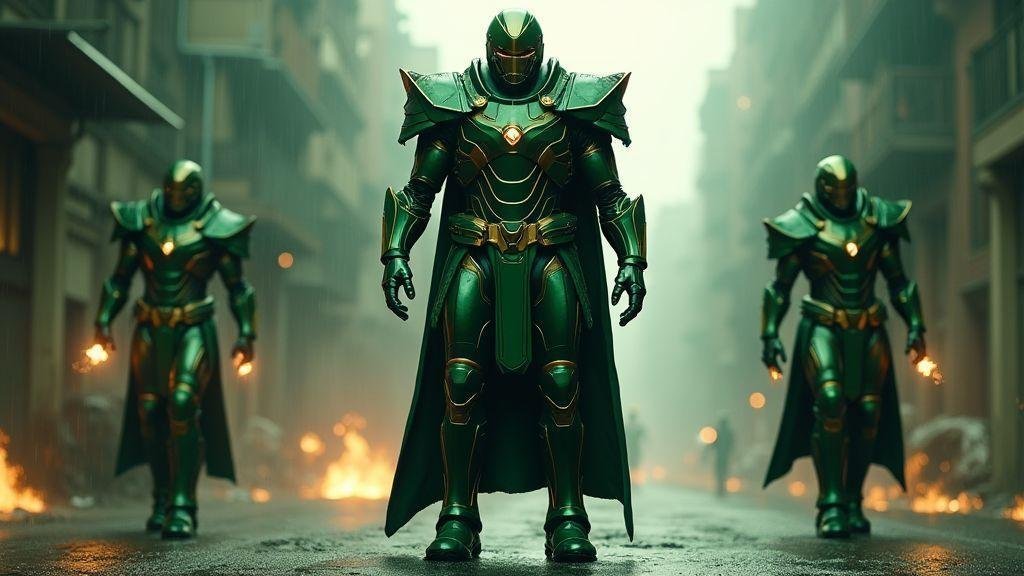
The new shell keeps the iconic look: mask, green cloak, iron plates. But under that faceplate, the tech is different: adaptive armor layers, an internal AI-like system, and energy routing that shunts hits away from vital nodes. Hits that used to dent Doom now get absorbed or rerouted.
The upgrade raises Doom’s survivability and reach—he can tank blasts, counter energy weapons, and still use magic. That shifts how heroes must plan an attack.
Doom’s armor is a tool, but his brain is the real weapon.
What changed in materials and defense compared to past armors
Doom now uses nano-alloys and composite cerametal layers instead of heavy single-metal plates. These layers flex and spread impact. Thermal control improved—heat disperses and the armor avoids brittle failure.
Defensive systems are more active: adaptive energy shields, electromagnetic damping, and micro-repair swarms fix punctures on the fly. EMPs and sustained attacks have diminished effect because the suit can isolate and reroute damaged sections.
| Feature | Older Suits | New Armor |
|---|---|---|
| Primary material | Heavy metal plates | Nano-alloys composites |
| Shielding | Passive plating, rare force fields | Adaptive energy shields |
| Mobility | Slower, bulky | Lighter, powered joints |
| Self-repair | Manual repairs | Autonomous micro-repair |
| Vulnerabilities | Overheat, EMP | Hardened vs EMP, heat dispersion |
Writers and artists often draw inspiration from other armor evolutions—compare design direction and escalation with the evolution of Iron Man’s armor and how major Stark tech arcs like Extremis reshaped expectations.
What stayed the same about Doom’s tactics and genius
Doom still fights like a chess player: planning, contingencies, and political manipulation. The suit multiplies his capabilities, but it doesn’t replace his strategy. His ego and pride remain—he sets fights on his terms, uses allies as pawns, and retreats to regroup. You must beat both his mind and his armor.
Key differences you can spot quickly
You’ll see faster steps and a quieter hum versus the old clank. Visual cues: pulsing circuitry, slimmer joint plates, glowing shield nodes, and fewer big dents.
How Doom new armor changes everything in Marvel storylines
You feel it when Doom shows up in new gear: the map of power shifts. Doctor Doom’s New Armor Changes Everything because it mixes magic, technology, and strategy in ways that break old rules. Heroes must rethink plans; villains reevaluate alliances. The tone gets darker and smarter.
The armor changes conflict dynamics—battles become chess matches. Small scenes gain weight because Doom can alter outcomes in subtle, game-changing ways. Beyond fights, the armor affects relationships and politics: trust erodes, fear rises, and plotlines about loyalty, fear, and power take on fresh stakes.
Expect stronger focus on Latverian politics and sovereignty as the suit expands Doom’s reach; see a profile of his rule at the Monarch of Latveria.
Callout: Watch for scenes where the armor rewrites what you thought was permanent. That’s where the real shocks hide.
Doctor Doom armor impact on Marvel teams like the Avengers and Fantastic Four
- Avengers: lose tactical edge, need new tech and alliances
- Fantastic Four: emotional stakes rise, personal history weaponized
- Other teams: forced into uneasy truces or splintered responses
The Avengers may find their usual tactics failing; the Fantastic Four face personal wounds amplified by Doom’s new reach. The broader tech arms race echoes patterns seen when major inventions shift the playing field—compare to discussions of how Iron Man’s technology changed the Marvel Universe.
For a high-level look at Marvel’s publishing impact and how major story shifts ripple across continuity, see context on Marvel’s publishing and impact.
How writers use the armor to raise the stakes in comics
Writers treat the armor like a narrative magnifier:
- Introduce a surprising capability.
- Force heroes to change plans and question limits.
- Create personal costs that make victories hollow.
- Expand consequences so the whole universe feels the shift.
These beats create more bait-and-switch moments, betrayals, and desperate alliances—each issue becomes a new trap.
Big-picture impact you should watch
Look for ripple effects: multiverse rules, political power plays, and tech arms races. If others chase Doom’s blueprint, expect long-term shifts in who holds power across Marvel.
Doctor Doom vs heroes new armor: fight analysis for fans
Doctor Doom’s new armor reshapes opening beats. It adds durability, new energy outputs, and stealthy sensors. That means Doom can tank hits you thought would end him and has longer reach with built-in weapons—heroes must close gaps in new ways.
Read fights for pacing. The armor lets Doom trade longer and forces chess moves: feints, traps, and attrition rather than quick knockouts.
Also note the tech-magic blend—Doom will pull spells or mystical shields to seal weaknesses when expected tech-only confrontations unfold. Track whether the writer leans on tech, magic, or both; that signals how hard Doom will be to stop.
Matchups where the armor gives Doom an edge
- Street-level fighters relying on speed: Doom’s plating and counter-beams punish close-ins.
- Tech-savvy foes: Doom wins endurance battles—adaptive systems, heat/EMP resistance, and dirty tactics favor him in long scraps.
Heroes and tech that can still challenge Doom despite the upgrade
Not every hero is shut down. Reality-warpers, telepaths, or raw powerhouses can bypass or neutralize armor advantages. Tech counters include high-output energy weapons, specialized EMP fields, or inventions by top geniuses.
Think Stark-style heavy energy cannons informed by Iron Man design history (Iron Man in comics explained) or tools developed with extreme tech concepts like Extremis-level upgrades.
Examples of strong counters: Stark-style energy cannons, Reed Richards–level inventions, psychic interference, reality-bending powers.
Tactical takeaways you can use when reading fights
Watch damage vs resources vs mind-games. Note space control, timing, allies, and prep. If Doom wins, it’s often because he forced a long slog, used mixed tools, and struck a predictable weakness.
Comic review — Doctor Doom armor: art, story, and fan reaction
The new arc lands like a punch. Doctor Doom’s New Armor Changes Everything, and the comic treats that idea like a drumbeat. The art hits hard: heavy shadows, metal gleam, and presence. Panels sell the suit as bigger-than-life.
The story moves steadily—flashbacks, tense quiet scenes, and Doom planning more than talking. The plot ties the armor to grudges and new tech without drowning readers in jargon.
Fan reaction is loud and messy: some cheer the fresh look, others worry Doom lost mystique. Variant covers sell out, cosplayers show up, and forums explode—buzz that can lift the run into must-read status or mark it as a polarizing detour.
Doom’s place among iconic Marvel villains gets renewed debate as readers reassess power and personality.
Visual design notes and how artists show the new suit
The suit reads like a character. It’s not just gear. It has mood.
Artists lean into texture and scale: old-meets-new metal, rune lines, bolts, and lenses. Color keeps bronze and green for heritage; neon accents hint at power beyond magic. Layouts use full-page looms and slow reveals—arm pieces sliding into place over several panels—to make the suit feel inevitable.
Sales and fan response that hint at the armor’s impact
Early numbers matter: issue one saw spikes in orders and sold-out variants. Retailers reordered. That collector interest plus polarized fan voices means the armor is doing what it should—getting people to talk and buy.
“He looks unstoppable — and I love that mix of crown and circuit.” — fan on social
Final points you can use to judge the arc
Score the run by: how the art animates Doom, whether the story gives the armor meaning, and if fan heat changes your pull-list habits. Watch for follow-ups—if future issues build on the suit instead of recycling the idea, the arc will age well.
Conclusion: Doctor Doom’s New Armor Changes Everything
You should walk away with one rule: Doctor Doom’s New Armor Changes Everything. It fuses science and sorcery, gives him smarter sensors, tougher shields, and uncanny adaptability. Think less blunt instrument, more chessmaster with a Swiss Army knife—crafty, versatile, and dangerous.
Don’t sleep on practical bits. Hunt for weak spots at cores and power-routing seams. Call in allies, update tech, and plan for fights that turn from quick scraps into attrition wars. If you rely only on brute force, you’ll be outmaneuvered; if you mix tactics and preparation, you still have a shot.
Read fights with fresh eyes: track pace, space, and whether the writer leans on tech, magic, or both. That tells you how hard Doom will be to stop. And if you love craft, keep an eye on the art—those panels sell the menace as much as the script.
If you want more deep dives, breakdowns, and hot takes, keep reading at Hero and Villain World — there’s more to unpack and more surprises waiting.
Frequently asked questions
A: It boosts Doom’s power and shields. Expect tougher fights and new tricks.
A: Not easily. His suit adapts. You need new tools and quick thinking.
A: Yes. It gives him reach and control; big-city danger is possible.
A: Mostly no—he stays cunning, but his plans get bolder and faster.
A: Upgrade gear. Train with allies. Plan for tech-and-magic combos.