Doomsday’s New Form Destroys Everything
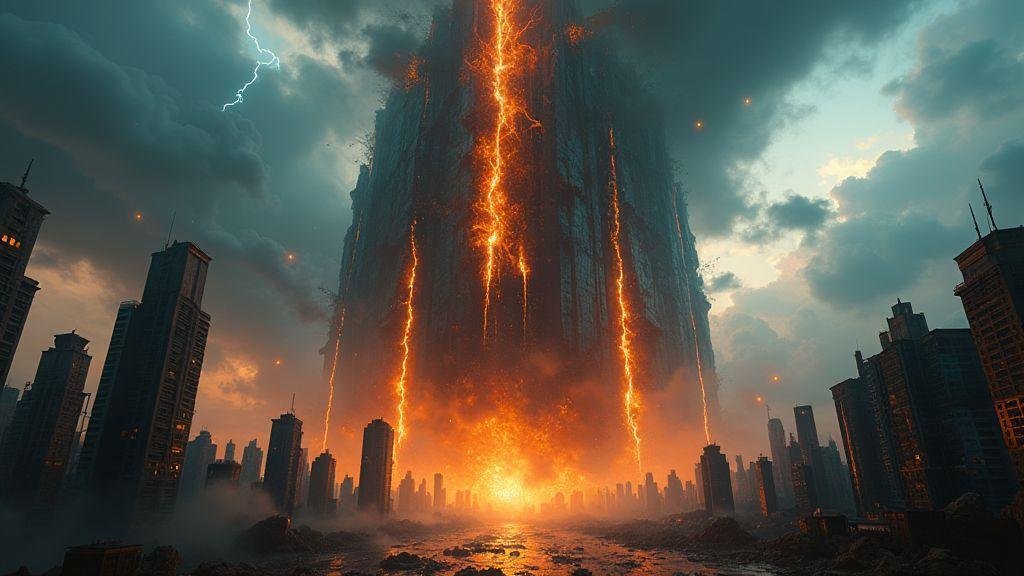
“Doomsday’s New Form Destroys Everything” explains how a monster from Krypton becomes unstoppable. You’ll learn the origin with Bertron and the brutal experiments that made him. You’ll see how repeated deaths and cloning drive biological adaptation and make him harder to stop.
You’ll get a simple timeline of major evolutions, key battles like the Death of Superman, and why those fights changed comics. You’ll also find clear analysis of his power scale, limits, and where to read smart takes.
Key Takeaway
- Act fast when the new form shows up
- Keep your family close and stay calm together
- Find strong shelter that can block the threat
- Take water, food, and a light with you
- Stay informed and avoid open areas
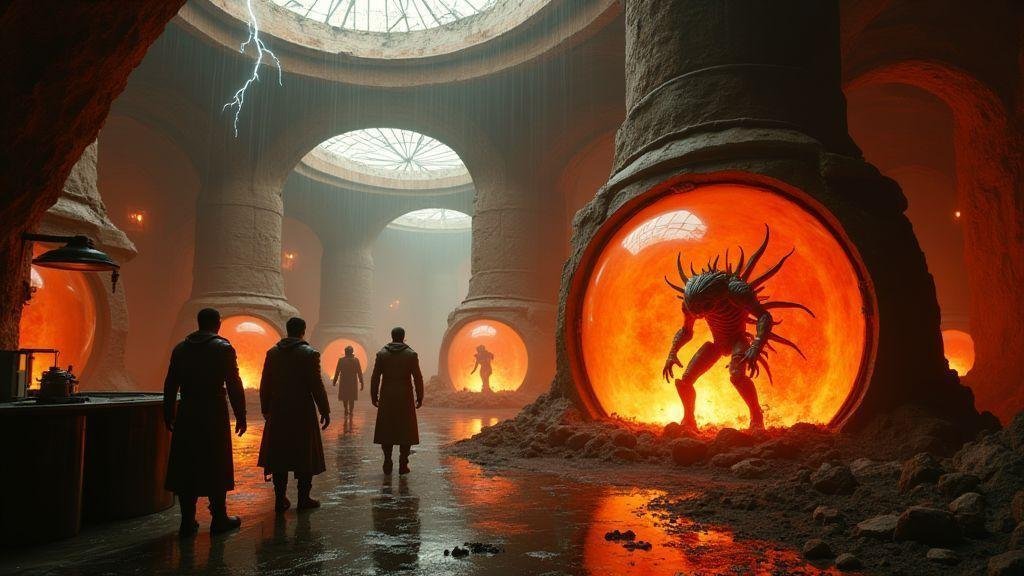
The Krypton experiments that created Doomsday and what you should know
The Krypton experiments began as cold science and ended as a living weapon. Scientists on a harsh outpost kept a newborn alive only to let it die again and again. Each death taught the creature how to resist that cause next time. The result was a being that learns by surviving—stronger after every fatal test.
The process was cruel and deliberate: exposure, death, recovery, cloning. Each cycle removed a weakness and added a new defense.
Doomsday wasn’t so much born as forged through pain and repetition. That method makes him more than a big brawler—he is a force shaped by survival logic. He adapts fast and forgets mercy. See the Official DC character profile for Doomsday for canonical details.
For a look at other villains born of twisted science and creator-driven origins, see the piece on a villain whose origin comes from his own creator, which offers useful parallels to Bertron’s obsession.
Who Bertron was and how Doomsday first came to be
Bertron was the scientist obsessed with creating a perfect survivor. He used cloning tech and rotating deadly environments to force evolution on a tight loop. He treated life like a lab variable; the result was a creature built to survive at any cost.
The first Doomsday emerged through death and rebirth. After each lethal test, Bertron made a new body that preserved traits that allowed survival. Over time, that “student” shed vulnerabilities and became a nightmare.
These Kryptonian roots sit beside other Krypton-linked stories — for broader Kryptonian context, the saga of Supergirl (Kara Zor-El) and the mythos of Superman help paint the cultural backdrop.
Why Doomsday’s origin matters to the rest of DC comics
Doomsday is not a random monster; he’s a product of cruelty and science. His origin raises responsibility questions—if a scientist makes a weapon like that, who answers for the damage? That theme appears in many stories about creations gone wrong.
For heroes like Superman, the stakes change. Doomsday learns from defeat and returns stronger. That pattern forces teams and writers to rethink strategy and scale, and it shows up in plots about moral choice, the cost of war, and the limits of power.
The way writers raise stakes for heroes after a disaster is a storytelling move explored across pieces on major universe-changing events—see reflections on the story that changed the DC Universe for how single events can alter tone and consequence.
Quick origin facts about Doomsday’s New Form Destroys Everything
- Created by Bertron through cloning and lethal tests
- Each death removed a weakness
- The creature evolves into tougher forms over time
- “Doomsday’s New Form Destroys Everything” is less a slogan and more a rule—he becomes more destructive after each rebirth and rarely stops once set loose
How Doomsday adapts biologically and becomes harder to stop
Doomsday changes like a living weapon. Every time you think you’ve pinned him down, his cells rewrite themselves. His body stores the memory of the attack and then builds resistance, so the same blow won’t work twice. For a scientific parallel, see the Research overview of experimental evolution methods.
Growth is literal and fast. Small wounds trigger rapid regeneration; lethal damage sparks deeper DNA rewrites. Brute strength can become new defenses: thicker bone, denser muscle, extra armor layers. Each comeback shifts the fight; tactics that worked before fall flat.
You face not just a monster but a moving target. Doomsday blends biological memory with brute force, so counters become outdated. That rising curve of power is why people say “Doomsday’s New Form Destroys Everything” — he adapts in ways that erase advantage.
The repeated death and cloning cycle that makes him immune
The loop is simple: kill, clone, repeat. When he dies, surviving tissue spawns a new body that inherits scars and defenses. Each death teaches the next version; what once worked becomes a lesson in failure.
This breeds real immunity. If a weapon works once, the next clone carries a built-in counter. Over time, these changes stack like layers of armor.
How you can see Doomsday power-escalation threat in his biology
Look at his bones: extra ridges, fused plates, new spines where trauma once broke him—living upgrades. His metabolism diverts energy into repair and mutation during fights, then stabilizes at a tougher baseline. Speed, strength, and pain tolerance climb in steps. That visible escalation shows adaptation in action, not random mutation.
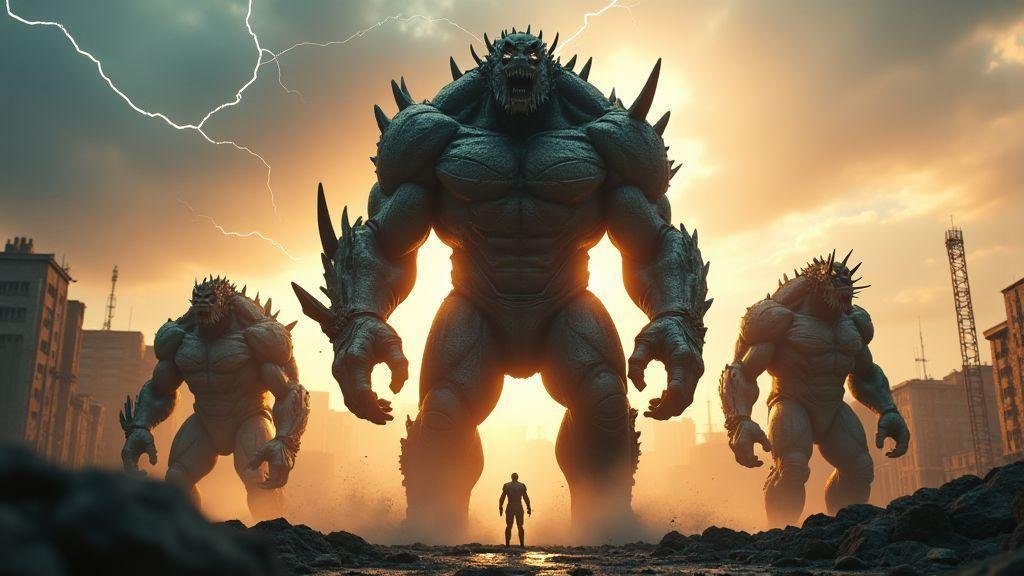
Tracking Doomsday transformation, apex form, and his major evolutions
You can trace Doomsday like a scar across comic history. He first burst onto the scene as the unstoppable force that killed Superman. That form was pure, single-minded destruction. From there, writers changed him so he’d come back meaner and harder to beat.
Each defeat taught him something. He mutates: gaining resistances, new attacks, and sometimes a sliver of cunning. Later fights feel different—and worse—each time.
Think of his growth like a wildfire that learns the shape of the forest: every place it burned before feeds a hotter blaze next time.
That’s why fans call later appearances apex moments: the Doomsday you knew becomes a stranger with deadlier tools. Don’t be surprised if “Doomsday’s New Form Destroys Everything” appears in files on villains — and then ruins that file.
Callout: If you assume one death stops him, you’re setting yourself up for a nasty comeback. Doomsday learns. You should, too.
The major forms from Death of Superman to later comic arcs
You remember the original: the savage, armored beast who met Superman in Metropolis. That version was raw power and pain tolerance—pure smash until nothing stands.
Later arcs showed him returning with changes. In “Hunter/Prey” and follow-ups, he had new defenses and sometimes more strategy—bone plates, extra limbs, and different attack styles designed to surprise heroes and readers.
Signature gains across forms:
- Regeneration and hardened bone armor
- New resistances to past attacks
- Occasional boosts to speed or intellect
- Ranged or energy-based attacks in some runs
- A stubborn ability to come back again
| Form example | Comic arc (general) | Notable change |
|---|---|---|
| Death-era Doomsday | Death of Superman | Pure brute force, immune to conventional damage |
| Return / Hunter-Prey style | Post-death returns | Adaptive resistances, new armor, more vicious tactics |
| Modern / New 52 and later | Various revivals | Smarter moves, varied powers, large-scale threats |
How each loss leads to a stronger, more dangerous Doomsday
Defeat triggers upgrades. He comes back with the last fight’s weaknesses patched, making him a moving target. Loss can sharpen his purpose and unpredictability: one comeback is brute force, the next mixes speed or ranged strikes. For readers, it creates a tense rhythm: relax for one issue, panic the next.
A simple timeline of Doomsday’s New Form Destroys Everything forms
- Origin and first emergence — violent, unstoppable force
- Death of Superman — apex brute that kills Superman and wrecks Metropolis
- Return/Hunter-Prey era — adaptive armor and new attacks make him harder to pin down
- Modern revivals/New 52 — smarter, sometimes with energy or ranged methods
- Apex evolutions labeled by fans as “Doomsday’s New Form Destroys Everything” — versions seemingly bred to erase the next chapter
Major battles: Superman and other heroes facing Doomsday’s new form
You felt it when Doomsday smashed into Metropolis: raw power with no pause. In the first great clash, Superman fought like a hurricane. Read a Comprehensive event overview and publication timeline. Buildings fell. Streets cracked.
Fans still say “Doomsday’s New Form Destroys Everything”—this creature was made to break heroes and cities alike. The fight pushed Superman to his limits and left everyone watching with a lump in their throat.
After that, fights became team affairs. Heroes arrived in waves—Wonder Woman, Flash, Green Lantern—trying to slow Doomsday. They used speed, magic, hard hits, and clever traps. Each battle taught them something new about his evolution: he adapted fast and hit harder the next time. That forced heroes to change how they fought.
For how team dynamics and League-scale responses developed after universe-shaking events, see the discussion on Justice League history and tactics, which highlights how coordinated responses grow from repeated threats.
The cost was huge. Cities needed fixing. People lost homes. Heroes carried scars and guilt. Comics shifted tone because those losses mattered on the page. Outcomes started to stick, making stories feel weightier.
| Battle (headline) | Rough era | Main outcome |
|---|---|---|
| Death of Superman | 1992 | Superman falls; shock to fans |
| Return/Clone fights | Early 1990s | Heroes adapt; teamwork buys time |
| Modern evolved Doomsday clashes | 2000s–2010s | Containment wins; heavy damage |
What happened in The Death of Superman and why it changed comics
The original Death of Superman hit fast and hard. Doomsday came through with a single aim: destruction. You watched Superman trade blow for blow until both were down—the image of them collapsed in the snow became iconic. The comic sold like wildfire because readers felt the risk was real.
That event forced comics to feel weightier. Writers stopped treating major fights like noise that vanished next issue. You began to see grief, rebuilding, and real consequences.
It proved showing real cost could deepen the stories and reshape fan expectations. For broader takes on how single events shifted the industry, check the analysis of Crisis-level stories and their impact and how stakes carried forward.
Note: The death changed comic business and fan culture. It showed that risk can create drama that keeps people talking.
Later clashes where heroes learned to handle apocalyptic monster evolution Doomsday
Later fights taught how teamwork beats raw force. Heroes mixed skills: Flash distracted, Green Lantern contained, Wonder Woman hit weak spots, and Superman found timing to land critical blows. Technology and magic joined hands. Plans replaced pure brawling.
Tactical shifts across eras: training for adaptation, gadgets that dampen brute strength, and traps that funnel Doomsday away from crowds. After enough fights, heroes stopped guessing and started planning.
For examples of how teams coordinate and the narrative role of sanctuary and consequence, see pieces on heroes-in-crisis and sanctuary.
Key tactics used by heroes:
- Teamwork with clear roles
- Containment to protect civilians
- Tech and magic to limit regeneration
The real outcomes of superhero vs Doomsday new form battles
Heroes often stop Doomsday, but at cost. Victories leave wreckage and trauma. Cities heal slowly, and heroes carry blame. Those outcomes made comics feel real—beating an apocalyptic foe doesn’t erase the loss it caused.
Destructive capabilities and how close he came to planetary annihilation scenarios
Doomsday’s raw power in late forms looks like an unstoppable force. In some storylines his punches crack the crust, shockwaves level cities, and energy outputs fry satellites.
When panels scream “Doomsday’s New Form Destroys Everything,” buildings turn to dust, oceans boil at the horizon, and battlefields vanish. Those scenes sell the idea that he can threaten a planet—and sometimes he comes frighteningly close.
For perspective on other world-devouring threats and how writers stage planetary peril, compare Doomsday’s scale with cosmic-level enemies like the devourer of worlds or the intelligence-driven threats like Brainiac.
Understanding those comparisons helps see why Doomsday can feel apocalyptic even if he’s localized in a given issue.
But comics also show limits. His attacks can be localized or focused, leaving whole continents intact in some issues. Writers usually include a way to stop him: counterattacks, containment fields, or critical injuries.
Near-misses—moons cracked, cities vaporized, cores stirred—give the thrill without permanently removing the stage.
| Feat shown in comics | Scale described | Typical narrative result |
|---|---|---|
| Collapsing metropolitan areas | City/region | Massive casualties, evacuation arcs |
| Damaging orbital infrastructure | Planetary orbit | Satellite loss, global communication blackouts |
| Triggering tectonic instability | Continental | Long-term environmental crisis plots |
The limits of his strength, durability, and environmental damage
Doomsday’s strength varies with the writer. In close combat he can outmuscle nearly anyone, but feats depend on context: terrain, time spent evolving, or boosted forms. His durability is extreme, but not absolute.
He survives nukes, energy blasts, and prolonged beatings, yet writers supply vulnerabilities: power dampeners, magic, or combined team tactics. Environmental damage is enormous while he’s active, but usually serves the story rather than erasing the setting.
Writers use apocalyptic devices a lot—see how narrative-level catastrophes are used in works like Final Crisis or the metal-laced consequences in Dark Nights: Death Metal—to raise stakes and force character change.
Why writers use the Doomsday ultimate-form apocalyptic power to raise stakes
Writers use apocalyptic power because it forces characters to react on a huge scale. You get global evacuation scenes, moral choices, and team-ups you wouldn’t see against lesser threats. The pressure gives heroes growth and forces tough calls from leaders.
- Raises emotional stakes quickly
- Justifies massive team-ups
- Creates dramatic sacrifice arcs
- Sells the scale in covers and marketing
When you read these stories, the threat isn’t just physical—it becomes moral and social. That’s why Doomsday’s ultimate forms are a favorite device: they push heroes to their worst and best moments, and make consequences feel real.
Examples of damage and scale in comic book scenes
Panels of a single blow sending a mountain into the sea, an orbital defense array wiped out, or a city skyline turned to smoke are common. Those images give a concrete sense of cost: lives, infrastructure, and long-term ecosystems all hurt by his rampage.
CALL OUT: In scenes where “Doomsday’s New Form Destroys Everything,” the aftermath often drives entire plotlines—recovery, blame, and heroes redefining their limits.
How you can read comic book analysis of Doomsday’s New Form Destroys Everything
Start with the source. Look for pieces that cite panels, issue numbers, and creative-team comments. Direct quotes or screenshots bring you closer to primary evidence.
That helps separate wild claims from story facts about Doomsday’s new form. Consult the Library of Congress resources on comics scholarship for archival methods.
Read with purpose: spot the claim, find the evidence, weigh it. Ask: what changed about Doomsday, who wrote it, and how does the new form affect other characters? Then verify by reading the cited issue or panel.
- Read the issue or panel cited
- Find creator or editor comments
- Compare multiple analyses before deciding
Watch for context: power jumps often come with plot devices—technology, magic, or narrative needs. A sharp analysis will name the mechanism and link to earlier issues. That way you can judge whether “Doomsday’s New Form Destroys Everything” is hype or a real shift.
For strong comparative reads on cosmic threats and how editors and creators shape them, consult pieces like the Anti-Monitor overview and articles about other grand threats to see consistent patterns.
What creators and critics say about Doomsday New Form Destroys Everything
Creators explain intent: why Doomsday changed—narrative need, new threat level, or a twist. Their comments help determine whether a change is permanent or a one-off spectacle.
Critics focus on impact and logic. Good critics compare feats, point out contradictions, and highlight how the new form affects future stories. That helps you see if the claim that “Doomsday’s New Form Destroys Everything” holds up across issues.
| Source type | Typical angle | What to look for |
|---|---|---|
| Creator quotes | Intent and plot reasons | Look for issue references and context |
| Critics | Consistency and consequences | Watch for comparisons to past feats |
| Reviewers | Reader experience | Note tone: constructive or clickbait |
How fan debate shaped the Doomsday power-escalation conversation
Fans drive the energy around big changes. Threads, videos, and memes push views that can make a change feel bigger than it is. If you follow fan discussion, you’ll spot common claims and repeated errors—like mistaking a one-off scene for a permanent upgrade.
Fan debate also sharpens the issues. Arguments highlight contradictions and force re-reads of panels. That pressure often leads critics and creators to clarify things. Use heated threads to find sources, not as the final word.
If you want a reading order to follow major universe events that influenced power escalations and fan conversation, the Crisis on Infinite Earths reading order and its impact notes are useful starting points.
Heads-up: heated fan threads can be full of passion and mistakes. Use them to find sources, not the last word.
Where to find reliable comic book Doomsday new form analysis
- Official publisher interviews and Q&As
- Long-form reviews that cite panels and issues
- Dedicated comic databases and issue archives
Why “Doomsday’s New Form Destroys Everything” is a useful shorthand
The phrase captures both spectacle and mechanic: it signals a version of Doomsday that combines raw destruction with adaptive evolution. Writers, critics, and fans use it to flag stories where the monster’s change has clear narrative stakes—large-scale damage, hard consequences, and lasting effects on the cast and setting.
For context on how apocalyptic threats reshape continuity and meta-narratives, see essays on Darkseid’s earth-shaking plans and how those patterns compare to Doomsday’s destructive arcs.
Conclusion: Doomsday’s New Form Destroys Everything
Doomsday is not just a big brawler—he’s the product of Bertron’s brutal experiments, forged by death, cloning, and ruthless adaptation. That origin explains why he learns from every loss and why the same punch won’t work twice.
Think biology over brawn. His upgrades are literal: tougher bone, faster healing, new resistances. That makes him a moving target and forces heroes to swap brute force for teamwork, tactics, and containment. A blunt instrument won’t cut it; you need strategy, allies, and the right tools.
The big fights changed comics by adding real consequences—loss, rebuilding, and moral cost. Those stakes stick and make the stories feel heavier and the victories harder earned.
If this hooked you, dive deeper at Hero and Villain World — there’s plenty more to explore.
Frequently Asked Questions
A: It’s a shorthand for a Doomsday evolution that combines massive destructive capability with adaptive biology—an iteration designed to overwhelm defenses and escalate stakes quickly.
A: Very fast in narrative terms. Rampages can escalate in hours and give little warning, which is why immediate action and containment are critical in the stories.
A: Maybe. Survival odds improve with shelter, planning, and coordinated response. In-universe, scientists and hero teams slow or contain him rather than instantly defeat him.
A: In story terms: evacuation plans, shelters that can withstand heavy damage, water, food, and medical supplies. Heroes focus on containment and civilian protection.
A: Not easily. Combined tactics—teamwork, tech, magic, and exploiting specific vulnerabilities—have worked. Stopping him usually requires coordination, time, and sacrifice.
Further reading suggestions:
- Cosmic-scale threats and comparisons: The Anti-Monitor overview
- How universe-level events reshape stories: Impact of Crisis on Infinite Earths
- Other major apocalyptic villains and their consequences: Devourer of Worlds and Dark Nights: Death Metal
![Review: Wolverine: Old Man Logan [Marvel Premier Collection]](https://heroandvillainworld.com/wp-content/uploads/2026/01/image-18-768x439.webp)