
Storing Comics Right! Your Guide to Preservation
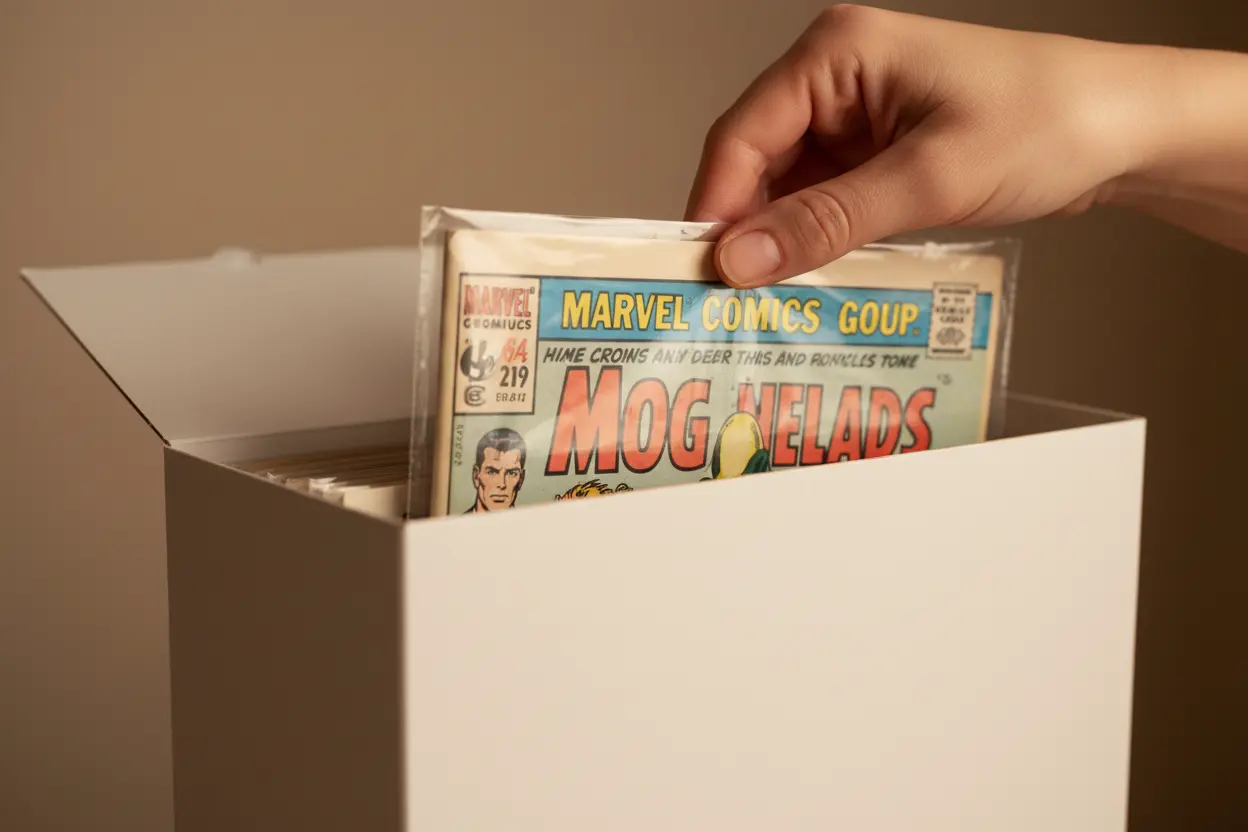
As a passionate collector, I know the joy of holding a classic comic, but also the dread of seeing it damaged. How do we ensure our prized possessions stand the test of time?
We‘re diving deep into the best ways to store comic books, from basic tips to advanced techniques, ensuring your heroes and villains remain in pristine condition for generations to admire.
Why Proper Comic Book Storage Matters
I have seen countless beautiful collections lose their luster because of poor planning.
Preserving a comic book is about more than just keeping it clean.
It is about defending history and protecting your financial investment.
We often forget that comics are made of organic materials.
Paper, ink, and staples are all prone to natural decay.
Without the right intervention, your favorite stories will eventually crumble.
Light is perhaps the most aggressive enemy we face.
UV rays can bleach the vibrant colors of a cover in months.
I always tell my readers that a faded cover is a lost treasure.
Humidity is another silent killer that we must monitor.
High moisture leads to mold and mildew growth on the pages.
This not only smells terrible but also destroys the structural integrity.
Pests like silverfish and beetles love the glue and paper.
They can turn a near-mint issue into a lace-like mess overnight.
Proper storage creates a barrier that these critters cannot penetrate.
Physical damage often happens during moving or casual browsing.
Blunted corners and spine stresses significantly lower a book’s grade.
We use storage solutions to provide a rigid skeleton for the paper.
Maintaining the original condition ensures the book remains readable for decades.
It also guarantees that the market value stays as high as possible.
A well-preserved comic is a legacy you can pass down to others.
We believe that every collector is a temporary guardian of these stories.
Treating them with respect is part of the comic book culture.
Let’s look at how we can stop these threats effectively.
Essential Supplies for Comic Book Preservation
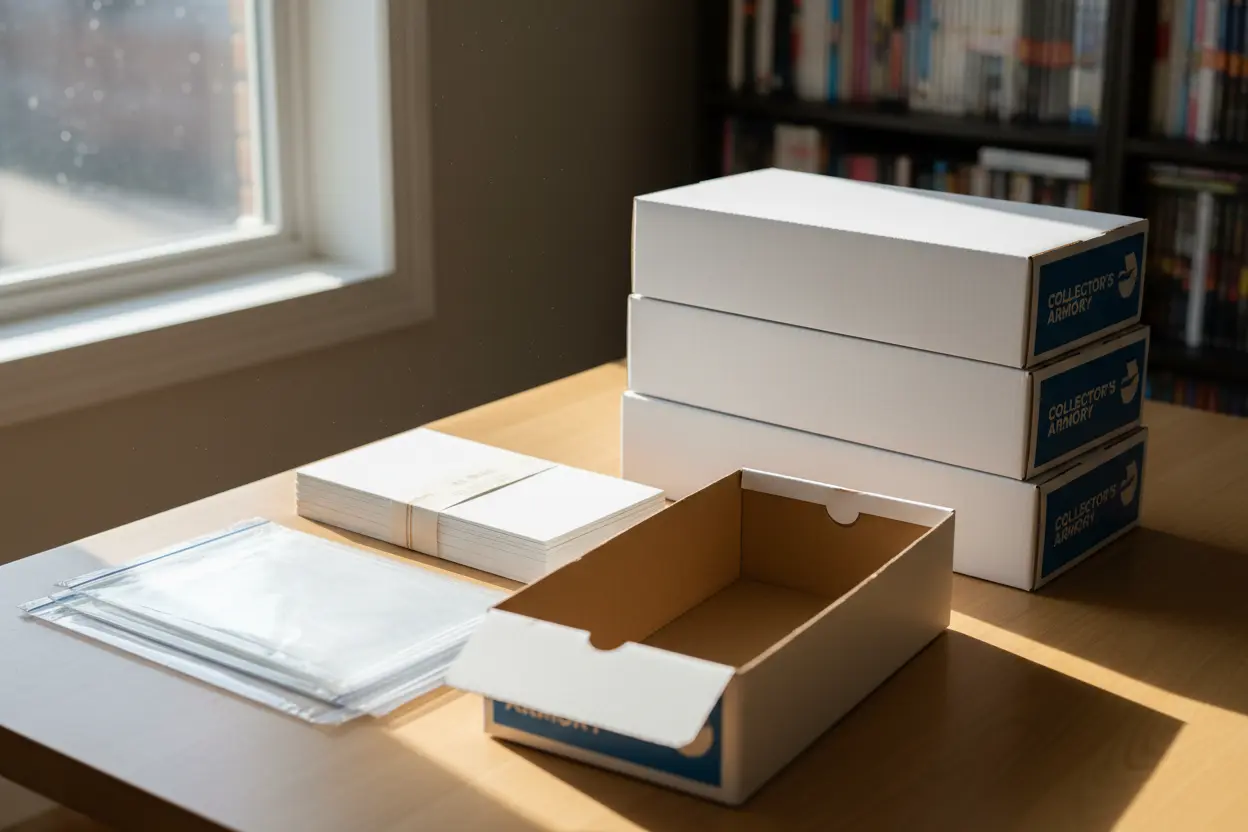
To get started, you need a specific set of high-quality supplies.
Not all plastics and cardboards are created equal in this hobby.
We always recommend investing in archival-grade materials for the best results.
The first line of defense is the comic book bag.
Most beginners start with polypropylene, which is affordable and clear.
However, for long-term storage, we prefer Mylar bags (BOPET).
Mylar is a specialized polyester film that is truly archival.
It does not produce harmful gases as it ages over time.
It also offers superior clarity and stiffness compared to cheaper options.
Next, you must have acid-free backing boards.
These boards provide the necessary support to keep the book flat.
I recommend using boards that are buffered with calcium carbonate.
This buffering agent neutralizes any acids that migrate from the paper.
Without a board, a comic can easily bend or develop “waves.”
We suggest replacing standard boards every five to seven years.
| Supply Type | Material | Best Use Case |
|---|---|---|
| Poly Bags | Polypropylene | Short-term / High turnover |
| Mylar Bags | Mylar (Type D) | Long-term / High value |
| Backing Boards | Acid-Free Cardboard | Structural support |
| Storage Boxes | Corrugated Plastic/Cardboard | Organized protection |
Storage boxes are the final piece of the essential gear puzzle.
Standard cardboard boxes are fine, but corrugated plastic is better.
Plastic boxes are water-resistant and much more durable for stacking.
We also suggest using microchamber paper for very old books.
These thin sheets are placed inside the front and back covers.
They absorb pollutants and acids that cause the “old book” smell.
Finally, consider using acid-free tape or “resealable” bags.
Standard tape can yellow and leave nasty residue on your bags.
I always opt for resealable Mylar to keep the look clean.
The Best Way to Store Comic Books Safely
The process of bagging and boarding is a ritual for us.
It requires a clean workspace and a very gentle touch.
I always wash and dry my hands thoroughly before touching any book.
First, select the correct size of bag and board.
Comics have changed sizes throughout the Golden, Silver, and Modern ages.
Using a bag that is too small can cause permanent edge damage.
| Comic Age | Typical Dimensions | Recommended Bag Size |
|---|---|---|
| Golden Age | 7.75″ x 10.5″ | Golden Size |
| Silver/Bronze | 7.125″ x 10.5″ | Silver Size |
| Modern Age | 6.625″ x 10.25″ | Modern/Current Size |
Place the backing board into the bag first to create a “tray.”
The shiny side of the board should face the comic book.
This side is usually the one treated with the acid-neutralizing buffer.
Carefully slide the comic book into the bag in front of the board.
I use my fingers to hold the bag open wide at the top.
Avoid letting the comic’s corners snag on the edges of the plastic.
Once the book is centered, fold the flap over and secure it.
If you use tape, make sure it is on the outside of the flap.
We want to prevent the tape from touching the book during removal.
When placing books into a box, always store them upright (vertically).
Never stack comic books flat on top of each other in a pile.
The weight of the stack can cause spine rolls and ink transfer.
Fill the box enough so the books don’t lean at an angle.
However, do not pack them so tightly that you have to pull hard.
I use cardboard spacers to fill gaps in partially full boxes.
Check your collection at least once or twice every year.
We look for signs of yellowing on the boards or wavy paper.
Early detection is the best way to store comic books successfully.
Controlling Environment for Long-Term Storage
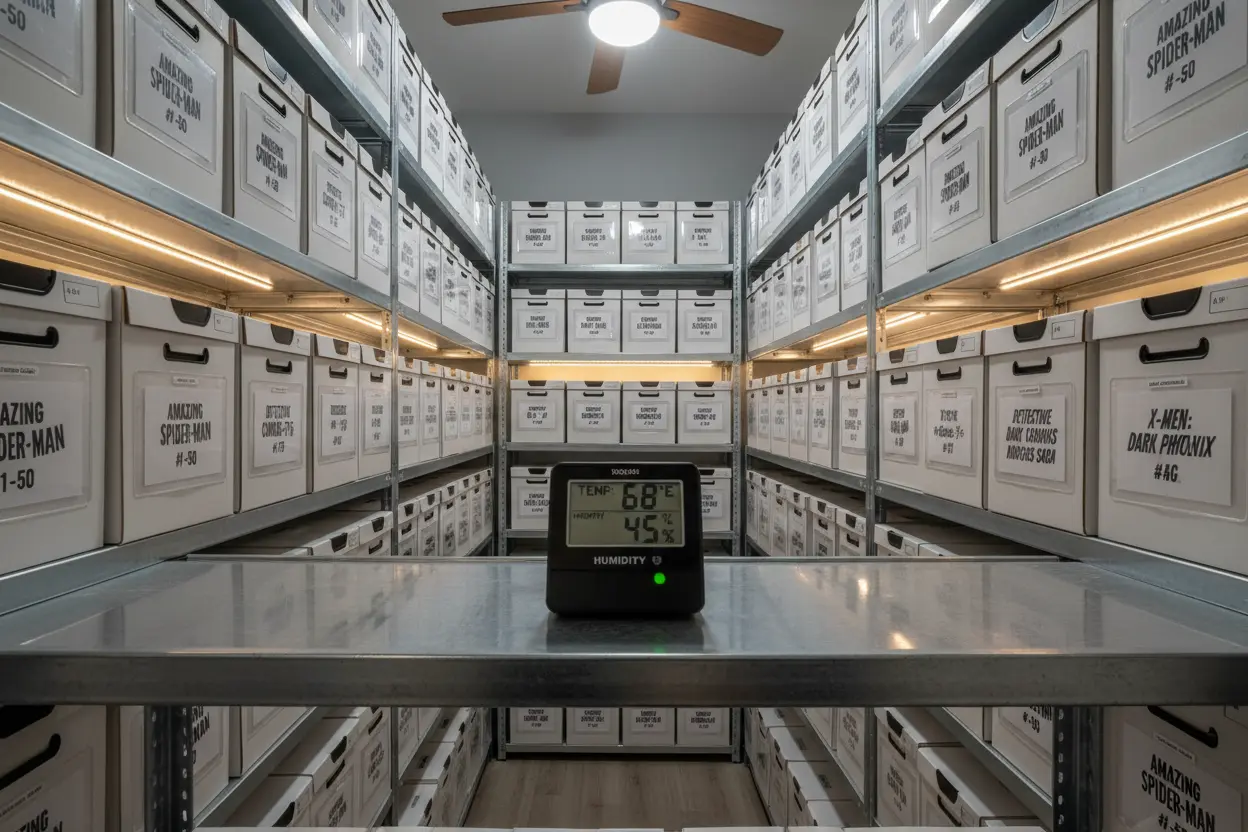
The room where you keep your collection is as important as the bags.
We call this “The Golden Rule” of environmental control.
If you are uncomfortable in the room, your comics probably are too.
Temperature should remain consistent and relatively cool for long-term health.
The ideal range is between 60°F and 70°F (15°C to 21°C).
Heat accelerates the chemical breakdown of the paper fibers.
Fluctuations in temperature are even worse than a steady high heat.
Expansion and contraction cause the paper to become brittle and fragile.
Avoid rooms with outside walls that get hot in the sun.
Relative humidity (RH) is the next factor we must master.
We aim for a consistent humidity level of around 50% RH.
Anything higher than 65% invites mold and destructive foxing.
If your storage area is damp, you must use a dehumidifier.
I keep a digital hygrometer in my comic room to track levels.
It provides peace of mind and warns me of sudden spikes.
Light control is non-negotiable for a serious comic book collector.
Keep your boxes in a room without direct sunlight exposure.
If the room has windows, use blackout curtains or UV-protective film.
Even indoor lighting can cause damage over many years of exposure.
We prefer LED bulbs because they emit very little UV radiation.
Always turn the lights off when you are not in the room.
Air quality is a factor that many collectors often overlook entirely.
Avoid storing comics near kitchens where grease and smoke linger.
Strong odors and pollutants can be absorbed by the paper over time.
Finally, keep your boxes off the floor to prevent water damage.
A simple metal shelving unit is a great investment for safety.
It protects against minor floods and improves air circulation around boxes.
Advanced Tips for Valuables and Graded Comics
For the “crown jewels” of your collection, standard storage isn’t enough.
We often turn to professional grading for high-value or rare keys.
Companies like CGC or CBCS provide a tamper-evident, hard plastic “slab.”
These slabs offer the ultimate protection against physical handling and air.
However, they are not completely airtight or UV-proof by themselves.
You still need to store graded comics in a controlled environment.
Specialized slab storage boxes are designed to fit these larger holders.
They usually feature padding to prevent the plastic from scratching.
We recommend these for any book valued over a few hundred dollars.
If you want to display your graded books, use UV-resistant frames.
Several companies make wall mounts specifically for graded comic slabs.
They allow you to enjoy the art without the fear of fading.
For raw books that are very valuable, consider Mylar 4-mil sleeves.
These are much thicker and stiffer than the standard 2-mil versions.
They provide a premium feel and “museum-grade” protection for your keys.
We also suggest using archival-grade storage folders for documents.
If you have original comic art, these folders are absolutely essential.
They keep the large-scale paper flat and safe from any environmental oils.
Consider a fireproof safe for your most expensive single issues.
Make sure the safe is rated for paper, as some are only for media.
Add a silica gel pack inside to prevent moisture buildup in the safe.
Insurance is another “advanced” step that we highly recommend for collectors.
Standard homeowners’ insurance often fails to cover collectible valuations.
Specialized policies cover market value increases and accidental damage risks.
Digital cataloging helps you track the condition and location of books.
Apps like CLZ Comics allow you to attach photos of the condition.
This is vital for insurance claims and general collection management.
Common Storage Mistakes to Avoid
One of the biggest mistakes I see is the use of cheap tape.
If the tape catches the cover while you slide the book out, it’s over.
The “tape pull” is a heartbreaking and avoidable tragedy for collectors.
We always suggest folding the tape back on itself to create a tab.
Or better yet, use tape-free resealable bags to remove the risk.
It makes the unboxing experience much safer and more enjoyable.
Never store your comics in the attic or the garage.
These areas have the most extreme temperature and humidity swings.
I have seen entire collections destroyed by a single summer in a garage.
Avoid using PVC-based plastics that are not marked as archival.
PVC releases hydrochloric acid as it degrades, which eats the paper.
If a bag smells like a “new shower curtain,” get rid of it.
Don’t stack your comic boxes directly against an outside wall.
Condensation can form behind the boxes, leading to hidden mold growth.
Leave a few inches of space for air to circulate freely.
Packing boxes too loosely is another common error we encounter.
If the books lean, they will eventually develop a permanent curve.
Use “filler” boards or empty bags to keep everything standing straight.
I often see collectors forgetting to change their supplies periodically.
Standard poly bags and boards break down after several years.
Set a schedule to “re-bag and board” your collection every decade.
Using wood shelving can sometimes be risky for raw paper.
Certain woods release “lignin,” which can cause paper to yellow.
We prefer powder-coated metal or sealed surfaces for our comic shelves.
Finally, don’t forget to wash your hands every single time.
Even if they look clean, natural oils and salts are on your skin.
These microscopic traces will eventually become permanent brown spots.
Keep Your Heroes Immortal!
Protecting our comic book treasures is a labor of love, and I hope this guide empowers you to safeguard your collection. From choosing the right supplies to maintaining the perfect environment, every step contributes to their longevity.
We invite you to share your own storage tips or ask any questions in the comments below! Let’s build a community of well-preserved comic book legacies together.
FAQ – Common Questions About the Best Way to Store Comic Books
We’ve gathered the most frequent questions we receive from the community to help you master the art of preservation.
1. How often should we replace our comic book bags and boards?
We recommend checking your collection every 3 to 5 years if you use standard polyethylene bags, as they can degrade and become acidic. If you invest in Mylar, these can last decades, but we still suggest a quick inspection to ensure your boards aren’t yellowing.
2. Is it better to store comics vertically or stack them horizontally?
We always advise storing your comics vertically in specialized boxes. Storing them horizontally creates uneven pressure that can lead to “spine roll” or permanent creases, which we definitely want to avoid for long-term value.
3. What is the ideal environment for a comic book collection?
We find that the best way to store comic books is in a cool, dark, and dry place. We suggest keeping your room temperature around 65-70°F and maintaining humidity at 50% to prevent mold growth or paper brittleness.
4. Can I use regular cardboard boxes instead of specialized comic boxes?
While any box is better than a floor pile, we strongly recommend using acid-free comic boxes. Regular cardboard contains acids that can migrate into your comics over time, causing the paper to yellow and deteriorate much faster.
5. Do I really need a backing board for every single comic?
In our experience, yes! A high-quality, acid-free backing board provides the necessary structural support to prevent bending and keeps the comic flat. We believe this is a crucial step in the best way to store comic books to maintain their “like-new” condition.