The New Gods Vol. 1: The Falling Sky Review – Worth Buying?
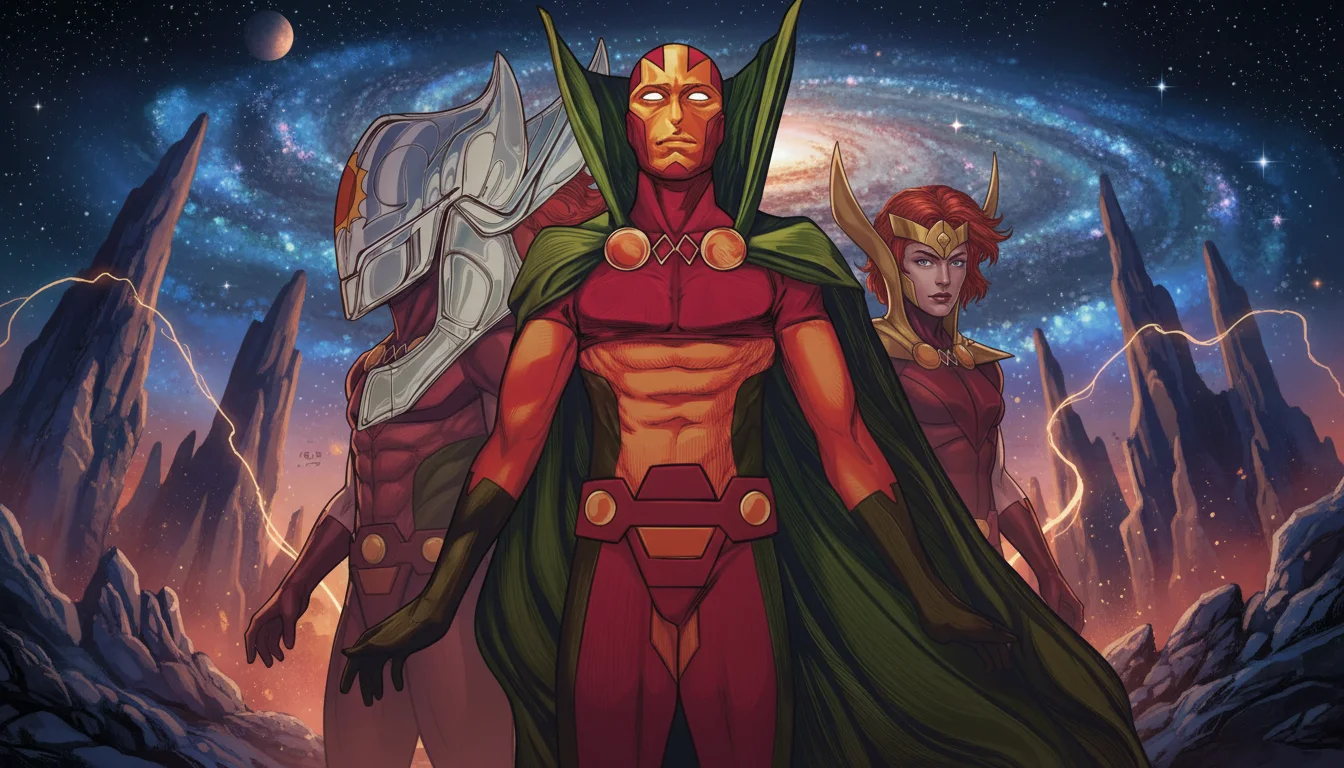
Is the Fourth World ready for a new architect? When Jack Kirby first penciled the New Gods, he created a mythology so dense and vibrant that few have dared to touch it since. However, Ram V and Evan Cagle have accepted that challenge.
In “The New Gods Vol. 1: The Falling Sky”, the unthinkable has happened: Darkseid is dead (or so it seems), and the resulting power vacuum threatens to swallow the universe whole.
As a comic book specialist who has analyzed decades of DC lore, I approached this volume with a mix of skepticism and excitement. Could this creative team truly honor the King’s legacy while forging a path for the Absolute Universe era? Furthermore, is this hardcover worth the shelf space next to your Mister Miracle deluxes?
In this extensive review, I will dissect the narrative arcs, the breathtaking art, and the technical specifications to give you a definitive answer. Consequently, you will know exactly whether this cosmic saga deserves your money.
Technical Specifications
Before we dive into the critique, let’s examine the raw data. Based on the official listing, here is what you get in this volume:
| Feature | Specification |
|---|---|
| Title | The New Gods Vol. 1: The Falling Sky |
| Writers | Ram V |
| Artists | Evan Cagle |
| Format | Hardcover / Trade Paperback |
| Publisher | DC Comics (Black Label / Mainline) |
| Release Cycle | 2025/2026 Collection |
| Page Count | ~160 Pages (Estimated) |
| Collects | The New Gods #1–6 |
| Age Rating | Teen+ |
The Narrative: A World Without Darkseid
The premise of “The New Gods Vol. 1: The Falling Sky” is immediately gripping. The narrative begins in the aftermath of a cosmos-shattering event: Darkseid is gone. For decades, the tension between New Genesis and Apokolips relied on his menacing presence.
Now, that pillar is removed. Consequently, we aren’t dealing with a war, but rather the terrifying uncertainty of peace.
Ram V, known for his cerebral runs on Swamp Thing and Detective Comics, brings a heavy, operatic tone to the script. He focuses intently on Orion, the son of Darkseid, who is struggling to find his purpose without his father’s shadow to fight against. Moreover, the inclusion of Mister Miracle (Scott Free) and Big Barda grounds the cosmic loftiness in genuine human emotion.
They are trying to raise a child amidst this chaos, adding a layer of domestic stakes that recalls Tom King’s influence, yet feels distinctively Ram V’s.
However, the plot is not just character study. A prophecy regarding a “child on Earth” who could bring salvation or destruction drives the conflict. Highfather, usually the benevolent leader, is portrayed with a harder, more pragmatic edge, ordering a hit on this child.
This moral ambiguity is where the book shines. It asks: What happens to the ‘good guys’ when the ‘bad guy’ is no longer there to define them?
Is The New Gods Vol. 1 Canon?
Can I Read This Without Prior Knowledge?
Yes and no. While Ram V does an excellent job of establishing the current stakes, the New Gods lore is inherently dense. If you know who Orion, Highfather, and Darkseid are, you will be fine. If this is your very first DC comic, you might find the terminology (The Source, Mother Box, Boom Tube) slightly overwhelming initially. Nevertheless, the emotional core remains accessible.
Visuals: Evan Cagle’s Artistic Triumph
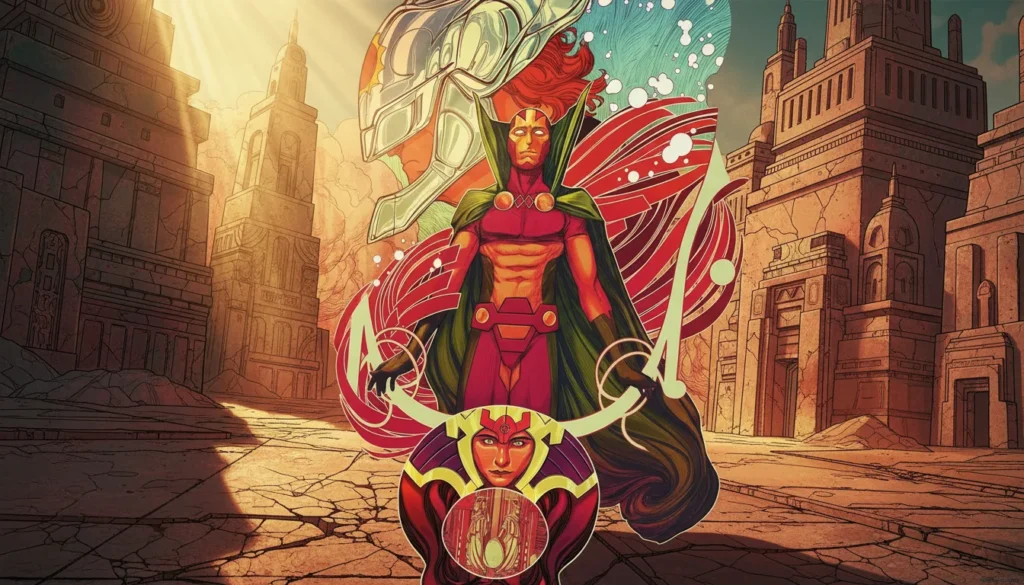
If the script is the skeleton, Evan Cagle’s art is the soul of this book. Visually, “The New Gods Vol. 1: The Falling Sky” is a masterpiece. Cagle does not try to imitate Jack Kirby’s “Kirby Krackle” or blocky dynamism. Instead, he opts for a style that feels more illustrative, almost like stained glass or classical mythology paintings.
The panel layouts are inventive, often breaking traditional grids to reflect the reality-bending nature of the Fourth World. For instance, the depictions of the Source Wall and the cosmic void are hauntingly beautiful. The coloring is equally impressive, shifting from the pastoral golds of New Genesis to the fiery, industrial oppression of Apokolips.
Furthermore, the character designs are refreshed. Big Barda looks powerful yet maternal; Orion looks regal yet burdened. It is a visual feast that demands you linger on every page. In summary, even if the story were lackluster (which it isn’t), the art alone would justify the purchase price.
Performance and Pacing
One minor critique worth noting is the pacing. Ram V is a writer who prefers the “slow burn.” The first two issues collected here are heavy on exposition and mood-setting. Therefore, if you are looking for non-stop action from page one, you might find the opening chapters slow.
However, once the pieces are on the board—specifically when the hunt for the child begins on Earth—the momentum accelerates. The dialogue is poetic, sometimes bordering on purple prose, but it fits the Shakespearean tragedy of the New Gods perfecty.
Pros and Cons
To help you decide, here is a breakdown of the strengths and weaknesses of this volume:
Pros
- Stunning Artwork: Evan Cagle’s illustrations are gallery-worthy and unique in the current DC lineup.
- Fresh Status Quo: Exploring a universe without Darkseid offers new, unpredictable storytelling avenues.
- Character Depth: Orion and Big Barda receive significant development beyond their usual archetypes.
- High Production Value: The collection (especially the Hardcover) features excellent paper quality and binding.
Cons
- Dense Pacing: The early chapters are dialogue-heavy and may feel slow to action-oriented readers.
- Complex Lore: Newcomers to the Fourth World might need a wiki open to understand some references.
- Ambiguous Tone: The shift between cosmic horror and domestic drama can be jarring for some.
Expert Checklist: Is This For You?
- Do you love epic sci-fi/fantasy blends like Dune or Star Wars?
- Did you enjoy Tom King’s Mister Miracle or Ram V’s Swamp Thing?
- Are you looking for art that breaks the traditional superhero mold?
- Do you prefer hardcovers that look prestigious on a shelf?
If you checked 3 or more boxes, this book is a mandatory acquisition.
Verdict: A Modern Mythic Classic
“The New Gods Vol. 1: The Falling Sky” is not just a comic; it is a declaration that the Fourth World is alive and evolving. Ram V respects the source material but is not shackled by it, delivering a story that feels dangerous and important.
While the density of the writing requires patience, the payoff is immense. Coupled with Evan Cagle’s career-defining art, this volume stands as one of the best releases of the year.
For collectors and fans of high-concept storytelling, this is a MUST BUY. It successfully revitalizes a classic property for the modern era without losing the grandeur that made it legendary.
Check the Latest Price on Amazon
Expert Tips for Readers
Tip #1: Read this alongside the DC All In Special to fully understand the context of Darkseid’s disappearance. Tip #2: Pay attention to the background details in Cagle’s art; there are numerous Easter eggs referencing Jack Kirby’s original 1970s run.
FAQ
Technically, his absence is the main character. While he appears in flashbacks or visions, the plot revolves around the vacuum left by his death/disappearance.
This is rated Teen+. It deals with complex themes of war, patricide, and political intrigue. It is not explicit, but it is thematically mature.
This series runs parallel to the Absolute Universe titles. While Absolute Batman and Wonder Woman are in a separate continuity, the events here (Darkseid’s death) are the catalyst for the creation of that alternate reality.
Yes, this is an ongoing series. Vol. 1 sets the stage, and the story continues directly into the next arc.
Yes, DC’s recent collected editions have had solid glued binding (and sometimes sewn in Deluxe formats). It opens flat reasonably well without gutter loss, preserving Cagle’s double-page spreads.