Underrated Artists Who Changed Comics Without You Noticing
Ever thought about the many amazing comic artists who fly under the radar? The comic book world is full of hidden gems. These artists have been changing the game with their art for years.
Ken Steacy, Keith Pollard, and Steve Rude are just a few of the many talented artists who have made a big impact. They bring fresh ideas and challenge what we think comics should be.
Exploring comic art history opens up a world of creativity. You’ll find artists who bring new views and techniques to the table. They change how we see stories in pictures.
Discovering unsung comic book talents shows you the artists who have shaped the medium. Yet, they’re not well-known by most people. Their work shows the true depth and artistry of comics.
The Evolution of Underground Comic Creators Through History
Underground comic creators have changed the world of graphic stories. They pushed limits and broke rules. These indie comic visionaries were the rebels in a world bound by mainstream rules.
The story of alternative comics started in the 1960s. Artists wanted to escape old ways of telling stories. They found new ways to share deep thoughts through their art.
Early Pioneers in Alternative Comics
Artists like Robert Crumb and Art Spiegelman led this movement. They did things differently. They:
- Challenged what was normal in comics
- Told stories in new, personal ways
- Tackled topics that were off-limits before
The Rise of Independent Publishing
Indie comic creators saw the power of self-publishing. They made their own ways to share their work. Small presses and indie networks helped spread their art.
Impact on Modern Comic Art
The work of these underground creators still inspires today’s artists. Their bold methods changed how we see comics. Comics are now seen as a serious art form, not just fun.
“We didn’t just draw comics; we challenged entire cultural narratives.” – Anonymous Underground Comic Creator
Today, the spirit of these pioneers lives on. The comic world is diverse and full of new ideas. It shows that true creativity has no limits.
Lesser-Known Masters of Comic Book Illustration
Comic book art is full of hidden gems. Many lesser-known comic illustrators have created amazing works. These artists have shaped graphic storytelling in ways that often go unseen.
Artists like Larry Mahlstedt and Steve Lightle have made big impacts. Their work on the Legion of Super-Heroes showed off their skill in character design and storytelling.
- Unique panel compositions that break traditional storytelling boundaries
- Innovative character rendering techniques
- Experimental approaches to visual narrative
The world of lesser-known comic illustrators is full of talent. These artists often work outside the mainstream. They create works that challenge what comic book art should be.
| Artist | Notable Work | Unique Contribution |
|---|---|---|
| Larry Mahlstedt | Legion of Super-Heroes | Distinctive character design |
| Steve Lightle | Legion of Super-Heroes | Dynamic storytelling techniques |
Exploring the world of obscure comic innovators opens up a universe of artistic brilliance. These artists bring new perspectives and techniques. They continually push the limits of comic book illustration.
True art exists in the margins, waiting to be discovered by those willing to look beyond the familiar.
Underrated Comic Artists Discover: Hidden Talents of the Industry
The comic book world is full of unrecognized geniuses. They have changed the medium with their creativity. Many talented artists are hidden, waiting for fans and insiders to find them.
These artists find new ways to tell stories, breaking old rules. Their work is a rich mix of art that goes beyond what’s common in comics.
Innovative Storytelling Techniques
Comics need great skill to tell stories visually. Some artists do things differently by:
- Trying out stories that don’t follow a straight line
- Changing how panels are used
- Adding new visual symbols
- Using simple designs to show deep feelings
Unique Artistic Approaches
Artists like Jan Duursema and Tom Mandrake show how new talent can change comics. Their styles make readers see things differently and open up new ways to make comics.
Genre-Defining Contributions
Some artists have really changed certain comic genres. They create new ways to tell stories and make them feel different.
- Bringing weird elements into horror comics
- Mixing up how stories are told
- Coming up with new ways to design characters
When you dive into comics, remember there are many amazing artists waiting to be found. Each one brings their own special voice to this exciting art form.
The Forgotten Heroes of British Comics
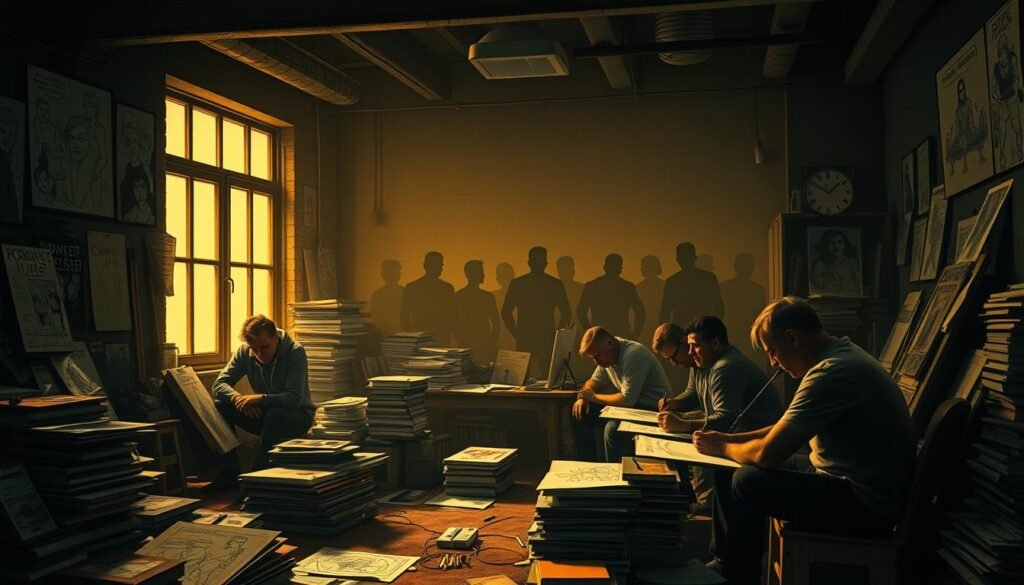
British comics are filled with creativity, thanks to many overlooked graphic novelists. They have greatly shaped the medium. While American readers might know about superheroes, the UK’s cult comic artists are a hidden treasure.
Frank Hampson, the creator of Dan Dare, changed science fiction comics in the 1950s. His detailed artwork and stories raised the bar for graphic novels. Yet, he’s not well-known outside of British comic fans. These artists added depth and complexity to comics, breaking new ground.
- Frank Hampson: Pioneering Dan Dare creator
- Frank Bellamy: Innovative illustrator of historical and science fiction strips
- Don Freeman: Master storyteller behind complex narrative arcs
British comics are home to unsung heroes with unique styles and storytelling. Their work has inspired many artists. They created worlds that still inspire today, from historical tales to science fiction.
“British comics represent a hidden universe of artistic innovation” – Comic Art Quarterly
Exploring this world shows how these artists made comics more than just fun. They turned them into a sophisticated art form. They combined storytelling, social commentary, and visual innovation.
Masters of Horror and Supernatural Comics
Horror comics are made special by offbeat storytellers who turn fear into art. These artists have created new ways to tell supernatural stories. They’ve made graphic novels more than just stories.
Supernatural comics are a mix of imagination and fear. Artists in this field create detailed worlds. They explore the darkest parts of our minds.
Tom Sutton’s Surreal Compositions
Tom Sutton changed horror comic art. His style was known for:
- Intricate, nightmarish detail work
- Surreal character designs
- Complex emotional storytelling
- Innovative panel compositions
Pablo Marcos’ Distinguished Style
Pablo Marcos also made a big impact in supernatural comics. His art was unique and drew readers in. His work showed:
- Dramatic shadow techniques
- Expressive character renderings
- Dynamic horror storytelling
Visual Storytelling in Horror Genre
The best horror comic artists know that fear isn’t just about violence. It’s about making us feel scared inside. They create stories that make us feel like we’re right there.
| Artist | Signature Technique | Notable Work |
|---|---|---|
| Tom Sutton | Surreal Composition | Charlton Horror Covers |
| Pablo Marcos | Dramatic Shadows | Tales of the Zombie |
These artists have made supernatural comics more than just fun. They’ve turned them into deep, meaningful art. Their work has changed graphic novels forever.
Revolutionary Artists of the Bronze Age
The Bronze Age of comics changed the world of graphic stories. It brought in new talents who pushed the limits of art in comics. From the early 1970s to the mid-1980s, these innovators changed how stories were told and looked.
During this time, comic artists broke free from old ways of telling stories. They explored deeper themes, made characters more complex, and tried new visual styles. These changes would affect many creators to come.
- Frank Miller’s gritty noir approach
- Jim Starlin’s cosmic storytelling
- Bernie Wrightson’s horror illustration style
“We weren’t just drawing comics—we were redefining an art form.” – Anonymous Bronze Age Artist
These artists added depth to comic book stories. They tackled big social issues, expanded what genres could be, and created new ways to tell stories. Their work spoke to more grown-up readers.
| Artist | Innovative Contribution | Signature Style |
|---|---|---|
| Gene Colan | Dynamic Panel Composition | Atmospheric Storytelling |
| Marshall Rogers | Architectural Panel Design | Detailed Urban Landscapes |
| Neal Adams | Realistic Human Proportions | Cinematic Action Sequences |
By exploring new ways to create, these talents made comics more than just fun. They turned comics into a serious art form. Their work still inspires artists today and shapes how we see graphic stories.
Innovative Techniques in Comic Book Art
The world of comic book art is always changing. Indie comic visionaries are leading the way with new ways to tell stories. They use artistic techniques that challenge old ways of making comics.
Comic artists have come up with new methods that change how we see comics. These methods take us beyond just looking at pictures. They make us feel like we’re part of the story in a new way.
Experimental Approaches to Panel Layout
Panel layout is key for telling stories. Artists now try out new designs that don’t follow the old grid:
- Asymmetrical panel arrangements
- Overlapping visual elements
- Non-linear narrative structures
- Dynamic spatial relationships between panels
“Breaking the grid means breaking the rules of storytelling” – Bill Sienkiewicz
Groundbreaking Color Applications
Color has become more than just for looks. It’s now a way to tell the story. Modern comic artists use color to:
- Convey emotional states
- Represent psychological landscapes
- Create visual metaphors
- Enhance narrative depth
Mixed Media Integration
The boldest indie comic visionaries mix different art forms. Experimental techniques now include:
- Photographic elements
- Digital manipulation
- Collage techniques
- Watercolor and digital hybrid approaches
These new methods show how offbeat comic storytellers keep changing the game. They’re pushing the limits of what comic book art can do.
The Impact of International Comic Artists
Unrecognized comic geniuses from all over the world have changed graphic storytelling. They bring fresh cultural views that shake up how we tell stories with pictures.
Artists from different countries have made a big mark on comic book art. They use their own styles, from European to Asian, to break new ground. This challenges the old ways of American comic books.
- Spanish artist Esteban Maroto pioneered intricate fantasy illustration techniques
- Argentinian creators developed sophisticated narrative structures
- Japanese manga artists introduced dynamic panel compositions
The global comic art scene is a rich mix of artistic voices. Each area adds its own way of telling stories, making the medium grow.
| Region | Artistic Contribution | Unique Style |
|---|---|---|
| Spain | Fantasy Illustration | Detailed Mythological Imagery |
| France | Graphic Novel Innovation | Philosophical Narrative Approach |
| Japan | Narrative Complexity | Dynamic Panel Layouts |
Exploring these international views, you’ll see how unknown comic geniuses have broadened storytelling. Their fresh ideas keep inspiring graphic novelists everywhere.
Conclusion
Exploring comics is an exciting journey of discovery. You find hidden gems of visual storytelling. These unsung talents bring new life to comics.
By supporting these artists, you help make comics more diverse. Each creator adds a unique voice. They challenge old stories and grow the art form.
The world of comics is always changing. Discovering new artists offers unique experiences. Your support can help these artists shine.
Every famous artist began as an unknown. By exploring these talents, you join a community that values creativity. Your passion can help celebrate the amazing diversity in comic art.
FAQ
Q: What are underrated comic artists?
A: Underrated comic artists are talented creators who haven’t gotten much recognition. They often work in indie comics. Their unique styles and storytelling push the medium’s boundaries.
Q: Why should I care about lesser-known comic artists?
A: Exploring underrated comic artists opens up a new world of creativity. They bring fresh perspectives and diverse storytelling. This can greatly expand your appreciation of comic book art.
Q: How can I find and support underrated comic artists?
A: To find underrated comic artists, check out indie comic shops and comic conventions. Follow indie publishers and explore online platforms like Kickstarter. Join forums and communities that celebrate underground creators.
Q: What makes a comic artist considered “underrated”?
A: An underrated comic artist has great talent but isn’t well-known. This might be because they work in niche genres or indie publishing. Or their work might be ahead of its time.
Q: Are underrated comic artists only found in specific genres?
A: No! Underrated artists are found in many genres, like horror, science fiction, and more. Each genre has its own hidden talents with unique perspectives and storytelling.
Q: How have underrated comic artists influenced the industry?
A: Many underrated artists have introduced new techniques and styles. Their work often challenges traditional comic book norms. This has pushed the medium forward.
Q: Can international comic artists be considered underrated?
A: Yes! International artists bring unique cultural perspectives and artistic traditions. They contribute greatly to the global comic book scene, offering diverse storytelling and visual styles.
Q: What challenges do underrated comic artists face?
A: Underrated artists face financial struggles, limited distribution, and lack of recognition. Despite these challenges, they keep creating groundbreaking work driven by passion and vision.
Q: How can readers help support underrated comic artists?
A: You can support underrated artists by buying their work, sharing it online, and attending their events. Back their crowdfunding campaigns and recommend their art. Engage with their creative communities.
Q: Are there specific periods in comic book history known for underrated artists?
A: Yes, the Underground Comix movement, the 1980s indie boom, and the digital age are rich in underrated artists. These periods saw artists challenge traditional norms and storytelling.