Watchmen Cultural Impact Graphic Novel
The Watchmen cultural impact graphic novel is a game-changer in the world of comics. This article will take you on a journey through its amazing storytelling, complex themes, and influential characters.
You’ll discover how Watchmen reshaped the comic landscape and continues to resonate with readers today. Let’s dive into this iconic work and see why it matters so much!
Key Lessons
- Watchmen changed how we see superheroes.
- It mixes real-life issues with comic book stories.
- Characters have deep, personal struggles.
- The story questions good vs. evil.
- Watchmen inspired many other comics and movies.
The Watchmen Cultural Significance in Comics
How Watchmen Changed the Comic Landscape
The Watchmen comic book series, created by Alan Moore and Dave Gibbons, truly changed the way we view comics. Released in 1986, it introduced readers to a gritty, realistic world where superheroes faced real-life issues. This was a game changer!
Before Watchmen, comics often featured clear-cut heroes and villains. But this series blurred those lines, showing that heroes could be flawed and complex. This shift made many readers rethink what comics could be and opened the door to a new era in comic storytelling.
The Role of Watchmen in Graphic Novel Evolution
Watchmen is often called one of the first graphic novels. It pushed the boundaries of what a comic could be. By combining deep themes with stunning artwork, it set a high standard for future graphic novels.
Here’s a quick look at how Watchmen influenced graphic novels:
| Aspect | Impact of Watchmen |
|---|---|
| Storytelling | Complex narratives with adult themes |
| Character Development | Flawed heroes and moral ambiguity |
| Art Style | Detailed artwork that complemented the story |
| Cultural Commentary | Reflections on society and politics |
This table shows how Watchmen helped shape the graphic novel landscape, encouraging creators to tell deeper, more meaningful stories.
Understanding Watchmen’s Unique Storytelling
The storytelling in Watchmen is something special. It mixes flashbacks, multiple viewpoints, and even a story within a story. This method keeps you engaged and makes you think. You may find yourself pondering the characters’ choices long after you finish reading.
The series also uses symbols and motifs, like the smiley face and the doomsday clock, to convey deeper meanings. These elements invite you to look beyond the surface, revealing more with each turn.
In conclusion, the watchmen cultural impact graphic novel is undeniable. It transformed the comic industry, encouraging new stories and fresh perspectives. If you haven’t read it yet, you’re in for a treat!
Themes and Motifs in the Watchmen Graphic Novel
Exploring the Complex Themes of Watchmen
Watchmen dives deep into heavy themes that make you think. One major theme is power and corruption. It shows how those in power can easily become corrupt, a reflection of real-life situations.
Another theme is morality. The characters often face tough choices, questioning what is right and wrong. This makes you wonder about your own values. Would you do the right thing if it meant hurting someone?
The Motifs That Make Watchmen Stand Out
Watchmen uses motifs that stick with you. One of the most famous is the smiley face, which represents the darker side of humanity. It serves as a reminder that things aren’t always what they seem.
Another motif is the clock. The “Doomsday Clock” symbolizes the constant threat of nuclear war, adding tension and urgency to the story.
| Motif | Meaning |
|---|---|
| Smiley Face | Innocence hiding darkness |
| Doomsday Clock | Imminent danger and urgency |
How Themes Resonate with Readers Today
These themes are still relevant today. The power struggle we see in Watchmen mirrors the political climate of our time. Many feel disillusioned with leaders, just like the characters in the graphic novel.
The moral dilemmas faced by the characters can resonate with you, too. You might find yourself grappling with tough decisions in your own life.
In conclusion, the watchmen cultural impact graphic novel is not just a story; it’s a reflection of society. It challenges you to think deeply about power, morality, and the world around you.
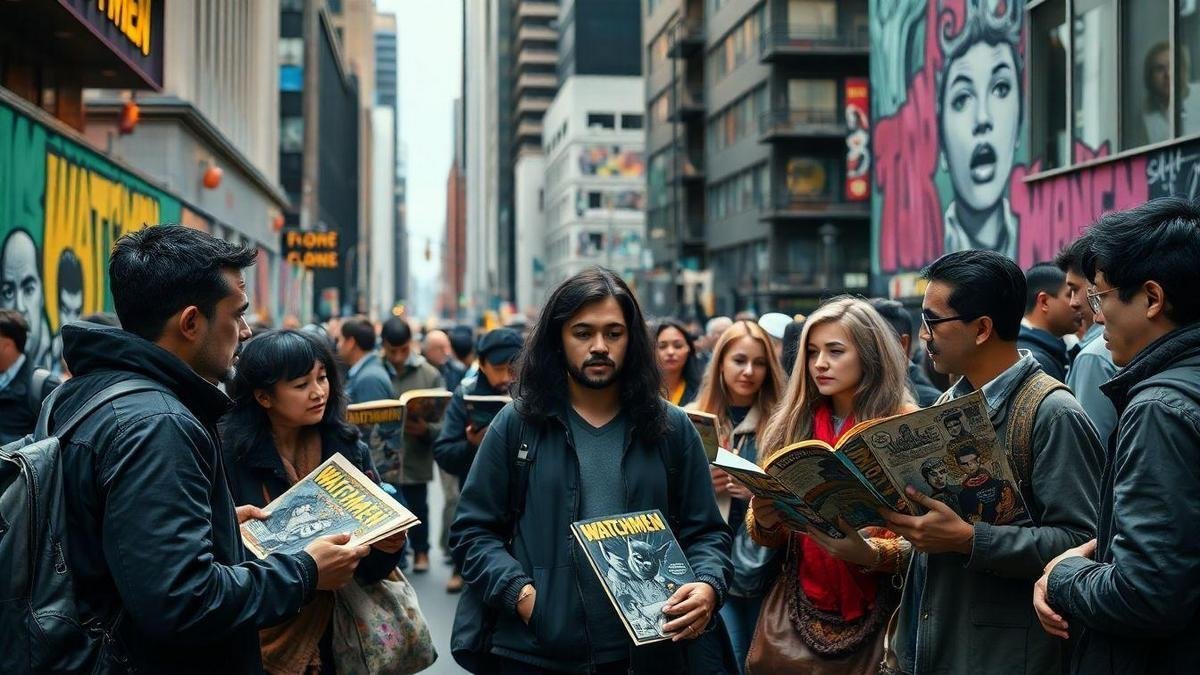
Watchmen’s Impact on Society and Culture
The Social Commentary Found in Watchmen
Watchmen isn’t just a comic; it’s a mirror reflecting the world around us. The story dives deep into social issues like power, morality, and the nature of heroism. You’ll find characters that challenge the traditional superhero mold, prompting you to think about what it truly means to be a hero.
Characters like Rorschach and Dr. Manhattan highlight the complexities of morality. Rorschach sticks to his black-and-white view of justice, while Dr. Manhattan shows a more detached perspective. This contrast raises the question: Is there really a right or wrong?
How Watchmen Reflects Real-World Issues
When you read Watchmen, you can’t help but notice how it tackles real-world problems. The graphic novel speaks about the Cold War, the fear of nuclear war, and the ethics of power. These themes resonate with many people today.
Here’s a quick look at some of the real-world issues reflected in Watchmen:
| Issue | Watchmen Element |
|---|---|
| Nuclear Threat | The Doomsday Clock |
| Government Control | The Keene Act |
| Morality | Rorschach’s Journal |
| Identity | Dr. Manhattan’s existential crisis |
This table shows how the novel mirrors our society and the challenges we face.
The Lasting Influence of Watchmen on Society
Watchmen has made waves in the world of comics and beyond. It paved the way for other graphic novels to explore serious themes. Many creators look to Watchmen as a blueprint for storytelling that goes beyond mere entertainment.
The impact doesn’t stop there. Movies, TV shows, and even video games have borrowed elements from this iconic work. It has sparked discussions about ethics, power, and the role of heroes in society.
In short, Watchmen has left a mark on culture that continues to inspire and provoke thought.
Character Development in the Watchmen Graphic Novel
Analyzing the Depth of Watchmen Characters
In the Watchmen graphic novel, characters are not just heroes in capes; they are complex individuals. Each character has their own backstory, feelings, and flaws.
For example, take Rorschach. He is tough and uncompromising, but his past reveals a troubled childhood. This makes you think about what shaped him.
On the other hand, Dr. Manhattan is a god-like figure who struggles with his humanity. This contrast shows the depth of the characters and makes you question what it means to be human.
| Character | Key Traits | Backstory Highlights |
|---|---|---|
| Rorschach | Tough, uncompromising | Troubled childhood |
| Dr. Manhattan | God-like, detached | Struggles with humanity |
| Ozymandias | Intelligent, calculating | Driven by a grand vision |
| Nite Owl | Brave, insecure | Struggles with self-worth |
The Growth of Characters Through the Story
As you dive deeper into the Watchmen story, you notice how characters evolve. Nite Owl, for instance, starts as a hero unsure of himself.
But as the story unfolds, he finds his courage and steps up when it matters. Similarly, Ozymandias believes he is doing the right thing for humanity, yet his choices lead to shocking consequences. This growth reflects real-life struggles, showing that just like you, these characters face challenges and learn from them.
Why Character Development Matters in Watchmen
Character development is crucial in Watchmen. It helps you connect with the story on a personal level. When you see characters grow, you can relate to their struggles, making the story more impactful.
It’s not just about good versus evil; it’s about understanding human nature. This exploration of characters adds layers to the watchmen cultural impact graphic novel, making you think about your own choices and the world around you.
Alan Moore’s Vision in the Watchmen Graphic Novel
The Creative Genius Behind Watchmen
When you think about Watchmen, you can’t help but think of Alan Moore. This graphic novel is a true masterpiece that changed how we see comics.
Moore didn’t just write a story; he crafted a world where heroes are flawed and real. He took a deep dive into what it means to be a hero, making you question everything you thought you knew.
Alan Moore’s Influence on Comic Storytelling
Moore’s work on Watchmen has had a lasting effect on comic storytelling. He introduced complex characters and intricate plots that go beyond simple good vs. evil. This was a game-changer! Readers began to expect more from comics, wanting stories that made them think and feel.
Here are a few ways Moore influenced the comic industry:
| Influence | Description |
|---|---|
| Character Depth | Heroes with flaws and real-life struggles. |
| Mature Themes | Tackling issues like power, morality, and society. |
| Non-linear Narratives | Stories that unfold in unexpected ways. |
| Graphic Storytelling | Using visuals to enhance the narrative. |
How Moore’s Ideas Changed the Comic Industry
Moore’s ideas didn’t just stay in Watchmen; they spread like wildfire. Other writers and artists started to explore deeper themes and more complex characters. This shift opened the door for more mature and thought-provoking stories in comics.
For example, after Watchmen, we saw titles like Sandman and V for Vendetta push boundaries even further. Writers were no longer afraid to tackle real-world issues, making comics a platform for serious storytelling.
In summary, Alan Moore’s vision in Watchmen reshaped the comic landscape. His work paved the way for a new era of storytelling that resonates with readers even today.
The Watchmen Influence on Modern Storytelling
How Watchmen Shaped Narrative Techniques
When you think about storytelling in comics, Watchmen stands out as a game-changer. This graphic novel didn’t just tell a story; it redefined how stories could be told. With its non-linear narrative, it encouraged writers to play with time and structure, taking readers on a winding journey.
Watchmen also introduced the idea of complex characters. Each hero had flaws, making them feel real and relatable. This was a significant shift from the traditional “good vs. evil” tales, prompting readers to think deeply about the characters.
Here’s a quick look at some of the narrative techniques Watchmen popularized:
| Technique | Description |
|---|---|
| Non-linear storytelling | Events are shown out of order, creating suspense. |
| Complex characters | Heroes with flaws, making them relatable. |
| Multiple perspectives | Different viewpoints enrich the story. |
The Legacy of Watchmen in Popular Culture
The legacy of Watchmen is everywhere in popular culture. You might not realize it, but many movies and shows borrow from its style. Think of the gritty realism in superhero films today. That tone? It’s a direct descendant of Watchmen.
You can see its influence in series like The Boys and Daredevil, where the heroes are not just fighting villains but also facing their inner demons. This approach has changed the game for how stories are told across various mediums.
Why Watchmen is a Must-Read for Storytellers
If you’re a storyteller, Watchmen is a must-read. It’s not just about superheroes; it’s about human nature. The themes of power, morality, and identity are relevant to everyone.
Reading Watchmen can open your eyes to new storytelling possibilities. It challenges you to think outside the box and create characters that resonate with your audience. Plus, you’ll find yourself inspired to tackle complex themes in your own work.
In short, Watchmen is more than just a graphic novel; it’s a blueprint for anyone looking to make their mark in storytelling.
Conclusion
In wrapping up our exploration of the Watchmen cultural impact graphic novel, it’s clear that this iconic work is more than just a collection of colorful panels.
It’s a transformative masterpiece that has reshaped the comic book landscape, challenging how we perceive heroes, morality, and society. The complex characters and thought-provoking themes invite you to reflect on your own values and the world around you.
So, if you haven’t yet taken the plunge into this gritty and realistic universe, now’s the time! You’ll find yourself questioning what it truly means to be a hero and how power can corrupt. Remember, Watchmen isn’t just a story; it’s a mirror reflecting our own humanity.
For more insights and articles that will spark your imagination, don’t forget to check out Hero and Villain World. Happy reading!
Frequently asked questions
The Watchmen graphic novel changed how people see comics. It brought deep themes and complex characters, influencing many stories in movies and books.
Watchmen set a new standard, leading to darker, more mature stories in graphic novels today. It also made creators think about storytelling differently, much like the impact seen in the evolution of comic storytelling.
Watchmen is called a classic because of its unique art and powerful writing. You can read it on many levels, making it timeless. Lots of people still discuss its themes today, similar to the discussions around other seminal works in comics.
Yes! Watchmen‘s impact reaches pop culture, from movies and shows to music. You might notice references to it in various media, sparking conversations on heroism and morality, much like the impact of other iconic comics.
Watchmen dives into big themes like power, ethics, and humanity. You’ll think about what makes a hero and the cost of peace. It’s a book that stays with you long after reading, echoing the themes found in other impactful stories.