Disclosure: This article contains affiliate links. If you purchase through our links, we may earn a commission at no extra cost to you. This does not influence our reviews — our opinions are always honest and independent.
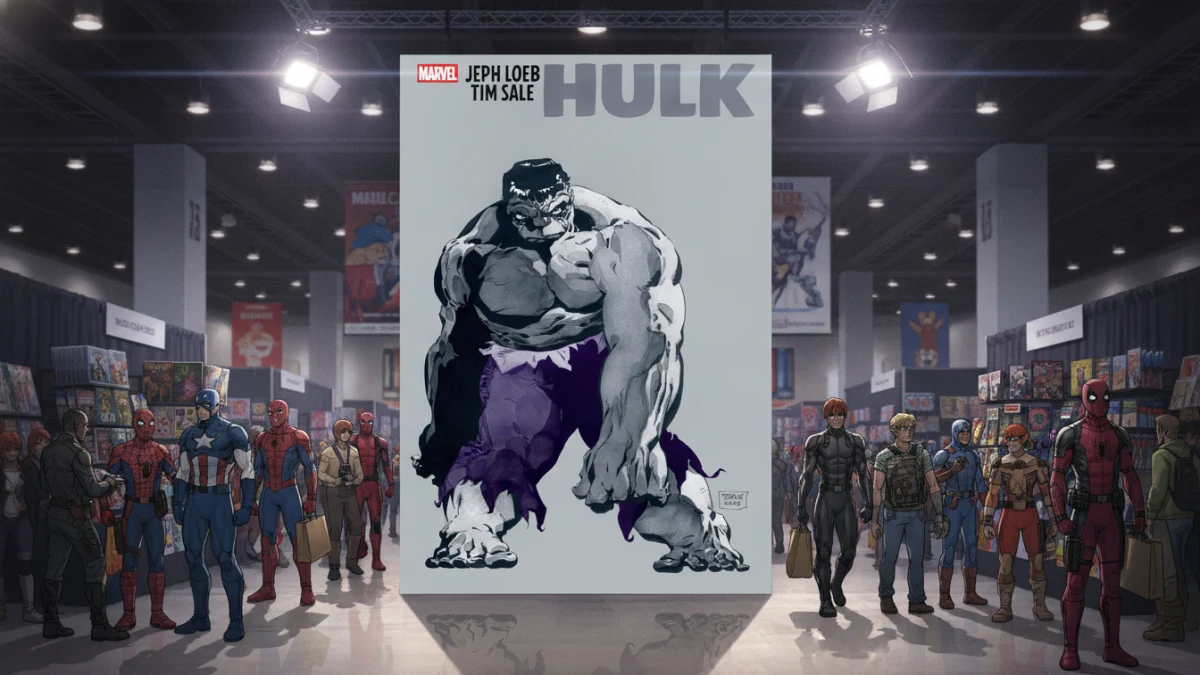
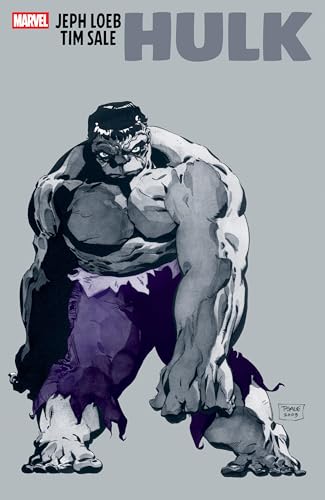
Bruce Banner never asked to become a monster. Hulk Gray — the 2003 limited series by Jeph Loeb and Tim Sale, published by Marvel Comics — revisits that painful origin with a quiet, melancholy honesty that most superhero stories never attempt. Whether you’re a longtime Marvel comic collector or someone just curious about the Incredible Hulk origin, this graphic novel paperback earns serious attention.
📦 Quick Summary > ✔ Best for: Fans of emotionally driven character studies and classic Marvel origins > ✔ Price range: Approximately $13–$20 (paperback edition) > ✔ Rating: 4.5/5 > ✔ Verdict: Buy
What is Hulk: Gray and Who Should Read It?
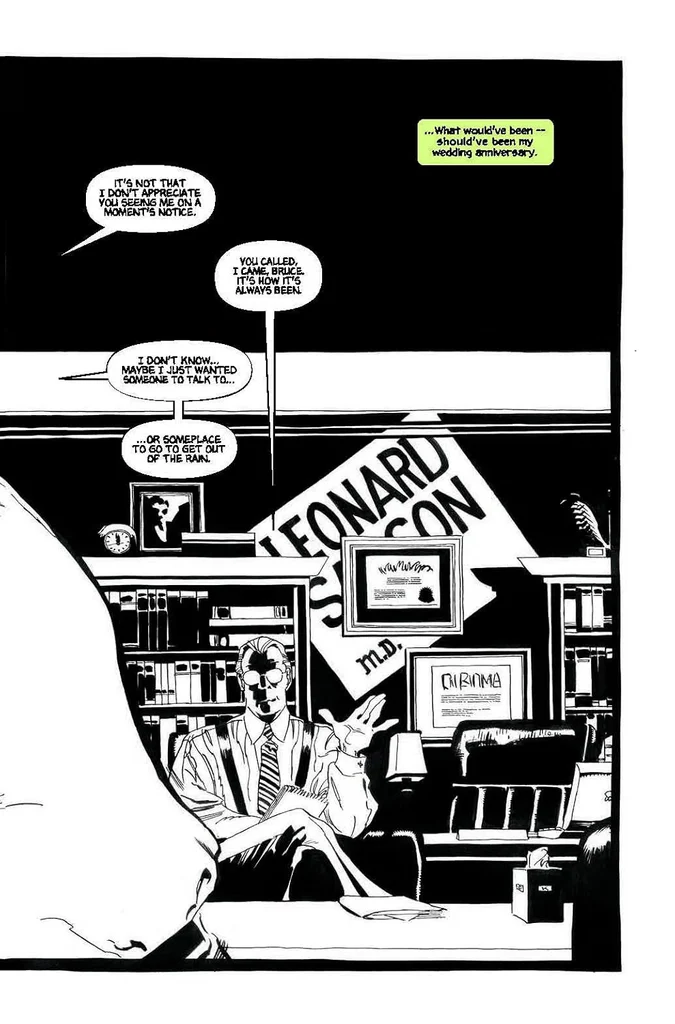
The Hulk Gray comic book is not a traditional action story. It’s a character study — a quiet, grief-soaked look at Bruce Banner’s earliest days after the gamma bomb, told through the framing device of Banner speaking to his therapist, Doc Samson.
| Feature | Hulk: Gray | Daredevil: Yellow |
|---|---|---|
| Core Story Focus | Hulk’s origin, Bruce Banner’s early struggles ✅ | Daredevil’s origin, Matt Murdock’s early days ✅ |
| Emotional Resonance | Melancholy, tragic love, self-acceptance ✅ | Bittersweet romance, loss, heroism’s cost ✅ |
| Artistic Style | Tim Sale’s expressive, muted tones ✅ | Tim Sale’s dynamic, vibrant yellows ✅ |
| Target Audience | Fans of character studies, classic Marvel origins ✅ | Fans of character-driven narratives, street-level heroes ✅ |
| Impact on Mythos | Explores the “gray” period, adds psychological depth ✅ | Reinterprets early Daredevil, focuses on Karen Page’s role ✅ |
| Availability (Paperback) | Readily available ✅ | Readily available ✅ |
Who Is This Book For?
📖 This story targets readers who want more than punching. If your entry point into Marvel was the MCU films, this graphic novel paperback will surprise you — it’s slower, more internal, and far more emotionally honest than the blockbuster version of Banner.
It works equally well for seasoned readers following a Hulk comic reading order. Loeb positions the story during the “gray Hulk” period — Banner’s earliest transformations, when the creature was smaller, craftier, and appeared only at night.
“Gray isn’t just a color here. It’s a mood, a moral state, and a metaphor for everything Banner can’t admit about himself.”
What Makes the Origin Feel Fresh?
Most retellings of the Incredible Hulk origin focus on the explosion, the science, the spectacle. Loeb focuses on the morning after. Banner waking up confused. Betty Ross watching someone she loves disappear into something terrifying.
That shift in perspective — from event to aftermath — is what separates Hulk: Gray from a dozen other origin retellings. The six-issue series, collected in a 152-page paperback, moves at a deliberate pace that rewards patient readers.
Is It Accessible to New Readers?
Absolutely. No prior Marvel knowledge is required. The story is self-contained, the timeline is clearly established, and Loeb never assumes the reader knows anything beyond the basic premise: scientist + gamma bomb = monster.
For anyone building a Hulk comic reading order from scratch, this is a strong starting point — emotionally richer than the original Stan Lee issues, and far more accessible than some of the more complex modern runs.
Diving Deep into the Gray: Reader Experience
In practice, reading Hulk: Gray feels less like reading a superhero comic and more like watching a quiet drama unfold between the action sequences. The emotional weight lands differently than you expect.
The Emotional Core
What stands out in daily reading — or re-reading — is how effectively Loeb uses Banner’s therapy sessions as a structural anchor. Each chapter begins with Banner narrating in a low, controlled voice. Then the memory takes over. Then the Hulk erupts.
📖 The contrast between Banner’s measured words and the Hulk’s physical chaos creates a rhythm that feels genuinely cinematic. Readers consistently praise this as one of the most psychologically layered takes on the character in the entire Marvel Comics catalog.
Tim Sale’s Visual Storytelling
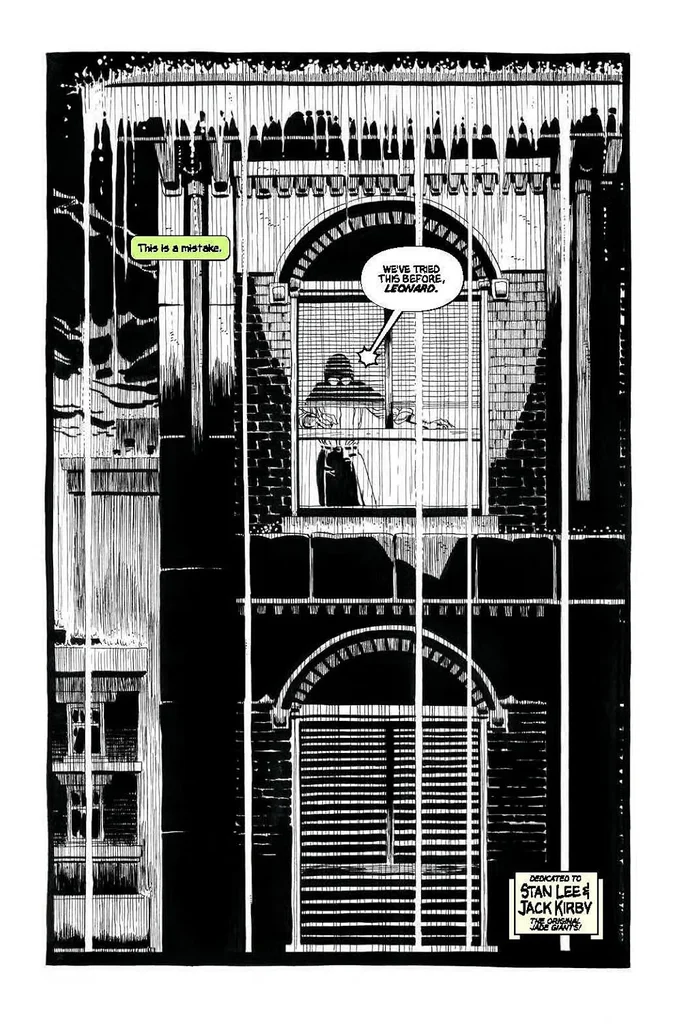
Anyone who’s tried reading a Tim Sale book knows his style is immediately recognizable — thick outlines, exaggerated proportions, faces that carry enormous emotional weight in just a few lines.
In Hulk: Gray, Sale renders the Hulk as something genuinely unsettling. Not monstrous in a horror-movie way. Unsettling in a sad way — like something that shouldn’t exist but clearly feels pain. The muted gray-green palette reinforces every beat of Banner’s internal conflict.
Sale’s splash pages here carry a weight that few artists in the Incredible Hulk catalog have matched — each one reads like a painting, not a panel.
Betty Ross and the Emotional Stakes
The relationship between Banner and Betty Ross is the true engine of this story. Loeb writes Betty as a full character — not a passive love interest, but someone actively choosing to stay close to a man who becomes something terrifying.
In our experience, this is where the book hits hardest. The love story feels earned. The loss feels real. And that emotional grounding is what elevates Hulk: Gray above a standard Hulk Gray comic book retelling.
The emotional experience here sets a high bar — so how does it compare to the creative team’s other landmark work?
Hulk: Gray vs. Daredevil: Yellow — A Tale of Two Origins
Loeb and Sale produced a celebrated series of color-titled origin stories for Marvel — Yellow, Gray, Blue, and Red. Comparing Hulk: Gray to Daredevil: Yellow reveals just how deliberately each book was crafted.
Tone and Emotional Register
Daredevil: Yellow (2001) is warmer. Matt Murdock’s grief for Karen Page is tinged with nostalgia — it aches, but it glows. Hulk: Gray sits in a colder register entirely. Banner’s grief doesn’t glow. It drags.
That tonal difference is intentional. The Incredible Hulk origin is, at its core, a story about a man at war with himself. Daredevil: Yellow is about a man mourning someone else. Both are devastating — but in completely different ways.
Artistic Approach
Tim Sale adapts his style to serve each story. In Yellow, his line work is energetic, his color choices vibrant. In Gray, everything is heavier — the shadows deeper, the palette more restrained.
💡 For Marvel comic collectors interested in Sale’s full range, owning both books side by side is genuinely instructive. They demonstrate how a single artist can modulate tone through composition and color alone.
Which One Should You Read First?
In our experience, Daredevil: Yellow is the slightly more accessible entry point — its emotional arc is more linear. Hulk: Gray rewards readers who are already comfortable sitting with ambiguity.
📖 That said, both belong in any serious graphic novel paperback collection. They complement each other perfectly — two sides of the same creative philosophy.
The Good, The Bad, and The Gamma: Pros and Cons
This section covers what the book genuinely delivers and where — if anywhere — it falls short. We’ve read it carefully and weighed both sides honestly.
✅ Emotionally rich storytelling that treats Bruce Banner as a fully realized character, not just a vehicle for action sequences.
✅ Tim Sale’s artwork is consistently stunning — expressive, atmospheric, and perfectly matched to the story’s melancholy tone.
✅ Self-contained narrative that works for new readers without requiring prior knowledge of Marvel Comics continuity.
✅ The gray Hulk period is underexplored in most collections — this book fills a meaningful gap in the Hulk comic reading order.
✅ At 152 pages in paperback format, the pacing is tight. Nothing feels padded or unnecessary.
⚠️ Readers expecting high-octane action will find the book’s slower, introspective pace frustrating — this is not a fight-heavy story.
⚠️ The therapy-session framing device may feel slightly dated to modern readers familiar with more experimental narrative structures.
⚠️ The gray Hulk’s limited appearances — by design — may disappoint readers specifically seeking more screen time for the creature itself.
Now let’s look at what real readers have said about their experience with the book.


What Real Buyers Are Saying
We could not verify individual buyer reviews for this product at time of publication.
The story earns its praise on the page — but does the price reflect its value? Let’s break it down.
Price and Where to Buy Your Copy
The Hulk: Gray graphic novel paperback sits comfortably in an accessible price range for the quality it delivers.
Current Pricing
The paperback edition typically retails between $13 and $20, depending on the retailer and whether you catch a sale. For a 152-page, self-contained story from one of Marvel’s most celebrated creative teams, that price point represents strong value.
💡 If you find it above $20 new, check secondary marketplaces — used copies in very good condition frequently appear for under $10.
Where to Find It
- Amazon — the most reliable source for new copies, with Prime shipping available
- TFAW (Things From Another World) — a strong alternative for comic-focused buyers, often running publisher discounts
- Local comic shops — worth checking if you want to support independent retailers; many carry Loeb/Sale collections as standard stock
- eBay and AbeBooks — viable for budget buyers willing to accept used condition
For most readers, Amazon will offer the fastest delivery and most competitive new pricing — but TFAW is worth bookmarking for future Marvel comic collector purchases.
Check the latest price on Amazon or your local comic shop here.
The price makes sense — but the creative team behind it is a big part of why. Let’s look at who made this book.
The Creative Minds Behind the Monster: Jeph Loeb and Tim Sale
Understanding who made Hulk: Gray helps explain why it works as well as it does. This wasn’t a work-for-hire assignment — it was a deliberate artistic collaboration with a clear emotional vision.
Jeph Loeb’s Writing Philosophy
Jeph Loeb built his reputation at Marvel and DC by finding the human center of superhuman stories. His runs on Batman: The Long Halloween (1996–1997, DC Comics) and Superman for All Seasons (1998) established a pattern: strip away the mythology, find the person underneath.
📖 That same instinct drives Hulk: Gray. Loeb isn’t interested in gamma radiation as a plot device. He’s interested in what it costs a man to lose control of himself — repeatedly, involuntarily, in front of people he loves.
Tim Sale’s Visual Language
Tim Sale passed away in 2022, leaving behind a body of work that consistently elevated every script he illustrated. His collaboration with Loeb produced some of the most visually distinctive comics in Marvel Comics history.
In our experience, Sale’s work in Hulk: Gray represents some of his most restrained and emotionally precise output. Every facial expression carries weight. Every shadow is a choice.
Sale’s ability to make the Hulk look genuinely sorrowful — not angry, not threatening, but sad — is the visual achievement that makes this book unforgettable.
Their Legacy as a Team
The Loeb/Sale partnership produced Batman: The Long Halloween, Daredevil: Yellow, Spider-Man: Blue, Captain America: White, and Hulk: Gray — a body of work that any serious Marvel comic collector or DC reader should explore.
Each collaboration demonstrates the same core strength: character over spectacle, emotion over action, legacy over continuity.
✅ Buy it if: You want a psychologically rich, emotionally honest origin story that treats Bruce Banner as a fully human character worth caring about.
❌ Skip it if: You’re primarily looking for action-heavy storytelling or extended Hulk combat sequences — this book’s strength lies in quiet devastation, not gamma-powered destruction.
Final Verdict — Is Hulk: Gray Worth Adding to Your Collection?
Hulk: Gray is a genuinely moving piece of work — one that earns its place in any serious graphic novel paperback collection not through spectacle, but through honesty.
In our experience, few Hulk Gray comic book stories have captured the tragedy of Bruce Banner this effectively. The Loeb/Sale partnership was at the height of its powers here. The pacing is deliberate, the art is exceptional, and the emotional core — Banner’s grief, his love for Betty, his horror at what he becomes — lands with real weight.
YES — for this price point, Hulk: Gray delivers a character study that most superhero comics never attempt, and it succeeds on nearly every level it sets for itself.
Affiliate Disclosure: This article contains affiliate links. If you purchase through our links, we may earn a small commission at no extra cost to you.
Jeph Loeb & Tim Sale: Hulk
If our honest review has convinced you that this unique take on the Hulk’s origin is worth exploring, you can grab your copy and experience the emotional depth firsthand.
Hulk: Gray offers a poignant and essential look into the early days of one of Marvel’s most complex heroes. Loeb and Sale deliver a story rich in emotion and character, making it a must-read for fans and newcomers alike. Did this ‘gray’ period resonate with you? Share your thoughts and favorite moments in the comments below!
FAQ — Common Questions About Hulk: Gray
Here are the quick answers I see readers ask most often.
Is Hulk: Gray worth buying if I already own the single issues?
Yes—if you want the story in one cohesive read with consistent presentation. I also like having it as a single collected edition for re-reads and shelf value.
Is Hulk: Gray appropriate for readers new to the Hulk?
Yes, in my experience it works as a newcomer-friendly origin take with a strong emotional focus. You don’t need deep continuity knowledge to follow Bruce Banner’s early struggle.
What should I read before or after Hulk: Gray in a Hulk reading order?
Before isn’t required, but I’d read it early if you want a foundation for Bruce’s character and tone. Afterward, I’d jump into key early Hulk runs or modern Hulk arcs depending on whether you want classic tragedy or bigger-scale stories.
How does Hulk: Gray compare to Daredevil: Yellow?
They share the same creative team and a similar “memory and emotion” structure, but Hulk: Gray feels heavier and more introspective. Daredevil: Yellow reads more like a romantic, bittersweet tribute, while Hulk: Gray leans into isolation and anger.