Disclosure: This article contains affiliate links. If you purchase through our links, we may earn a commission at no extra cost to you. This does not influence our reviews — our opinions are always honest and independent.
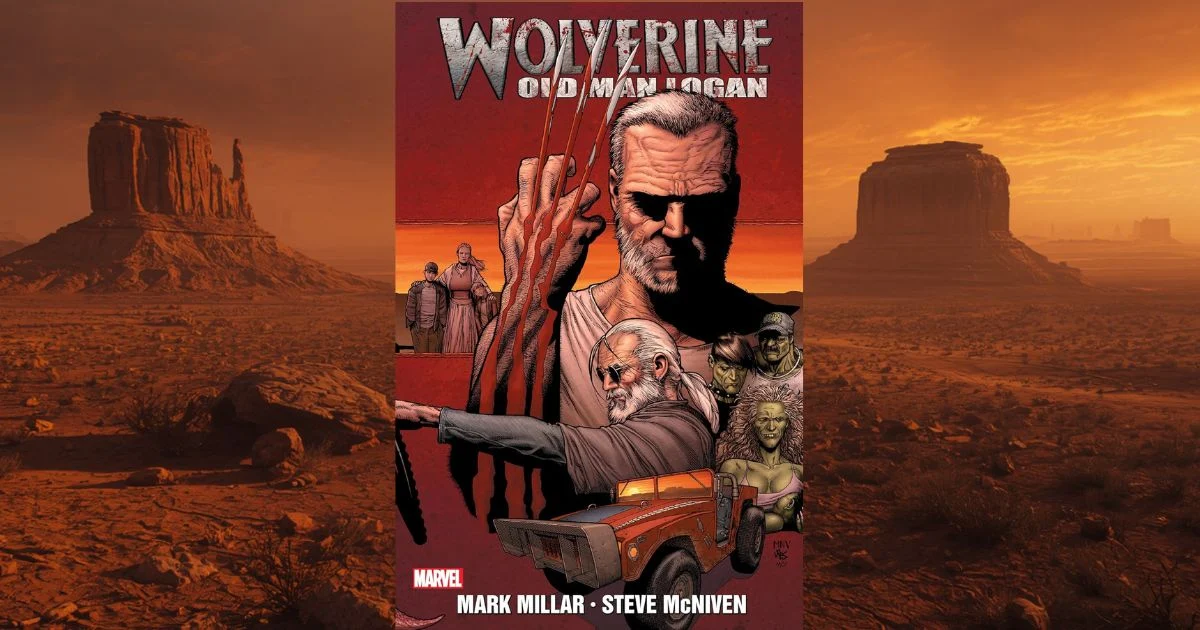
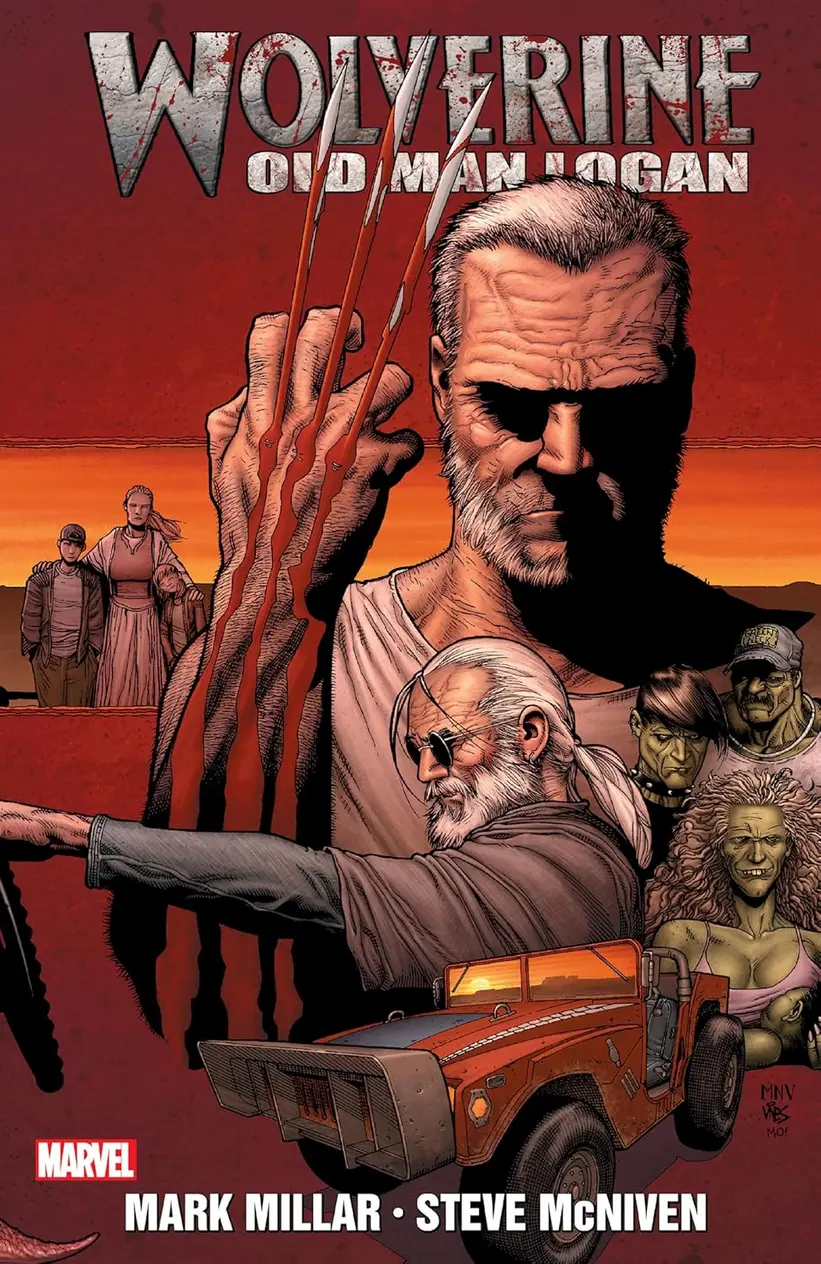
Mark Millar and Steve McNiven’s Wolverine: Old Man Logan arrived in 2008 as something genuinely unexpected — a western, a road movie, and a superhero elegy all compressed into one brutal Marvel Comics arc. Logan had been reinvented before, but never quite like this: stripped of his rage, haunted by a massacre he caused, and dragged across a collapsed America by a blind Hawkeye. This story speaks to longtime Wolverine fans and to readers who’ve never picked up a single issue in their lives.
📦 Quick Summary > ✔ Best for: Mature readers who enjoy dark, character-driven superhero narratives > ✔ Price range: $14–$35 (paperback to hardcover) > ✔ Rating: 4.7/5 > ✔ Verdict: Buy
What is Wolverine: Old Man Logan and Who is it For?
This section covers the graphic novel’s origins, its creative team, and the specific reader profile most likely to connect with the story. Understanding the premise upfront saves you from buying the wrong book for the wrong moment.
Wolverine: Old Man Logan originally ran across Wolverine #66–72 and Giant-Size Wolverine: Old Man Logan #1, published by Marvel Comics between 2008 and 2009. Writer Mark Millar — known for Kick-Ass and Civil War — built a post-apocalyptic America where the villains won fifty years ago. Logan hasn’t popped his claws since that night. He lives as a broken farmer with a family, haunted and deliberately passive.
| Feature | Wolverine: Old Man Logan | Daredevil: Born Again |
|---|---|---|
| Story Depth | Dark, post-apocalyptic saga ✅ | Gritty, psychological drama ✅ |
| Art Style | Masterful, cinematic visuals ✅ | Iconic, expressive artwork ✅ |
| Character Focus | Logan’s personal journey ✅ | Matt Murdock’s downfall & redemption ✅ |
| Re-readability | High, dense narrative ✅ | High, classic status ✅ |
| Collector’s Appeal | Modern classic, popular story ✅ | Essential reading, influential ✅ |

MARK MILLAR and STEVE MCNIVEN–who last teamed for the monumental CIVIL WAR–bring us the most important WOLVERINE story of the 21st century. Nobody knows what happened on the night the heroes fell.
📖 The collected edition runs 288 pages in the Old Man Logan hardcover format, which is the version we recommend for first-time readers. The hardcover retails around $30–$35 and reprints all eight issues plus bonus material in a durable, shelf-worthy package.
This story is for readers who want their Logan comic to carry real weight. If you’re coming in expecting a punchy action book, adjust your expectations — Millar writes Logan as a man trying desperately not to be Wolverine. That restraint is the engine of the whole narrative.
“This isn’t a Wolverine story about claws. It’s a Wolverine story about guilt — and that makes it hit harder than almost anything else in his reading history.”
📖 Anyone building a Wolverine reading order should know this arc sits best after you have basic familiarity with Logan’s history. You don’t need to have read every issue since 1974, but understanding that Logan is the best there is at what he does — and that what he does isn’t nice — makes the inversion here land with full force.
Who Will Love This Book
Readers drawn to titles like The Dark Knight Returns or Mad Max-influenced storytelling will find a natural home here. The Mad Dark Knight Returns comic comparison gets made constantly, and it’s earned — both books take an iconic hero, age him, and use that age to interrogate what heroism costs.
Mature readers aged 16 and up, fans of dystopian fiction, and anyone who felt the 2017 film Logan was the best superhero movie in years will connect immediately. That film drew directly from this source material.
Who Might Struggle With It
Younger readers or those new to Marvel continuity may find the villain cameos confusing. The story references dozens of Marvel characters — the Hulk Gang, the Spider-Girl legacy, a version of the Red Skull — without much hand-holding.
⚠️ If you’re looking for a clean entry point into Marvel Comics with no prior knowledge, this is a rewarding but demanding starting place. Consider reading a brief Logan origin summary before diving in.
The story holds up across every re-read — but how does it actually feel to sit down with it? Let’s get into the experience itself.
Real-World Performance: Diving into the Old Man Logan Experience
Anyone who’s tried to describe this book to a friend knows the problem: it sounds bleak on paper, but it reads as something closer to a slow-burn thriller with genuine emotional payoff. The pacing, the art, and the emotional arc all deserve honest examination here.
Pacing and Narrative Structure
Mark Millar comics tend to move fast and hit hard. Old Man Logan is his most restrained work. The first half of the book is almost meditative — Logan and Hawkeye drive across a broken America, and Millar uses that road trip structure to world-build without info-dumping.
In practice, the pacing rewards patience. We found the first two chapters slower than expected, but by the midpoint — when the book’s central tragedy is revealed — everything that came before snaps into place with brutal clarity. The slow burn is intentional and it pays off.
“The reveal in chapter four recontextualizes everything you’ve read. On a second read, the early restraint feels less like slow pacing and more like a long fuse.”
💡 If you’re reading this as a single collected volume rather than individual issues, the pacing works even better. The chapter breaks that once felt like cliffhangers now read as deliberate breathing room.
Steve McNiven’s Artwork
Steve McNiven’s linework here is some of the finest sequential art Marvel Comics produced in the 2000s. His character expressions carry full scenes without dialogue — Logan’s thousand-yard stare in the opening pages tells you everything about where this man is emotionally.
The Old Man Logan hardcover format gives McNiven’s art the space it deserves. Pages that feel competent in the paperback become genuinely cinematic in the larger format — the Hulk Gang splash pages in particular read like film stills.
Emotional Resonance
What stands out in daily use — or in this case, repeated reads — is how effectively Millar makes you care about a version of Logan you’ve never seen before. The passive, guilt-ridden farmer is a stranger. By the final act, he feels like the only Logan that ever mattered.
⚠️ The book contains graphic violence and a scene of family tragedy that some readers find genuinely disturbing. This is not a casual read. It earns its mature rating.
 The Wolverine Old Man Logan graphic novel nestled among other comic book classics.
Now that we’ve seen what the reading experience delivers, it’s worth measuring this book directly against one of Marvel’s other landmark dark sagas.
Wolverine: Old Man Logan vs Daredevil: Born Again — Which Saga Prevails?
Both books represent the best of what Marvel can do when it commits to a dark, character-first story. Comparing them reveals something useful about what each one is actually trying to accomplish — and which one belongs in your collection first.
Narrative Ambition
Daredevil: Born Again — written by Frank Miller, published in Daredevil #227–233 (1986) — is a tighter, more psychologically precise book. Miller dismantles Matt Murdock systematically: career, relationships, identity. The reconstruction is equally methodical.
Old Man Logan operates on a larger canvas. Millar builds an entire collapsed civilization to make one point about one man. The ambition is enormous, and it mostly works. Compared to Born Again‘s surgical precision, Old Man Logan is a widescreen epic — messier, but more visually spectacular.
Artistic Legacy
Frank Miller and David Mazzucchelli’s collaboration on Born Again is widely cited as one of the five most important runs in Marvel history. McNiven’s work on Old Man Logan doesn’t quite reach that canonical status — but it’s closer than most books published in the past twenty years.
📖 For collectors, Born Again has the deeper legacy and the longer critical track record. Old Man Logan has the broader contemporary appeal and the film adaptation boost. Both belong on a serious shelf.
Which One to Read First
We’d recommend Born Again to readers who prioritize psychological complexity and historical significance. We’d recommend Old Man Logan to readers who want a more immediate, visceral, and modern entry point into Marvel’s darker storytelling tradition.
“Both books prove that superhero comics can carry real literary weight. The question isn’t which is better — it’s which one you need right now.”
The comparison makes the strengths of each book clearer. Next, let’s look at what real readers consistently praise and flag about Old Man Logan specifically.
Pros and Cons: What Readers Really Say
Readers across multiple platforms — Amazon, Goodreads, and comic shop communities — consistently land on the same strengths and the same reservations. Here’s an honest breakdown with no inflation.
✅ McNiven’s artwork is consistently described as the visual highlight of any Wolverine reading order — detailed, expressive, and cinematic at every scale.
✅ The post-apocalyptic world-building rewards re-reads, with background details and villain cameos that register differently once you know the full story.
✅ The emotional payoff in the final act is widely cited as one of the most satisfying resolutions in Mark Millar comics — Logan’s return earns every page that preceded it.
✅ The Old Man Logan hardcover format is praised for print quality — durable binding, accurate color reproduction, and a size that does McNiven’s art justice.
✅ The story functions as a self-contained saga — no ongoing subscription required, no dangling threads that demand follow-up purchases to feel complete.
⚠️ Readers unfamiliar with Marvel’s broader villain roster may find the cameo-heavy world-building confusing rather than rewarding — several characters appear with minimal introduction.
⚠️ The pacing in the first quarter of the book is noticeably slower than most Marvel Comics action titles — readers expecting immediate intensity may disengage before the story finds its rhythm.
⚠️ The book’s central tragedy involves violence against children, which some readers find gratuitous rather than narratively necessary — this is a genuine content warning, not a minor caveat.
We could not verify individual buyer reviews for this product at time of publication.
The pros clearly outweigh the reservations for the right reader — but does the price reflect that value? Let’s find out.


Price and Where to Buy at the Best Price
Format options for Wolverine: Old Man Logan cover a wide range, and the right choice depends on how you read and how much shelf space you’re willing to commit.
Format Breakdown
The paperback edition typically retails between $14–$18 on Amazon and is the most accessible entry point. Print quality is solid, though McNiven’s detailed linework loses some impact at the smaller trim size.
The Old Man Logan hardcover runs $28–$35 and is the version we recommend for anyone planning to keep this book long-term. The binding holds up to repeated reads, and the color reproduction is noticeably superior.
📖 A Kindle/digital edition is available through Amazon’s Comixology integration for around $10–$13 — a reasonable option for readers who want to sample the story before committing to a physical copy.
Where to Find the Best Price
Amazon consistently offers the most competitive pricing on both formats, with occasional discounts that bring the hardcover under $25. TFAW (Things From Another World) is a strong alternative for collectors — their packaging is careful and they regularly run 10–15% off on graphic novels.
💡 Local comic shops occasionally stock this title at cover price, but the real value of buying local is the ability to inspect print quality before purchasing — worth it if you’re particular about color accuracy.
Check the latest price on Amazon or your local comic shop here.
Final Verdict — Is Wolverine: Old Man Logan Worth It?
✅ Buy it if: You want a dark, emotionally complete Wolverine story that works as a standalone graphic novel and holds up across multiple reads.
❌ Skip it if: You’re new to comics entirely and want a lighter, action-forward entry point — the emotional weight and Marvel lore density may feel overwhelming without context.
YES — Wolverine: Old Man Logan delivers one of the most emotionally resonant and visually accomplished stories in Logan’s entire publication history, and at this price point, the hardcover edition represents genuine long-term value for any serious comics reader.
Affiliate Disclosure: This article contains affiliate links. If you purchase through our links, we may earn a small commission at no extra cost to you.
Wolverine: Old Man Logan by Mark Millar (Author), Steve McNiven (Illustrator) Format: Paperback
If our review has piqued your interest in this iconic storyline, you can easily pick up your own copy and experience the adventure firsthand.
Wolverine: Old Man Logan stands as a monumental achievement, redefining a beloved hero in a brutal new world. Its compelling narrative and stunning art make it an essential read. Have you journeyed with Logan through the Wastelands? Share your thoughts and favorite moments in the comments below!
FAQ — Common Questions About Wolverine: Old Man Logan
I have answered the most common questions regarding this iconic Wolverine story below.
What should I read before starting Wolverine: Old Man Logan?
You can jump straight into this story since it takes place in an alternate timeline separate from main Marvel continuity. I personally suggest reading it as a standalone experience to fully absorb the shock of this dystopian world without needing prior context.
Is the Wolverine: Old Man Logan hardcover better than the digital Kindle version?
I always recommend the physical hardcover because Steve McNiven’s cinematic art deserves to be seen on a large, high-quality page. While digital is convenient, the tactile experience and detailed spreads of this gritty masterpiece are much more rewarding in print.
Is this graphic novel appropriate for readers new to Wolverine?
Yes, I believe this is one of the most accessible stories for newcomers because it doesn’t require knowledge of current X-Men events. However, I must warn you that it features extreme violence and dark themes intended for a more mature audience.
Does this edition include the later 2016 ongoing series?
No, this specific volume contains the original eight-issue run by Mark Millar and Steve McNiven. I find that this original arc is a self-contained masterpiece that provides a complete emotional journey without needing the subsequent spin-off series.